
An Introduction to McGregor's History
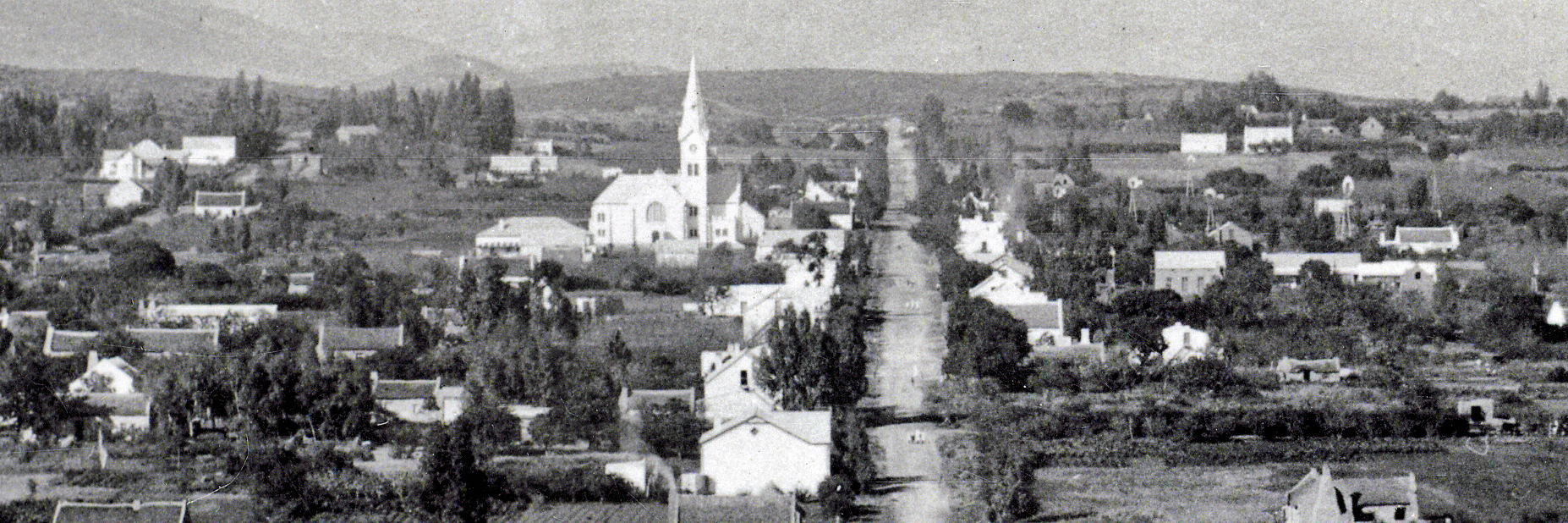
Table of Contents
A Brief History of McGregor
Legend has it that parents in the Breede Valley once admonished their errant children with, “Behave, or I’ll send you to McGregor!” Whatever truth lies behind the story, there’s no denying that McGregor has always been a little different — and all the better for it.
Tucked at the foot of the Riviersonderend Mountains, 20 km from Robertson along a good tarred road, McGregor is widely regarded as the best-preserved and most complete example of a mid-nineteenth-century town in the Cape. Its whitewashed, thatched cottages line quiet streets, hemmed in by mountains, wildlife and wine estates — a setting that has earned it a reputation as one of the true jewels of the Western Cape.
A Village Shaped by Isolation
A dirt road connects McGregor to the N2 via the Stormsvlei Pass, but the tar ends just beyond the village, near the start of the well-known McGregor-to-Greyton hiking trail over the Boesmanskloof Pass. It is this sense of physical isolation that has done more than anything to preserve the village’s nineteenth-century architecture. McGregor shares the climate of the Little Karoo: hot in summer, and cool to freezing in winter, when rain — and occasionally a dusting of snow on the surrounding hills — is not uncommon.
It was the quality of the farming land that first drew settlers to the area in the late 1700s. A handful of houses were built in the early 1800s, some serving as informal churches (a terrace of three, known as ‘Die Trein’, still stands in Voortrekker Street), others housing laborers, millers and a whip-maker.
From Lady Grey to McGregor
The village was only officially proclaimed in 1862, when it was divided into two-and-a-half-hectare plots. By 1905, all the land had been bought up by nineteen smallholders and farmers, whose names are recorded on a map now held in the McGregor Museum. An advertising poster from the time of the original auction claimed, rather optimistically, that the main road from the north to Cape Town would pass through the village. Neither that road nor the planned mountain route to Greyton through the Boesmanskloof Pass ever materialized — and the village has retained its peaceful, unhurried character ever since, its thatched cottages framed by vines, apricot trees and olive groves.
The settlement was originally named Lady Grey, a name it inconveniently shared with another town in the Eastern Cape, much to the confusion of the postal service. In 1904, the congregation of the Dutch Reformed Church chose to rename their parish and new church in Voortrekker Street after their much-loved former pastor, the Rev. Andrew McGregor, who had recently retired after forty years of service in Robertson. Two years later, in April 1906, the authorities — no doubt relieved to resolve the naming confusion — gazetted the official change to McGregor, a name that also happens to belong to one of the oldest and most honorable of the Scottish clans.
Preserving the Past
The McGregor Heritage Society
The McGregor Heritage Society exists to safeguard this legacy, promoting conservation awareness and continuing the development of the surrounding nature reserve. Unfortunately, preservation isn't always successful and the beautiful weathered ruins of the original post office and other buildings were bulldozed by a landowner a few years ago. Pictures of what was once there can be seen on our McGregor's Post Office page.
The McGregor Museum
Its work is complemented by the McGregor Museum, housed alongside the Tourism Office in the National Monument building on Voortrekker Street. Run informally by a dedicated group of volunteers — first organized under the leadership of Helaine Shand, whose own family ties to the village stretch back to the nineteenth century — the museum holds documents, letters, title deeds and artifacts relating to the area’s history from the late 1700s onward, including transcriptions of long-running water-rights disputes fought in the courts by the area’s pioneering farmers. Donations and loans of historical material are always welcome.