
McGregor under Apartheid
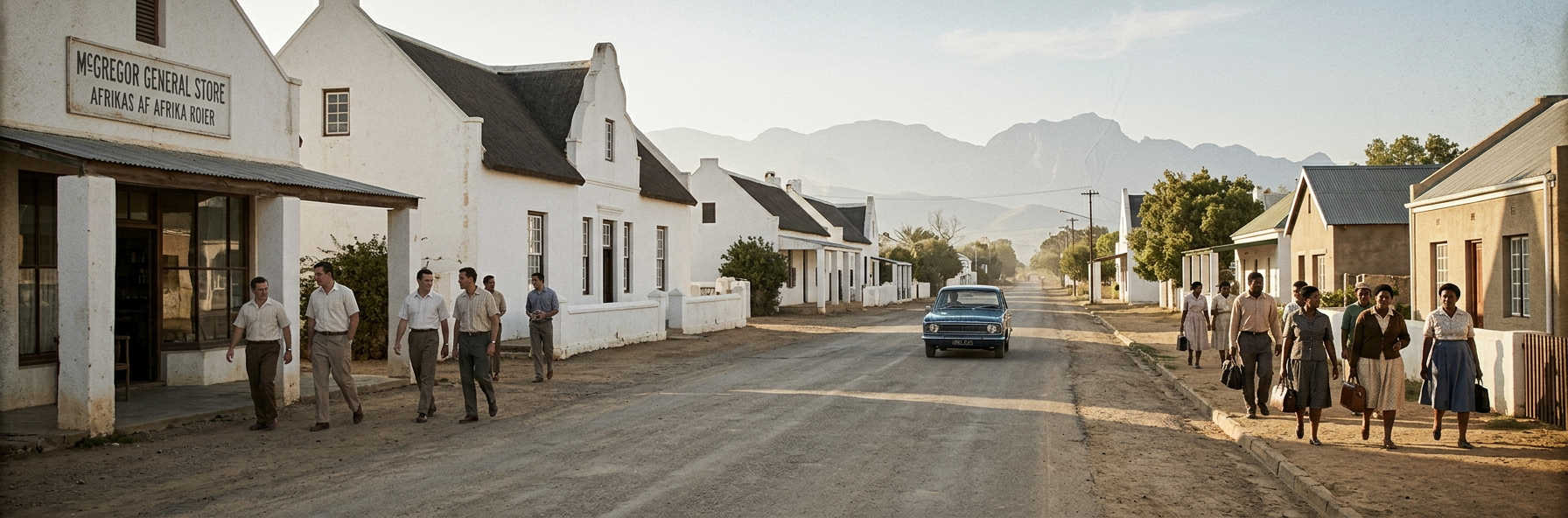
Table of Contents
A Village Divided: Apartheid-Era Segregation in McGregor
For all its charm, McGregor’s history carries the same scars as almost every other town in South Africa: for much of the twentieth century, the village was shaped and divided by law according to race. The story of that division — and of how the community lived around it — is a part of McGregor’s past worth remembering alongside its cottages and orchards.
Two McGregors, One Village
Like most small towns in the Western Cape, McGregor was physically split into racially demarcated areas under apartheid-era planning rules. The area along Voortrekker Road, toward the west of the village, was set aside for white residents, while the area at the eastern entrance to the village was designated for the coloured community. It was a layout imposed from above rather than one the village had organically grown into — part of a planning pattern repeated in towns across the country wherever the old Group Areas Act took hold. The legacy of that artificial split is still visible in the village today, in subtler ways than a map of two areas might suggest — in where newcomers to McGregor tend to settle versus where long-time families remain, and in the presence of what locals still call the “skeems”: the old government housing schemes built to house people who were relocated under the Act.
Page’s Halt: A Small Victory
Not every family accepted the Group Areas Act without a fight. Behind a white boundary wall in the village stand two houses; the one with a slightly crooked gable is still known locally as Page’s Halt. The Page family living there in the 1950s were told, like so many others, that they would have to leave and move to the eastern side of the village because they were classified as Coloured under the Population Registration Act. But one family member happened to work at the time in the very government department responsible for the reclassification, and was able to have the family’s name struck from the removal list. The house has remained in Page family hands ever since — a rare, small victory against a law built to make such victories impossible, and a piece of the village’s history now kept alive through local walking tours of the old part of town.
Land, Inheritance and Loss
The effects went beyond where people were allowed to live. Heritage researchers who studied McGregor in the early 1990s noted that large portions of land had been taken from residents under the Group Areas Act, and that families designated “Coloured” often couldn’t pass property down to their children at all: on the owner’s death, the land was simply auctioned off. Compared to many other towns, McGregor saw relatively few forced removals in the dramatic sense — but the slower erosion of land ownership through inheritance law left its own lasting mark on who owned what in the village, an imbalance still felt in the pattern of ownership today.
Faith and Learning Along the Lines
Religious and educational life reflected the same divide. While the Dutch Reformed congregation — served for forty years by Rev. Andrew McGregor, after whom the village is named — met in its own church, the Methodist church served as the local school for the coloured community during the week and as a place of worship on weekends. Many families in what is still known as the Ou Dorp trace their roots directly back to parents and grandparents who grew up attending that school, some of whom — the Damon family among them — were noted local herbalists as well.
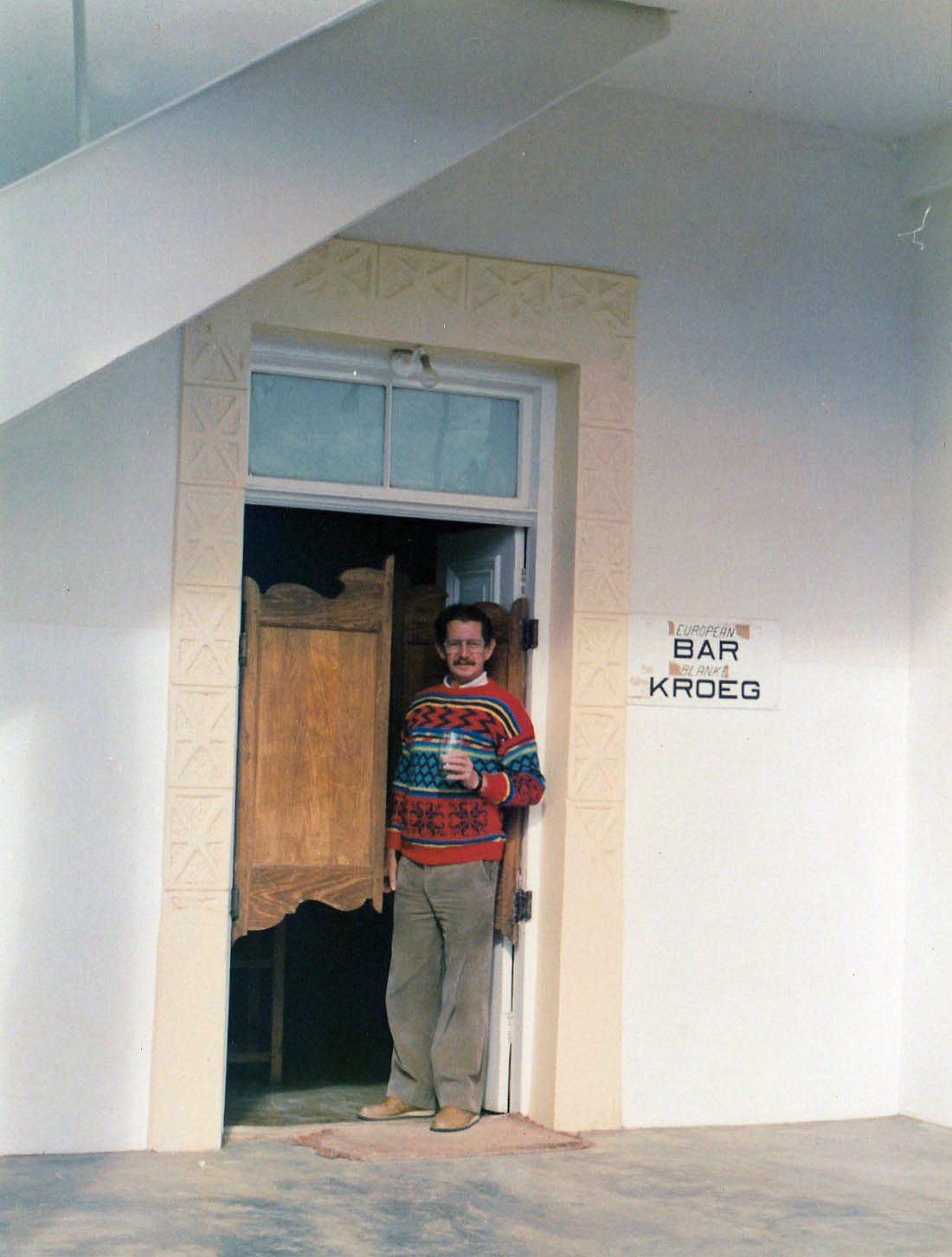
Separate Bars at the Village Inn
Living Around the Lines
Even so, the picture on the ground was not always as rigid as the law demanded. People who grew up in the village in the 1980s recall a place that, in practice, often blurred the boundaries apartheid tried to draw — wandering freely between areas and using facilities, like the village library, that were technically off-limits under the law, seemingly without anyone making an issue of it. Daily rhythms nonetheless bore the marks of the system: many men left the village to find work in Robertson, Worcester or Ashton, often away for the working week, while basics like electricity did not reach parts of the village until the early 1990s, and children had to travel out of McGregor entirely to finish their final year of school until McGregor Primary School was built.
A Legacy Still Being Addressed
By the time heritage practitioners returned to study McGregor in the early 1990s, the imprint of this history was impossible to ignore. Their planning work acknowledged the legacy of the Group Areas Act only briefly, and looking back on it decades later, those involved have suggested that this part of McGregor’s past deserves far more attention than it has received — both in how the village’s heritage is told, and in how future planning decisions try to build trust and benefit across the whole community.
Sources: Marshallene Harris, “Childhood memories of the village of McGregor”; Jane Banks, “McGregor stories: From historical records and my memories”; and Karin Dugmore-Ström, “Conservation by Todeschini and Japha 1993” — all in McGregor Workshop: New Design in a Historic Context (Vernacular Architecture Society of South Africa, 2021); and a local audio walking tour of McGregor’s historic streets, on the story of Page’s Halt.