
The Kampterrein
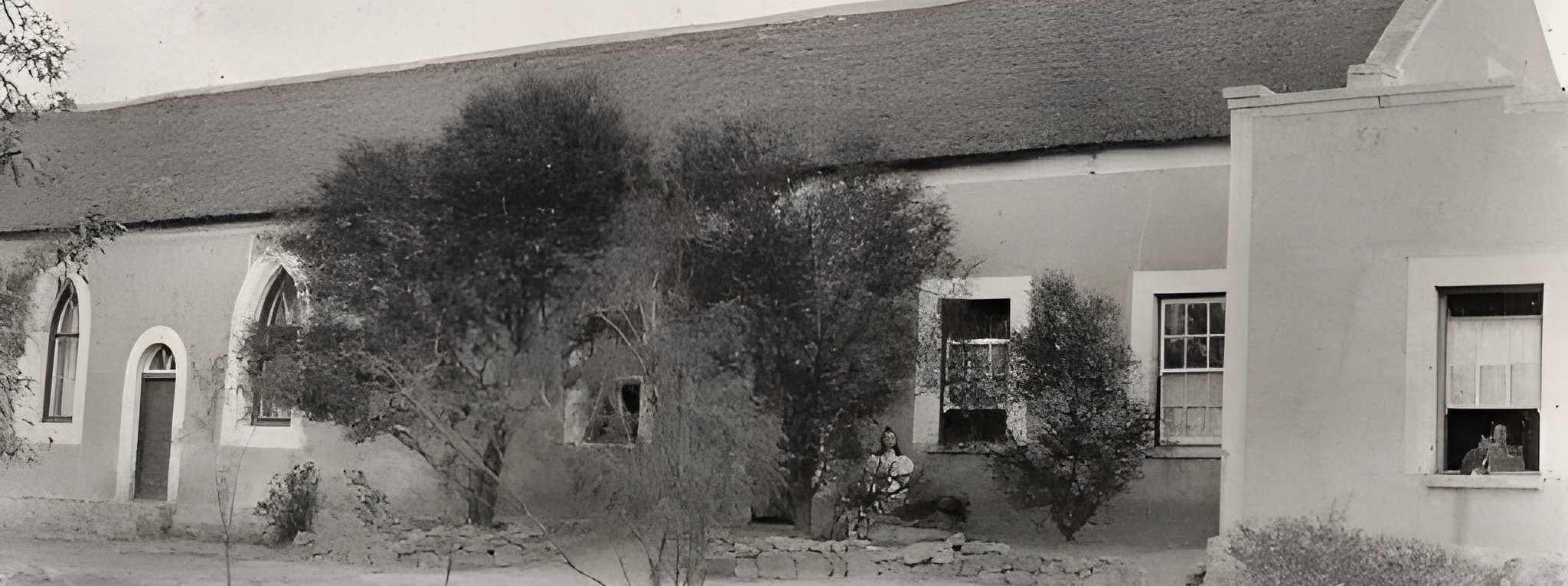
Table of Contents
The Kampterrein: A History of the McGregor Secondary School
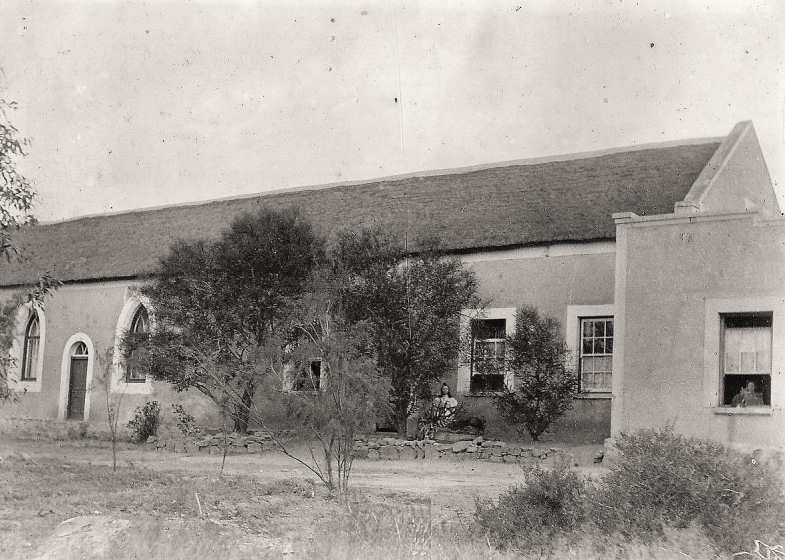
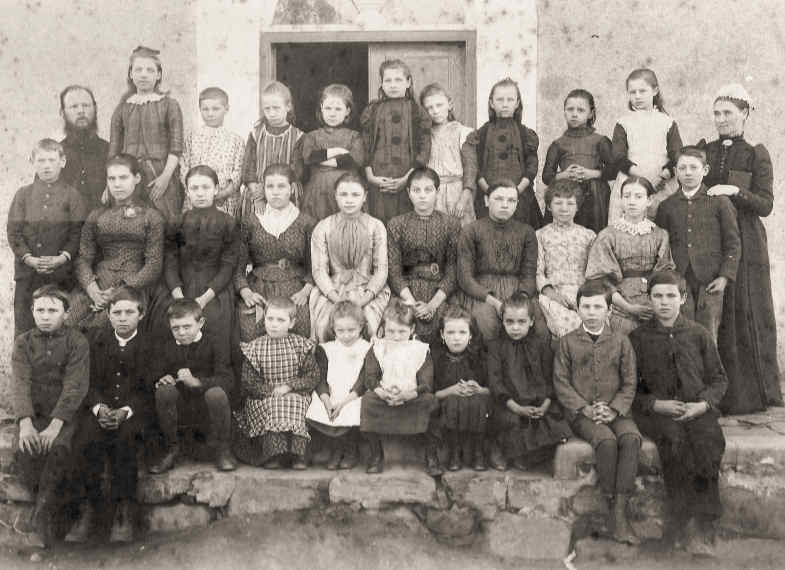
Long before it became known as the Kampterrein, this site was home to the village’s first school — and, for many years, its church as well. Its story is closely bound up with that of the village itself, and much of what follows is drawn from “A History of the McGregor NG Congregation,” a Master of Theology thesis by L. W. Breytenbach of Stellenbosch University, along with the surviving minutes of the old Lady Grey School Commission.
A Ward of the Robertson Parish
In the settlement’s earliest days, the growing community on Over-den-Berg — as Lady Grey was then also known — did not build its own church, unlike its neighbor Robertson. Instead, it was absorbed as a ward of the Nederduitse Gereformeerde parish of Robertson, and its spiritual needs were met, at first, by visiting clergy: the substitute minister Rev. W. Robertson of Swellendam, followed by Rev. C. H. de Smidt, Robertson’s first resident minister. From 1862, that role fell to Rev. Andrew McGregor — the man after whom the village would later be named. Because the Robertson parish was so large, McGregor could not visit Lady Grey often, and much of the day-to-day pastoral care fell instead to missionaries, chief among them Rev. Stephan Weich.
Breytenbach’s thesis notes that this arrangement placed a real burden on the community’s poorer members, who often lacked the transport or the means to travel to Robertson for services or confirmation classes. Over time, this hardship fed a growing desire among the Lady Grey congregation to break away and form a parish of their own.
“The first step taken was to nominate seven ‘Direkteure of the Lady Grey Ward’ at a meeting held on 10 March 1901. These seven members — all of whom would later serve on the first church council of the new parish — were tasked with preparing the way for separation, a duty they carried out with dedication.”
On the practical side, the fledgling parish already had land to build on: two erven donated by A. P. Brönn and earlier secured for church use by Rev. Weich. The seven directors also personally guaranteed the new minister’s salary for the first three years. Beyond these responsibilities, the new church council’s first task was to negotiate with the school commission over the shared use of school property. The two bodies eventually agreed that the church would have full use of the school hall, in exchange for paying half the building’s rates and taxes, and that the church council could use one room of the teacher’s house as a vestry, on condition that it built a replacement room for the teacher in its place. These negotiations set the tone for what would become a long and cooperative relationship between the church and the school in Lady Grey — soon to be renamed McGregor.
The School Commission Minutes
The school itself predates the parish split by several decades. Its commission’s surviving minutes open on 1 August 1867, with a meeting called to welcome a new teacher, Mr. Livesly. At that meeting, the commission agreed to buy the land the school stood on, along with its buildings, from Mr. J. P. van Reenen for £120. The property comprised four erven, two of which carried water rights, and the commission undertook to pay 6% interest on the purchase price from 1 January 1868. Rev. Andrew McGregor chaired the meeting, with the teacher acting as secretary.
A further meeting on 15 August raised nothing of great importance, but by 2 October the boundary beacons for the school land were being checked, and a committee of local residents — Messrs. S. Malherbe, J. F. Wessels, P. D. Geldenhuis, C. J. du Toit and F. J. de Wet — was appointed to see the purchase through. At a special meeting on 25 January 1868, the commission resolved to hold a country bazaar on 15 February to help raise the purchase price, and by 30 June, Rev. McGregor was able to report that he had written to Mr. van Reenen requesting the title deeds be delivered on 1 August, when the full amount would be paid. By then, £25 had already been collected, with a further £80 borrowed from a Mr. Erasmus to cover the rest. Yet by the end of August, no title deeds had arrived.
The matter dragged on for years. It was only on 17 December 1873 that the commission returned to the purchase in earnest, prompted by a letter from Mr. D. J. van Reenen — son of the original seller, who had since come of age. The commission decided that no further interest would be charged after the end of that year, given that no title deed had yet been produced. It wasn’t until 19 August 1874 that Rev. McGregor could finally announce that the deed had been received, and that he had settled the outstanding amount in full — £160, principal and interest together — with Mr. van Reenen.
With the land finally secured, the commission moved on to improvements. On 16 December 1875, it resolved to build a new residence for the teacher along with a new school building, both of which were completed by the contractor, Mr. A. J. Schoonwinkel, in September 1876.
Early Teachers
Mr. Livesly, welcomed in August 1867, remained at the school until the end of 1874, when he left for Mossel Bay. His successor, Mr. J. A. de Schmidt, served until the end of March 1884. A Mr. Collins of Graaff-Reinet was then chosen, on 29 March 1884, but never took up the post; the position went instead to Mr. Weich of Stellenbosch.
Life in the Old School
A vivid picture of daily life at the school survives in two student essays: one by van der Sandt de Villiers, formerly of Standard VI and son of the school’s headmaster, and another by A. van Reenen, formerly of Standard 5, published in the 1938 school yearbook.
“The school was formerly the [wine] cellar of the farm, and it had an earthen floor. The desks were large stumps over which planks were placed. Every Saturday, two girls had to smear the floor of the building [with cow dung], and two boys had to fetch water and scrub the desks.”
A new teacher’s residence and school building followed later. Religious services continued to be held in the school hall, and when the time came to build a separate school building, some in the community suggested simply enlarging the old school hall for use as a church instead. The idea proved unpopular: most residents preferred a purpose-built church, and the disagreement was eventually settled by circulating two separate collection lists — one for enlarging the school hall, the other for a new church. When the lists were presented to the church council, the school-hall list had raised nothing, while the church list had raised £1,700. The new church was built, and together with its pews and organ came to cost around £8,650; the manse followed later, funded partly by a £500 donation from Mr. C. Payne. Rev. Weber served as the first minister of the new church.
The same yearbook’s headmaster’s report records that the school had by then designed its own crest, bearing the motto “Always Higher.”
Piecing the Timeline Together
Taken together, the records suggest a fairly clear sequence of events: the school began operating in August 1867, initially in a converted cellar with distinctly rough-and-ready facilities. The teacher’s residence and a proper school building followed only later — and since the hall and the residence form part of the same structure, they were most likely completed together in 1876, a date consistent with the one carved into the gable of the hall. That inscription is not, in fact, the school motto, but a phrase in Hebrew carrying a religious message — fitting, given that the hall continued to double as a place of worship for roughly another twenty-five years. The date on the gable also lines up neatly with the paper trail: the commission only took formal transfer of the property in August 1874, after which the new school and teacher’s house — two separate buildings — were built, following the December 1875 decision to proceed, and delivered in September 1876.
A file on the history of the school is held in the museum cabinet.