
McGregor's Post Office
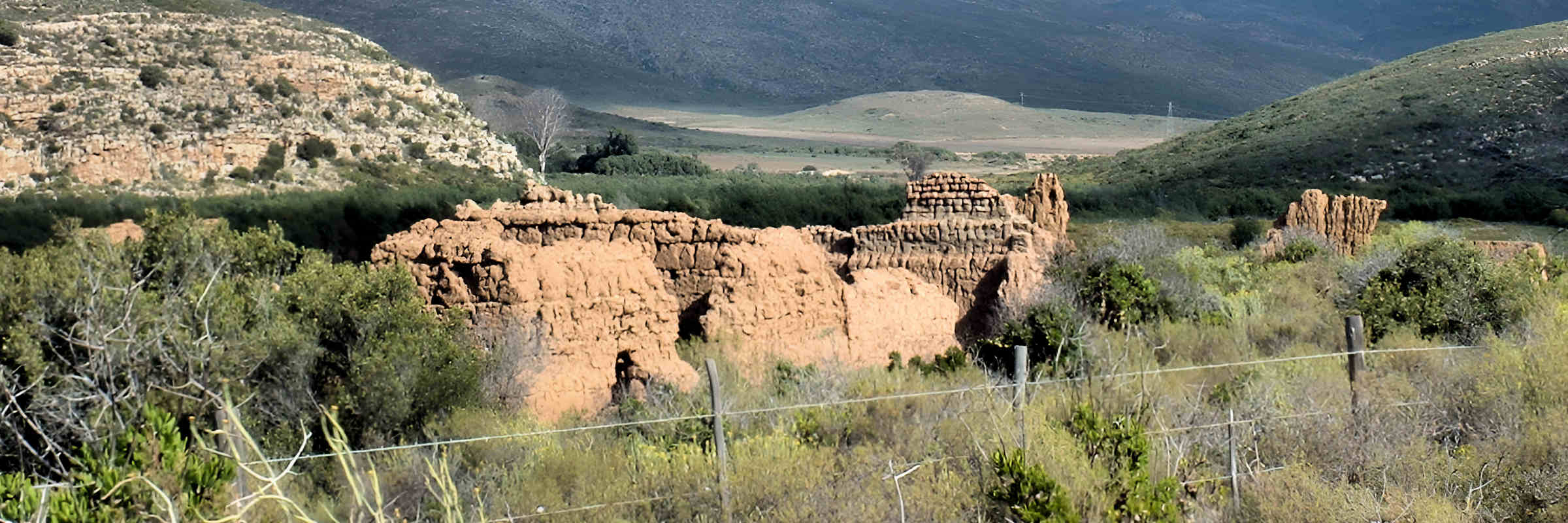
Table of Contents
The History of McGregor Post Office
Over the years, the McGregor post office has operated from three different locations. In earlier times, alongside the church, the post office served as a vital focal point for village life. However, all of these former locations are now gone, with the the final working office being closed by postal authorities as a cost-cutting measure.
The Locations Through the Years
McGregor's final full post office (version number three) was located on the corner of Kerk and Voortrekker Streets, directly across from the church. Its predecessor (version number two) operated a few doors down inside the little ACVV building.
The First Post Office Ruins
Please note that the ruins of the original site and other buildings have now been bulldozed by the landowner.
The very first post office was situated about a kilometer north-west of present-day McGregor. Access to the site was via the old Robertson Road, across the Houtbaais River, following a dirt track through a municipal gate. Notably, absent-minded key custodians over the years left no fewer than eight disused locks hanging on this gate.
The track led southwards onto the farm Ouplaas, passing the ruins of several small buildings constructed from unfired clay and stones. On the western side stood a larger oblong structure believed to be the area's first post office. Featuring an external skin of half-fired clay bricks, deep window embrasures, and walls embedded with river-rounded stones for structural support, all slowly crumbling under the sun, wind and incursions of grasses and bushes. A few deep window embrasures emphasised the thickness of the walls, and doves had moved into the numerous small holes in the brickwork - maybe this is where the term "pigeon hole" comes from!
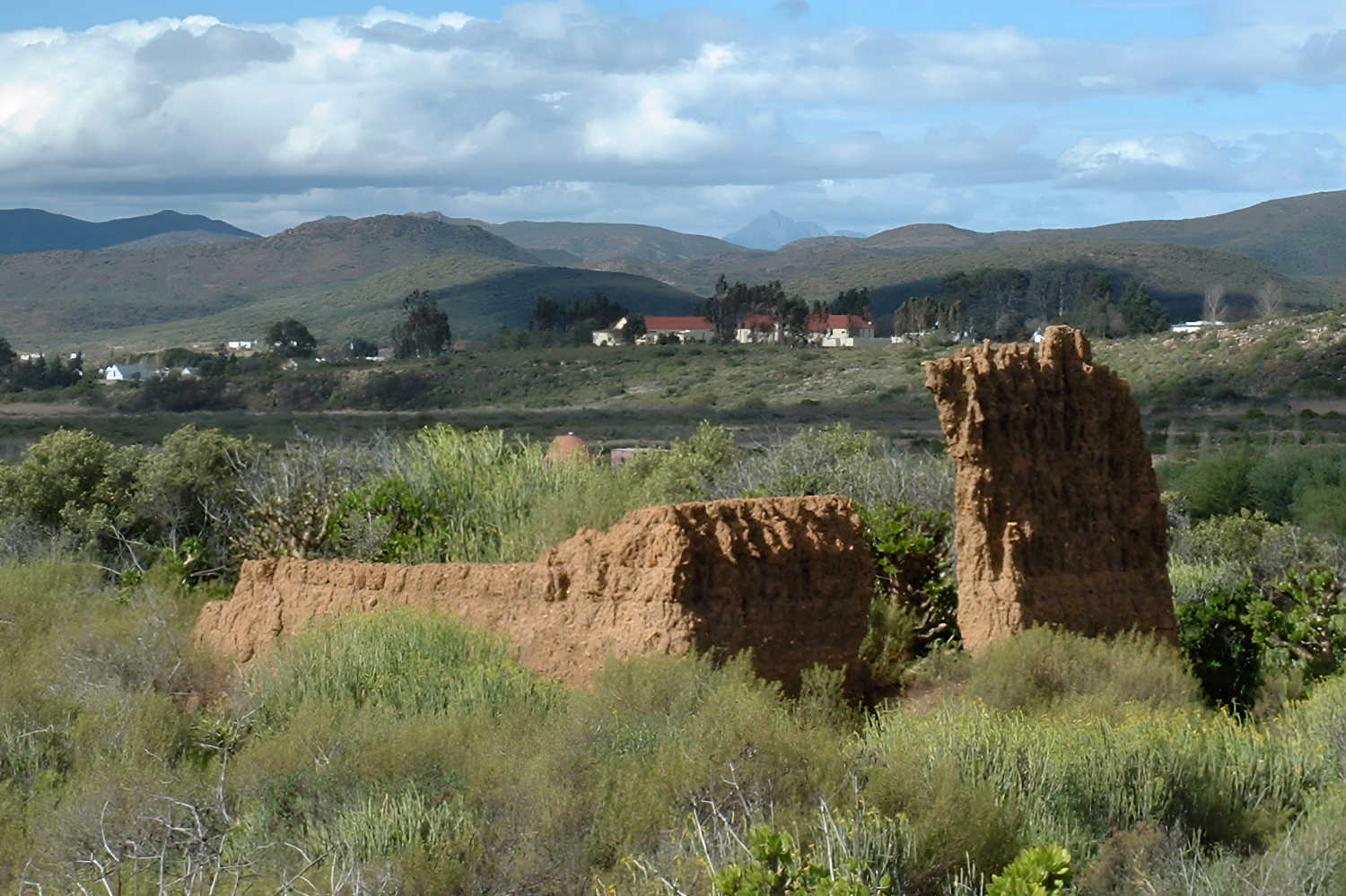
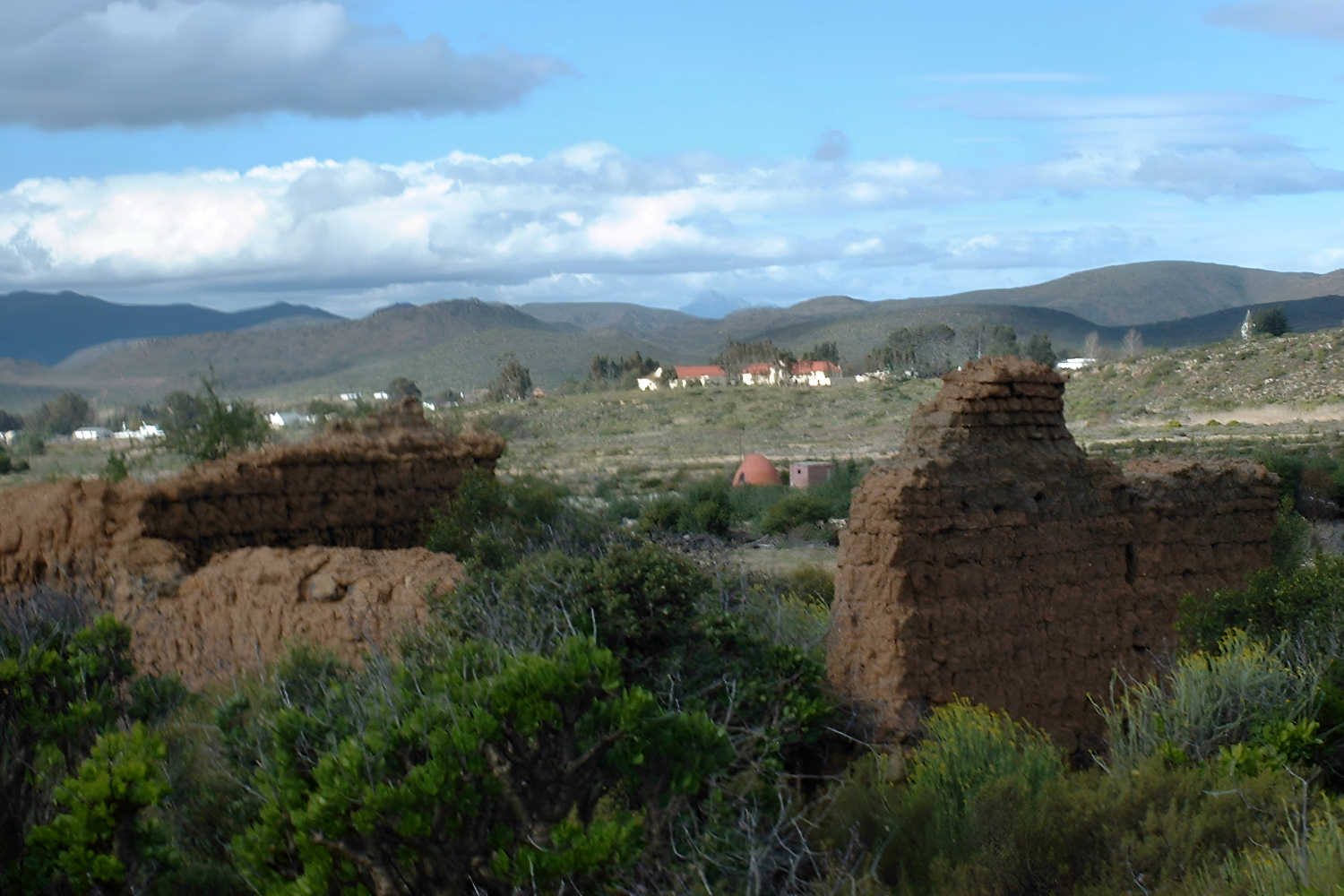
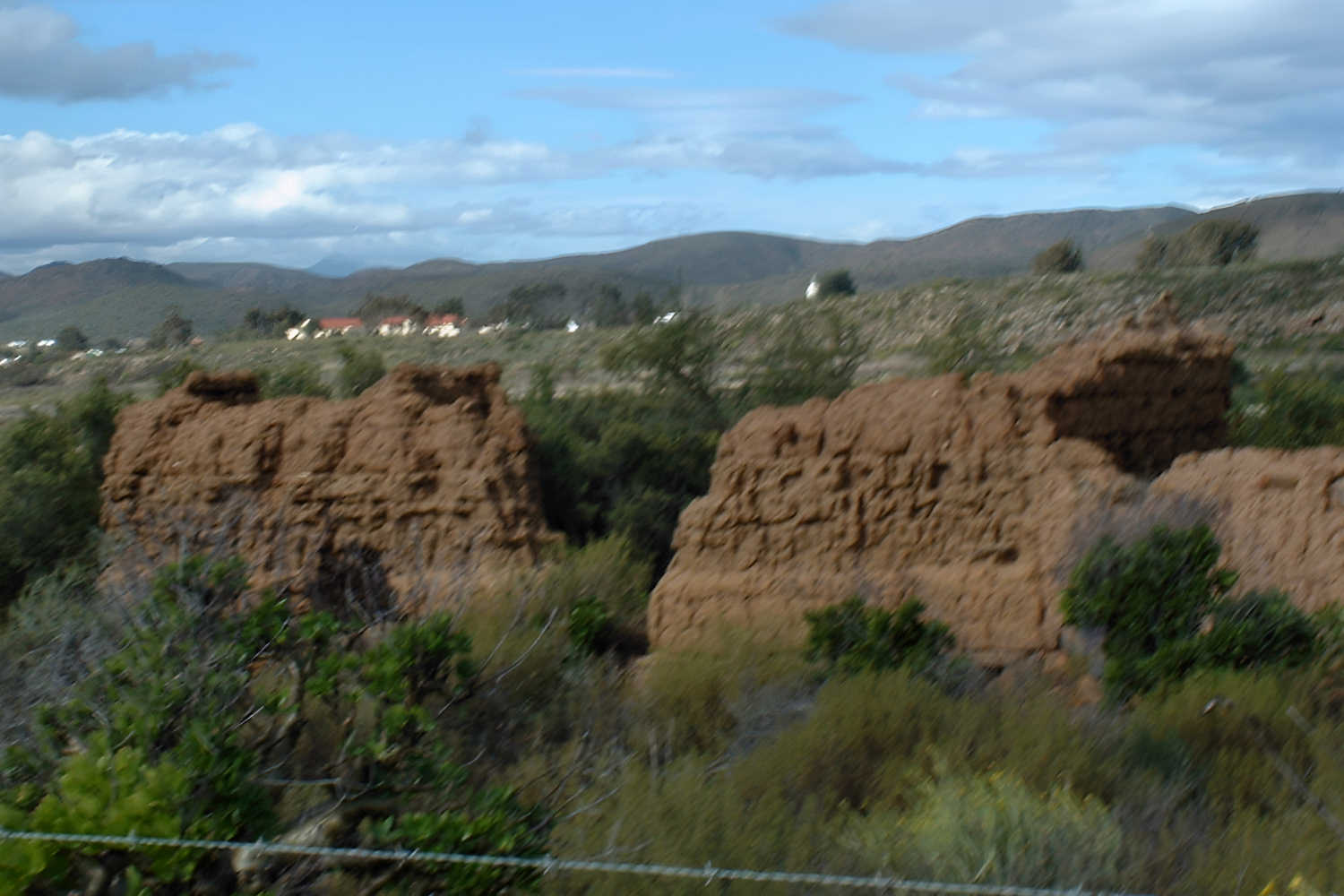
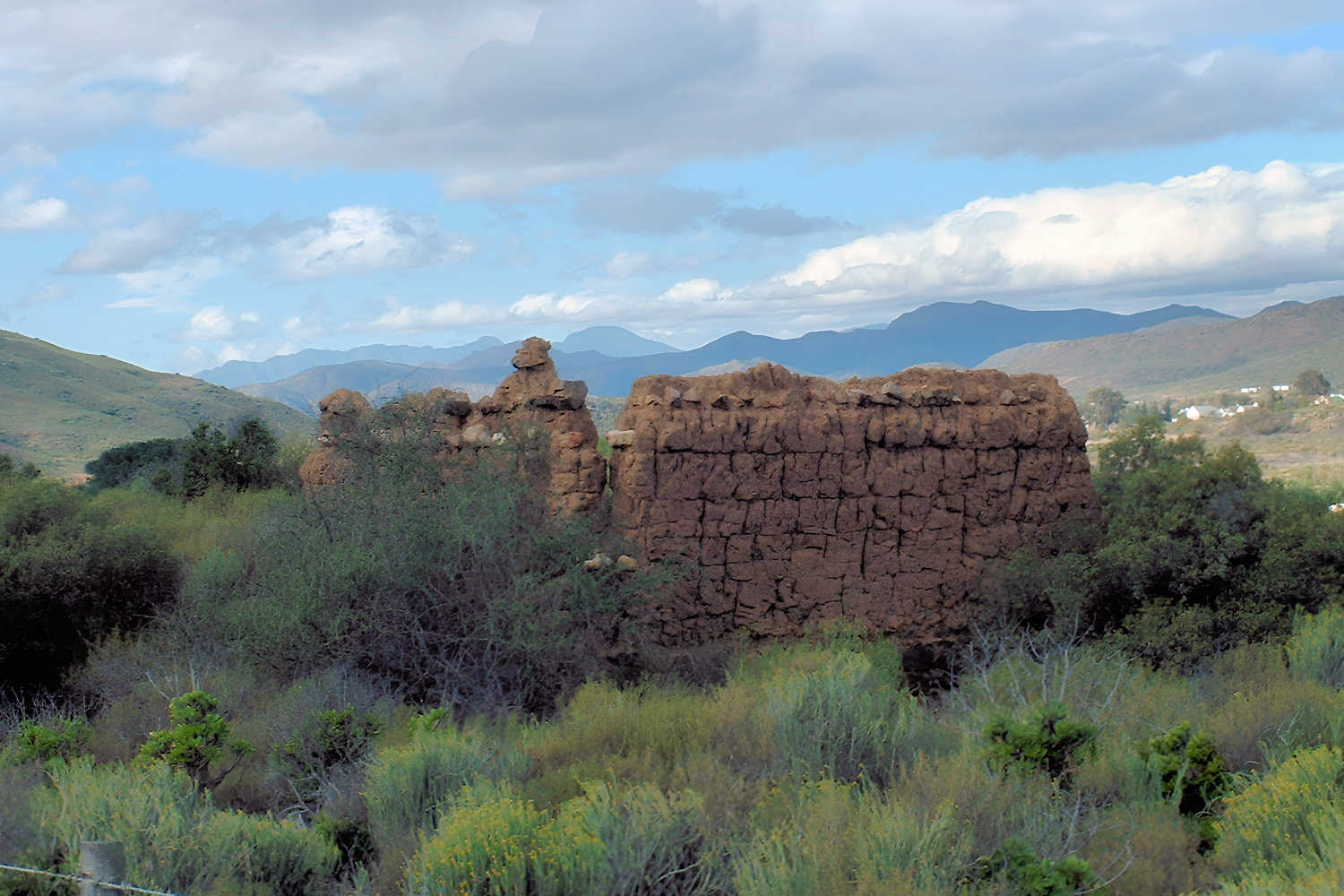
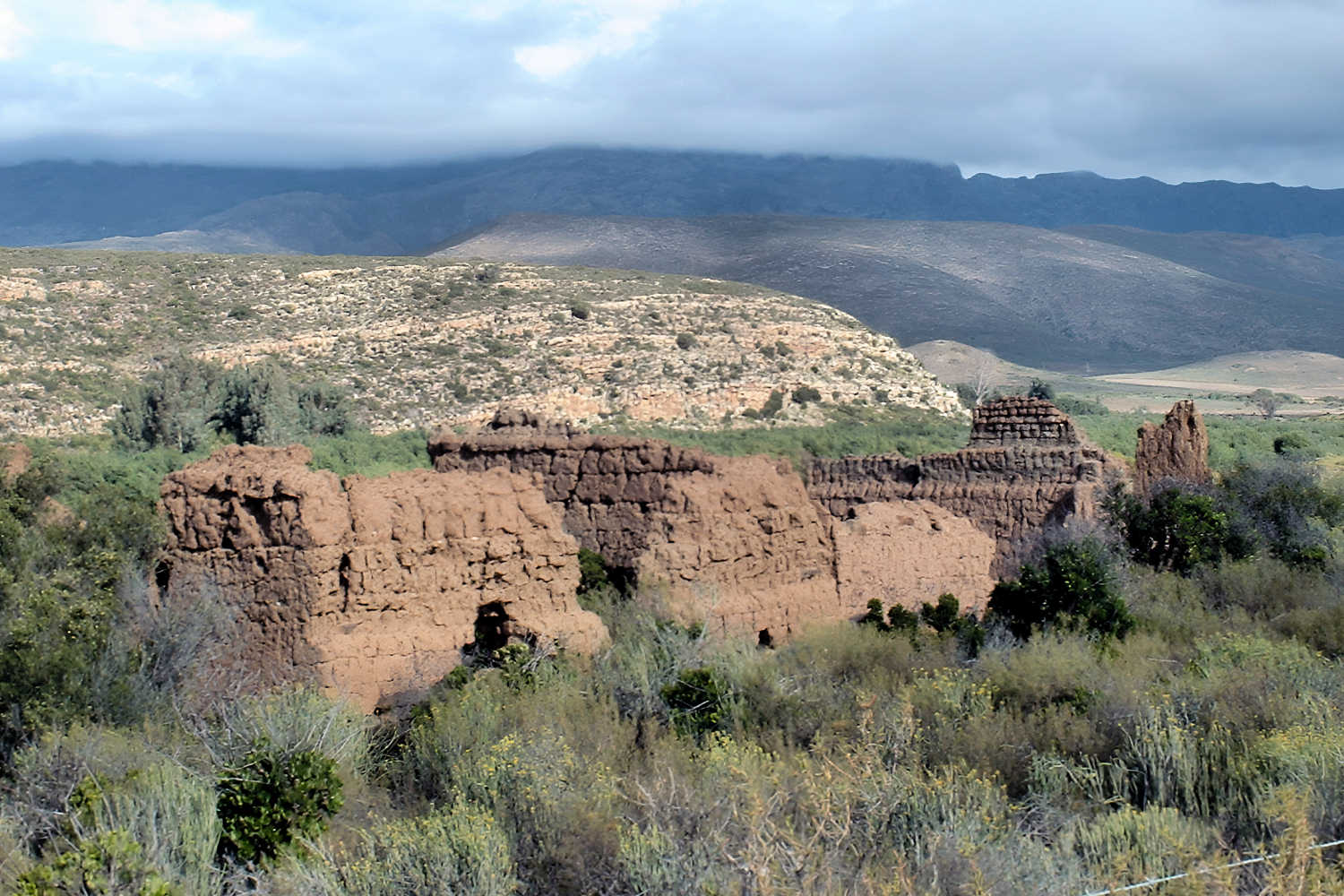
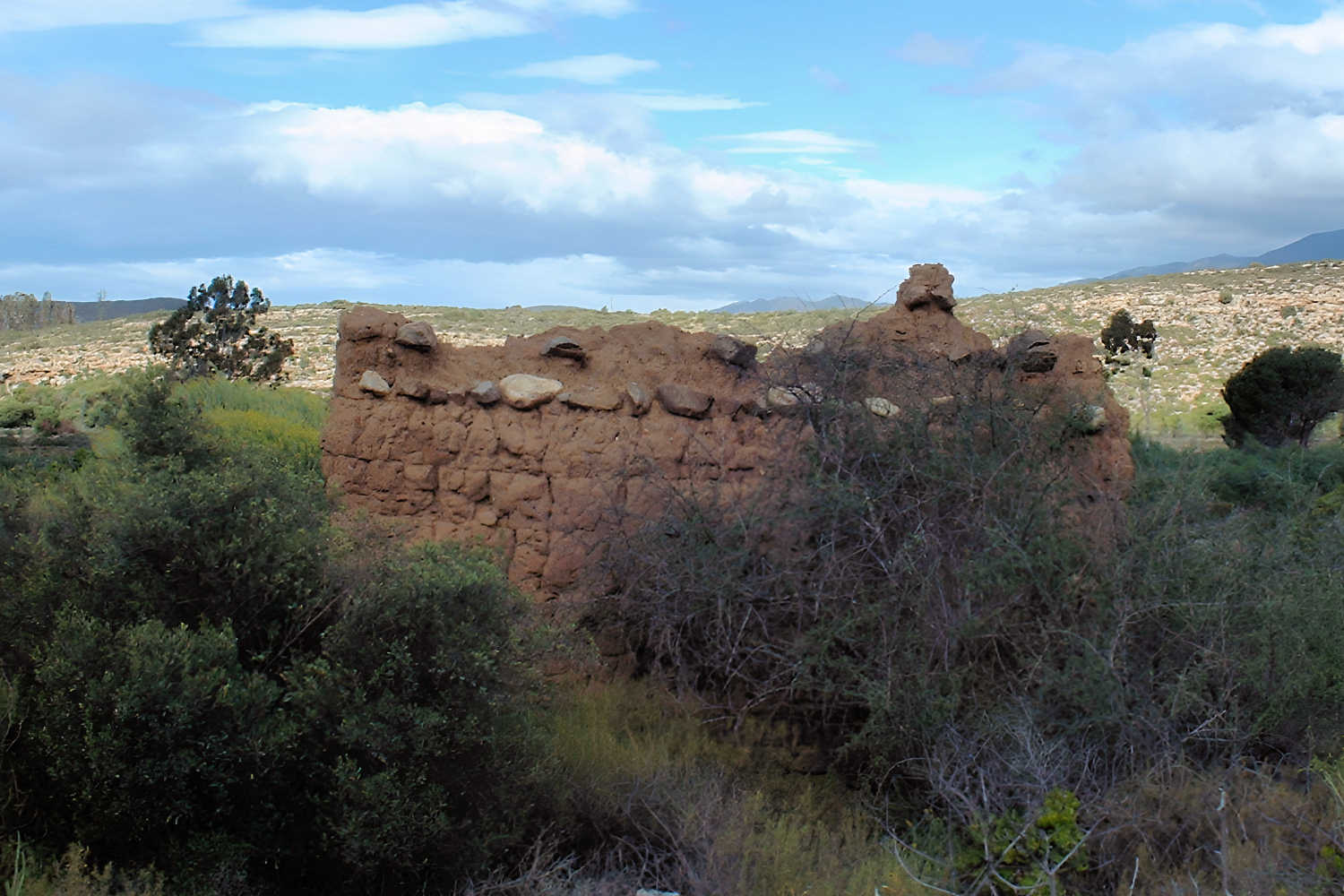

Photos by Adam Lewis. Apologies for the poor quality but I only had a phone with a low-res camera back then and there's no option to take new. If anyone has better quality ones I could use then I'd be very grateful to have them.
Although there was a mission station in the area prior to 1861, numerous farmsteads had grown up along the flood plain beside the river, and they would have needed some kind of central service. So, although there is no evidence of any internal walls ever having existed in the larger oblong building, it could have doubled as a small shop. The upper line of some of the walls on the McGregor side provided an interesting glimpse of early building methods as large river-rounded stones had been exposed. These had obviously been included to give strength and help support roof trusses, but they were used at random - almost as if tossed into the wet clay rather than placed on it. As a mute testimony to hopes and disappointments of bygone years, one wonders what stories these ruins would have had to tell us if they could have spoken.
Note: This historical overview is based on an article provided by Mrs. Marilyn Poole, with minor updates reflecting the past tense of the ruins.