<?xml version="1.0" encoding="utf-8"?>
<feed xmlns="http://www.w3.org/2005/Atom" xmlns:media="http://search.yahoo.com/mrss/">
    <title>Stone River</title>
    <link href="https://mcgregorvillage.co.za/feed.xml" rel="self" />
    <link href="https://mcgregorvillage.co.za" />
    <updated>2026-09-17T12:52:29+02:00</updated>
    <author>
        <name>Stone River</name>
    </author>
    <id>https://mcgregorvillage.co.za</id>

    <entry>
        <title>History of the McGregor Village Inn</title>
        <author>
            <name>Stone River</name>
        </author>
        <link href="https://mcgregorvillage.co.za/history-of-the-mcgregor-village-inn/index.html"/>
        <id>https://mcgregorvillage.co.za/history-of-the-mcgregor-village-inn/index.html</id>
        <media:content url="https://mcgregorvillage.co.za/media/posts/43/Hiistory-hotel-header.jpg" medium="image" />
            <category term="Local History"/>

        <updated>2026-09-10T12:04:35+02:00</updated>
            <summary type="html">
                <![CDATA[
                        <img src="https://mcgregorvillage.co.za/media/posts/43/Hiistory-hotel-header.jpg" alt="" />
                    From Over Den Berg to Stone River: A History of the Old&hellip;
                ]]>
            </summary>
        <content type="html">
            <![CDATA[
                    <p><img src="https://mcgregorvillage.co.za/media/posts/43/Hiistory-hotel-header.jpg" class="type:primaryImage" alt="" /></p>
                <div class="post__toc">
<h3>Table of Contents</h3>
<ul>
<li><a href="#mcetoc_1k2kni8166o">From Over Den Berg to Stone River: A History of the Old Hotel</a>
<ul>
<li><a href="#mcetoc_1k2kni8166p">A Victorian Villa Becomes a Hotel</a></li>
<li><a href="#mcetoc_1k2kni8166q">The Barry Years</a></li>
<li><a href="#mcetoc_1k2kni8166r">Changing Hands</a></li>
<li><a href="#mcetoc_1k2kni8166s">McGregor Village Inn, and Stone River Today</a></li>
</ul>
</li>
</ul>
</div>
<article>
<div class="gallery-wrapper"><div class="gallery" data-is-empty="false" data-translation="Add images" data-columns="3">
<figure class="gallery__item"><a href="https://mcgregorvillage.co.za/media/posts/43/gallery/History-hotel-01.jpg" data-size="1136x1500"> <img loading="lazy" src="https://mcgregorvillage.co.za/media/posts/43/gallery/History-hotel-01-thumbnail.jpg" alt="" width="768" height="1014"></a></figure>
<figure class="gallery__item"><a href="https://mcgregorvillage.co.za/media/posts/43/gallery/History-hotel-02.jpg" data-size="1994x1116"><img loading="lazy" src="https://mcgregorvillage.co.za/media/posts/43/gallery/History-hotel-02-thumbnail.jpg" alt="" width="768" height="430"></a></figure>
<figure class="gallery__item"><a href="https://mcgregorvillage.co.za/media/posts/43/gallery/History-hotel-03.jpg" data-size="1799x1012"><img loading="lazy" src="https://mcgregorvillage.co.za/media/posts/43/gallery/History-hotel-03-thumbnail.jpg" alt="" width="768" height="432"></a></figure>
<figure class="gallery__item"><a href="https://mcgregorvillage.co.za/media/posts/43/gallery/History-hotel-04.jpg" data-size="1003x782"><img loading="lazy" src="https://mcgregorvillage.co.za/media/posts/43/gallery/History-hotel-04-thumbnail.jpg" alt="" width="768" height="599"></a></figure>
<figure class="gallery__item"><a href="https://mcgregorvillage.co.za/media/posts/43/gallery/History-hotel-05.jpg" data-size="983x1350"><img loading="lazy" src="https://mcgregorvillage.co.za/media/posts/43/gallery/History-hotel-05-thumbnail.jpg" alt="" width="768" height="1055"></a></figure>
<figure class="gallery__item"><a href="https://mcgregorvillage.co.za/media/posts/43/gallery/History-hotel-06.jpg" data-size="1500x844"><img loading="lazy" src="https://mcgregorvillage.co.za/media/posts/43/gallery/History-hotel-06-thumbnail.jpg" alt="" width="768" height="432"></a></figure>
<figure class="gallery__item"><a href="https://mcgregorvillage.co.za/media/posts/43/gallery/History-hotel-07.jpg" data-size="767x488"><img loading="lazy" src="https://mcgregorvillage.co.za/media/posts/43/gallery/History-hotel-07-thumbnail.jpg" alt="" width="767" height="488"></a></figure>
<figure class="gallery__item"><a href="https://mcgregorvillage.co.za/media/posts/43/gallery/History-hotel-08.jpg" data-size="1500x980"><img loading="lazy" src="https://mcgregorvillage.co.za/media/posts/43/gallery/History-hotel-08-thumbnail.jpg" alt="" width="768" height="502"></a></figure>
<figure class="gallery__item"><a href="https://mcgregorvillage.co.za/media/posts/43/gallery/History-hotel-09-owners1.jpg" data-size="983x1350"><img loading="lazy" src="https://mcgregorvillage.co.za/media/posts/43/gallery/History-hotel-09-owners1-thumbnail.jpg" alt="" width="768" height="1055"></a></figure>
<figure class="gallery__item"><a href="https://mcgregorvillage.co.za/media/posts/43/gallery/History-hotel-10-owners2.jpg" data-size="1500x1097"><img loading="lazy" src="https://mcgregorvillage.co.za/media/posts/43/gallery/History-hotel-10-owners2-thumbnail.jpg" alt="" width="768" height="562"></a></figure>
<figure class="gallery__item"><a href="https://mcgregorvillage.co.za/media/posts/43/gallery/History-hotel-11-owners3.jpg" data-size="1500x1097"><img loading="lazy" src="https://mcgregorvillage.co.za/media/posts/43/gallery/History-hotel-11-owners3-thumbnail.jpg" alt="" width="768" height="562"></a></figure>
<figure class="gallery__item"><a href="https://mcgregorvillage.co.za/media/posts/43/gallery/History-hotel-12-owners4.jpg" data-size="1500x1093"><img loading="lazy" src="https://mcgregorvillage.co.za/media/posts/43/gallery/History-hotel-12-owners4-thumbnail.jpg" alt="" width="768" height="560"></a></figure>
</div></div>
<h1 id="mcetoc_1k2kni8166o">From Over Den Berg to Stone River: A History of the Old Hotel</h1>
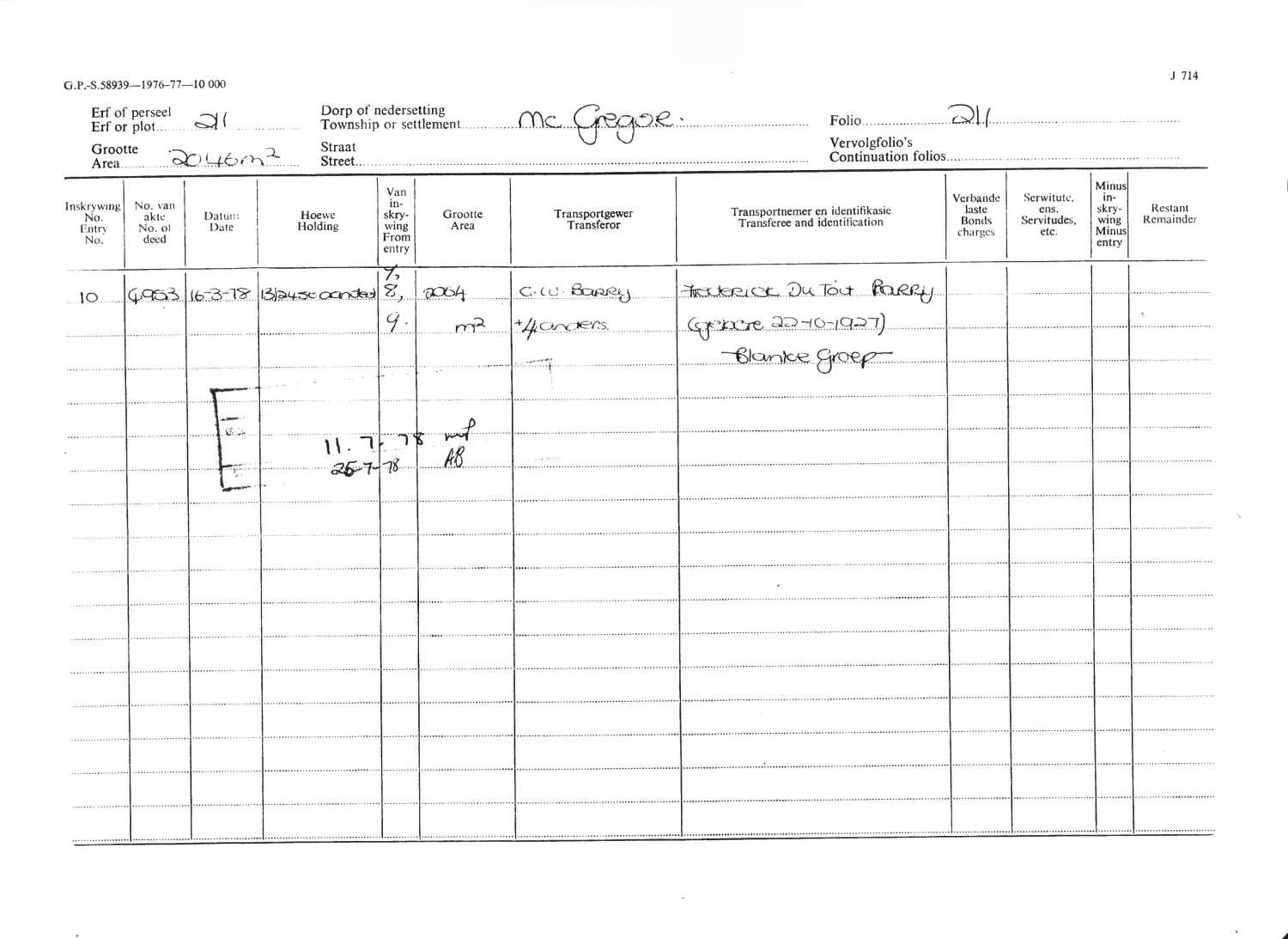
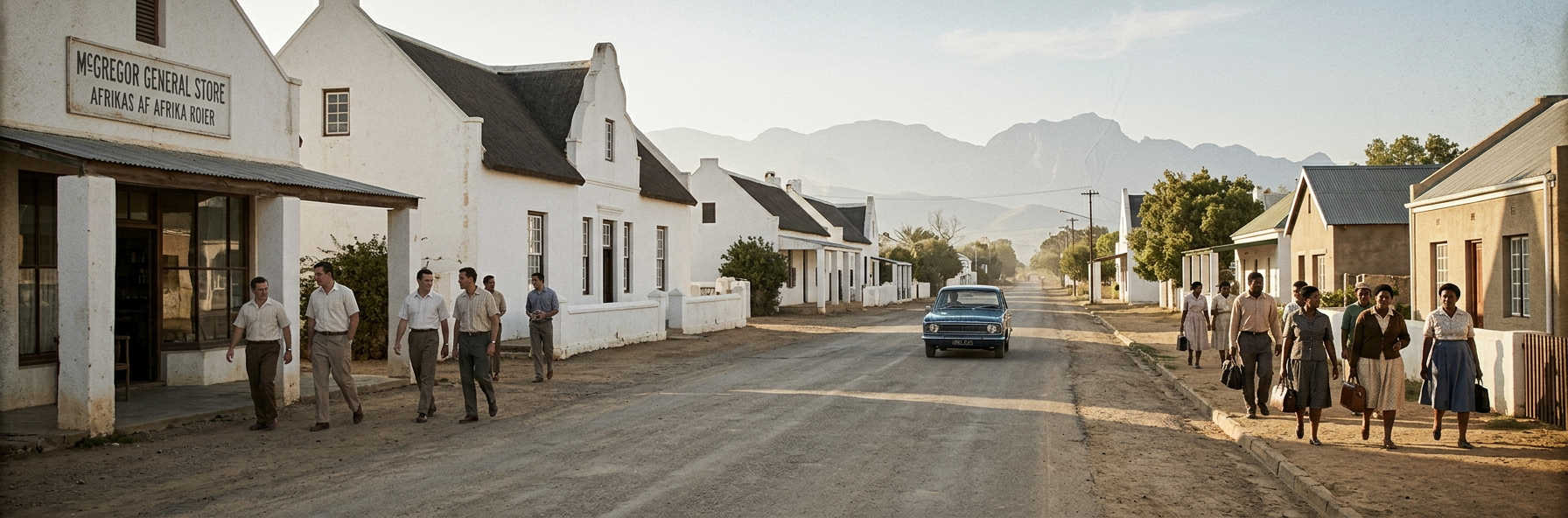
<p>Few buildings in McGregor have worn as many names, or passed through as many hands, as the two-storey building on Voortrekker Road that today houses Stone River. Over more than a century it has been a private home, a hotel, a restaurant, a liquor store and a corner shop — sometimes several of these at once — and its story is really the story of the village itself, told through one building’s changing fortunes.</p>
<h2 id="mcetoc_1k2kni8166p">A Victorian Villa Becomes a Hotel</h2>
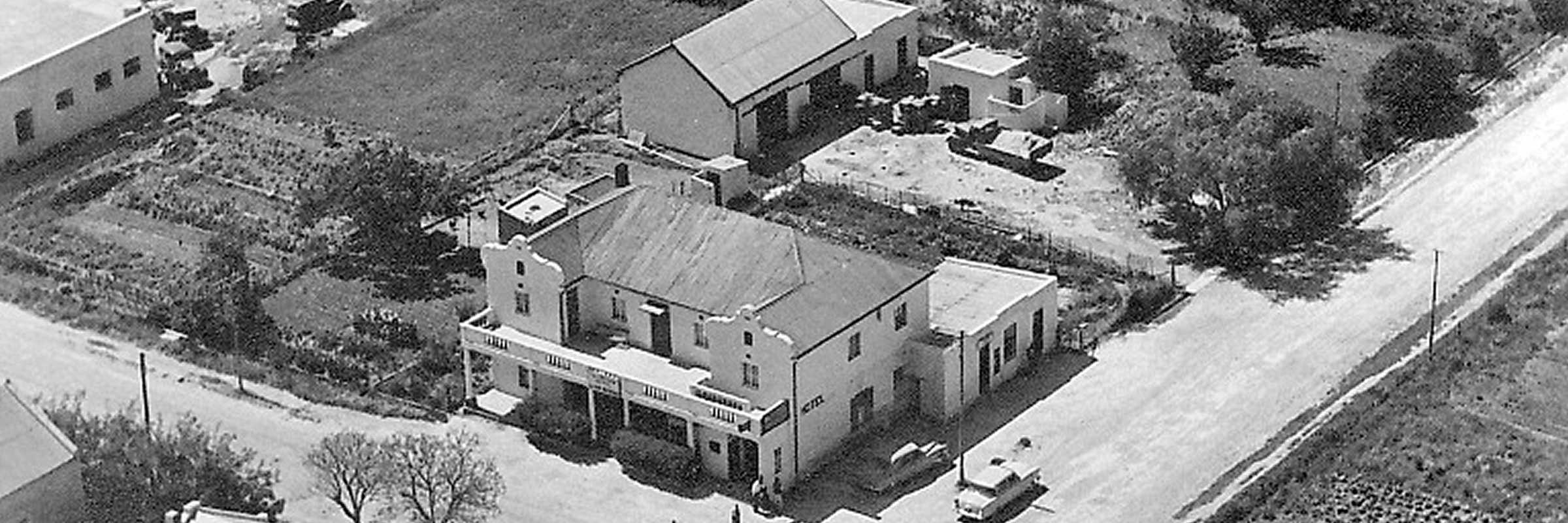
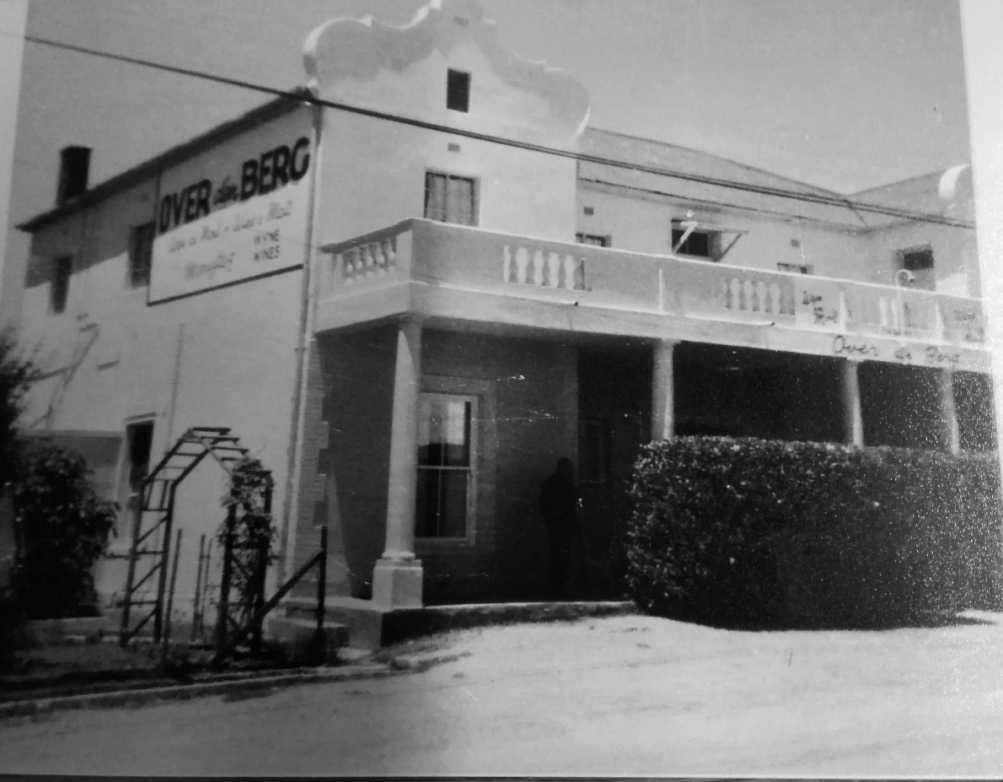
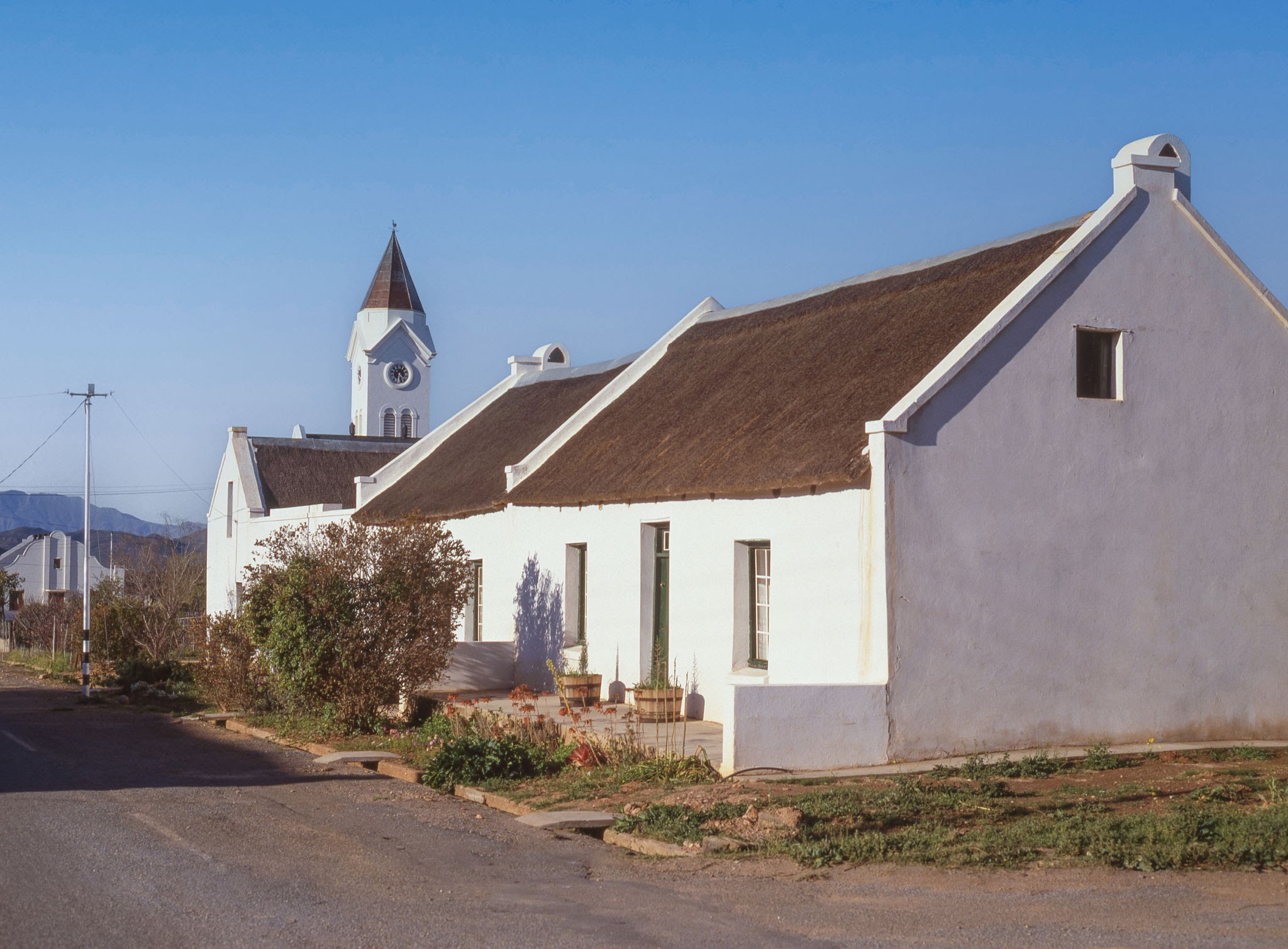
<p>The building’s core is thought to date to around 1890, when it was built as a single-storey Victorian house on the same plan as the Lion House further down Voortrekker Street — a typical layout of two stoepkamers bookending a timber-and-iron veranda. Lion House still stands much as it would have looked then, with its quoined corners and windows and a timber-panelled front door with sidelights, offering a good sense of what this building looked like in its earliest years.</p>
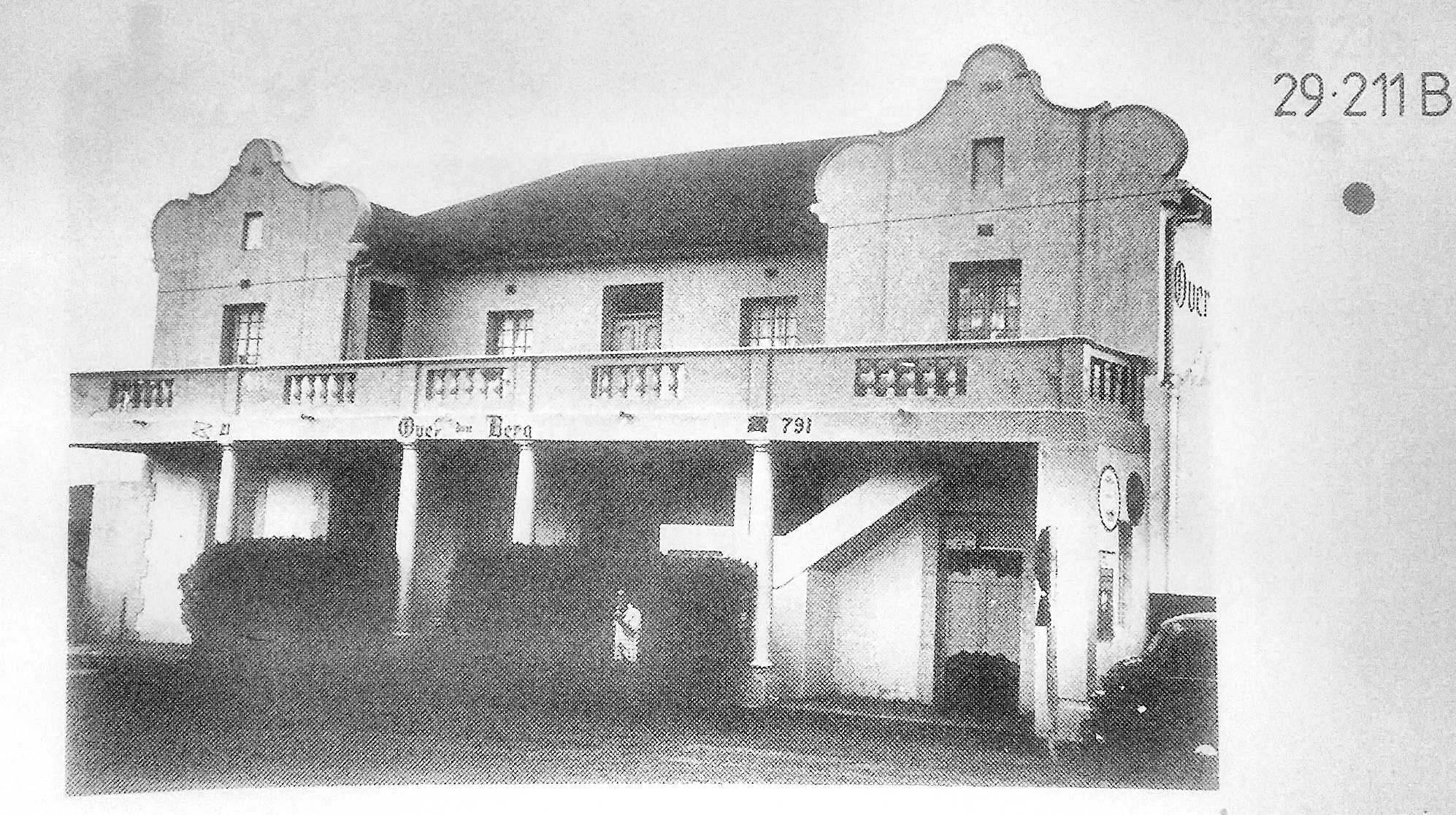
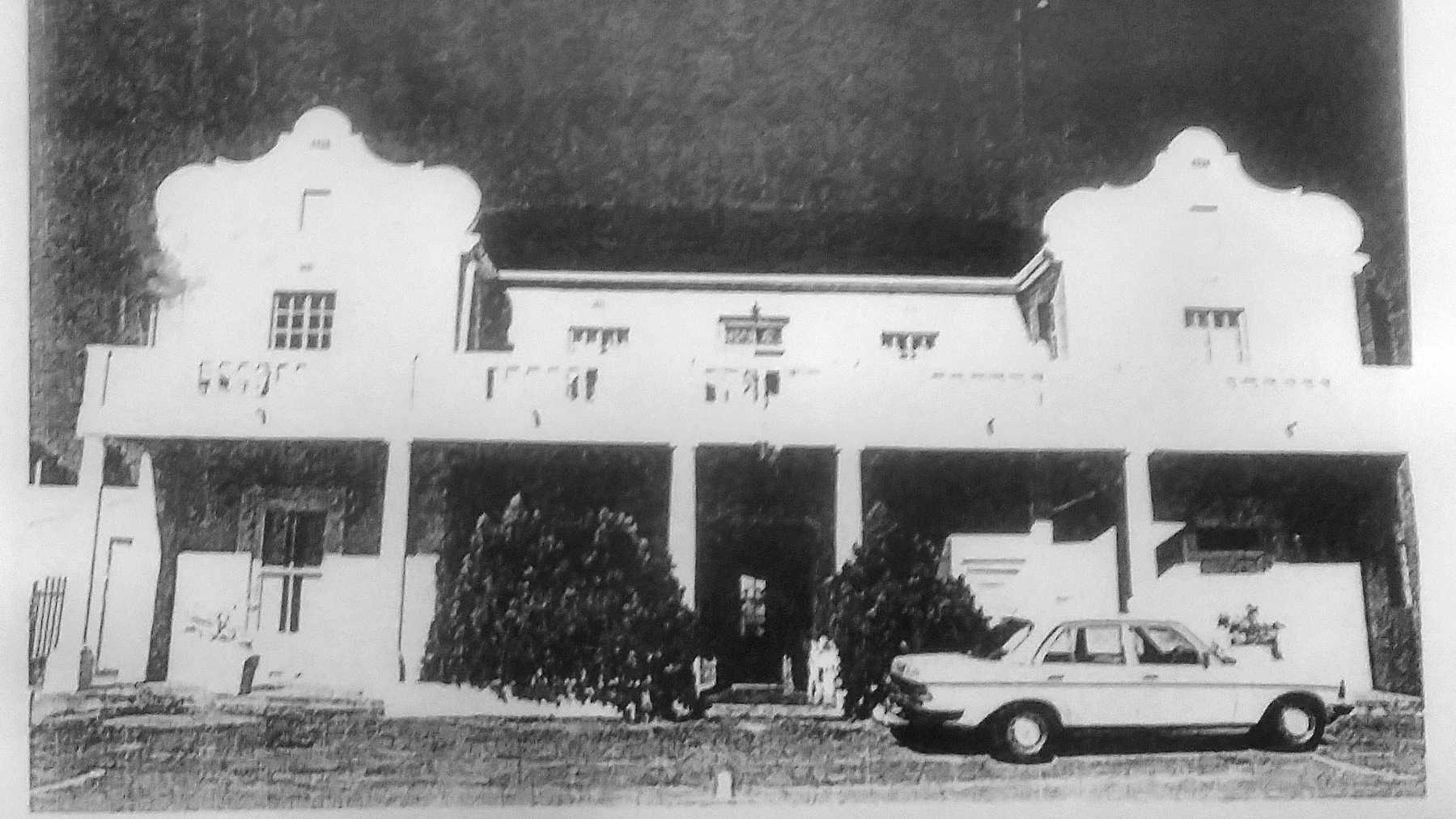
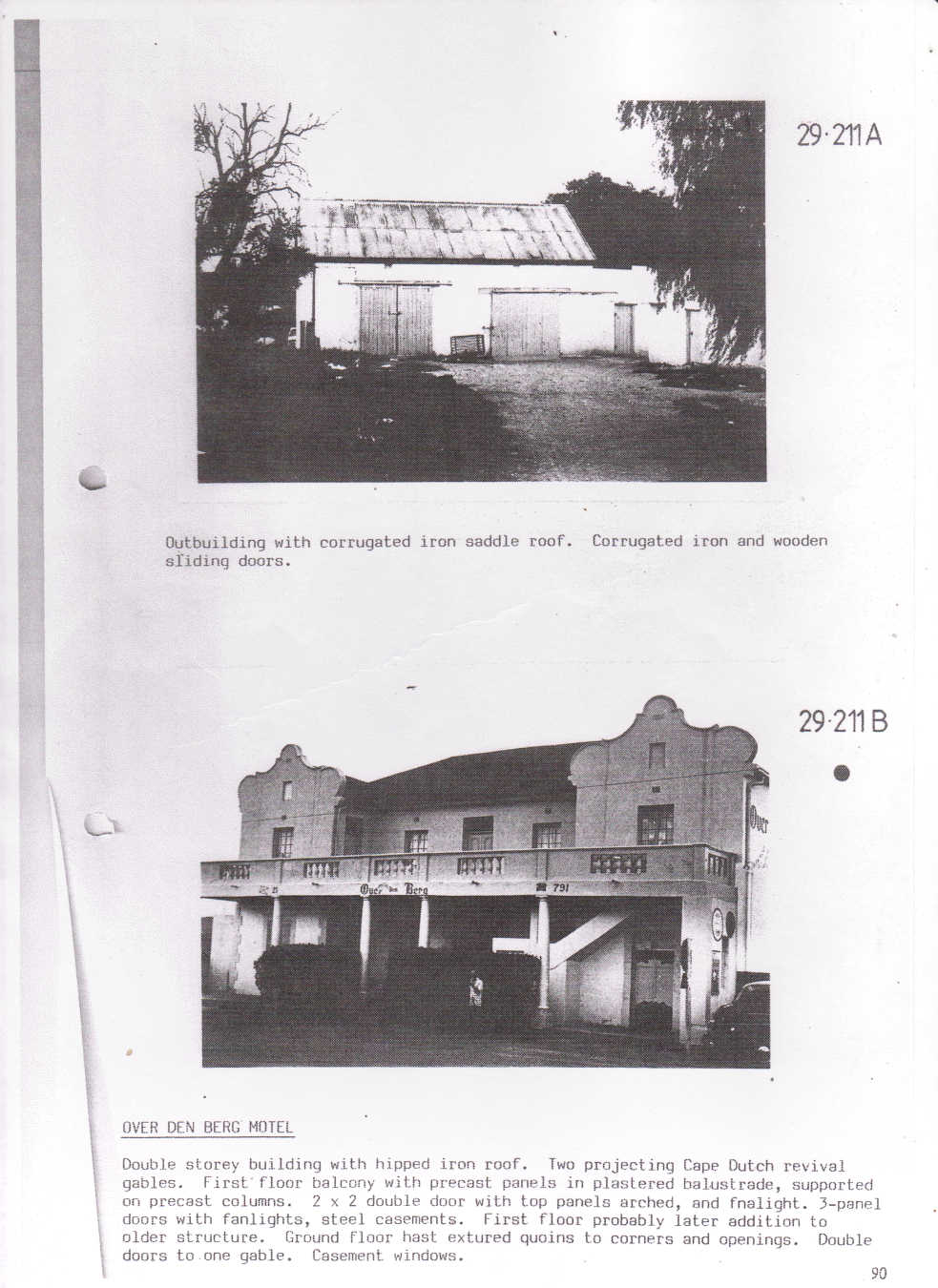
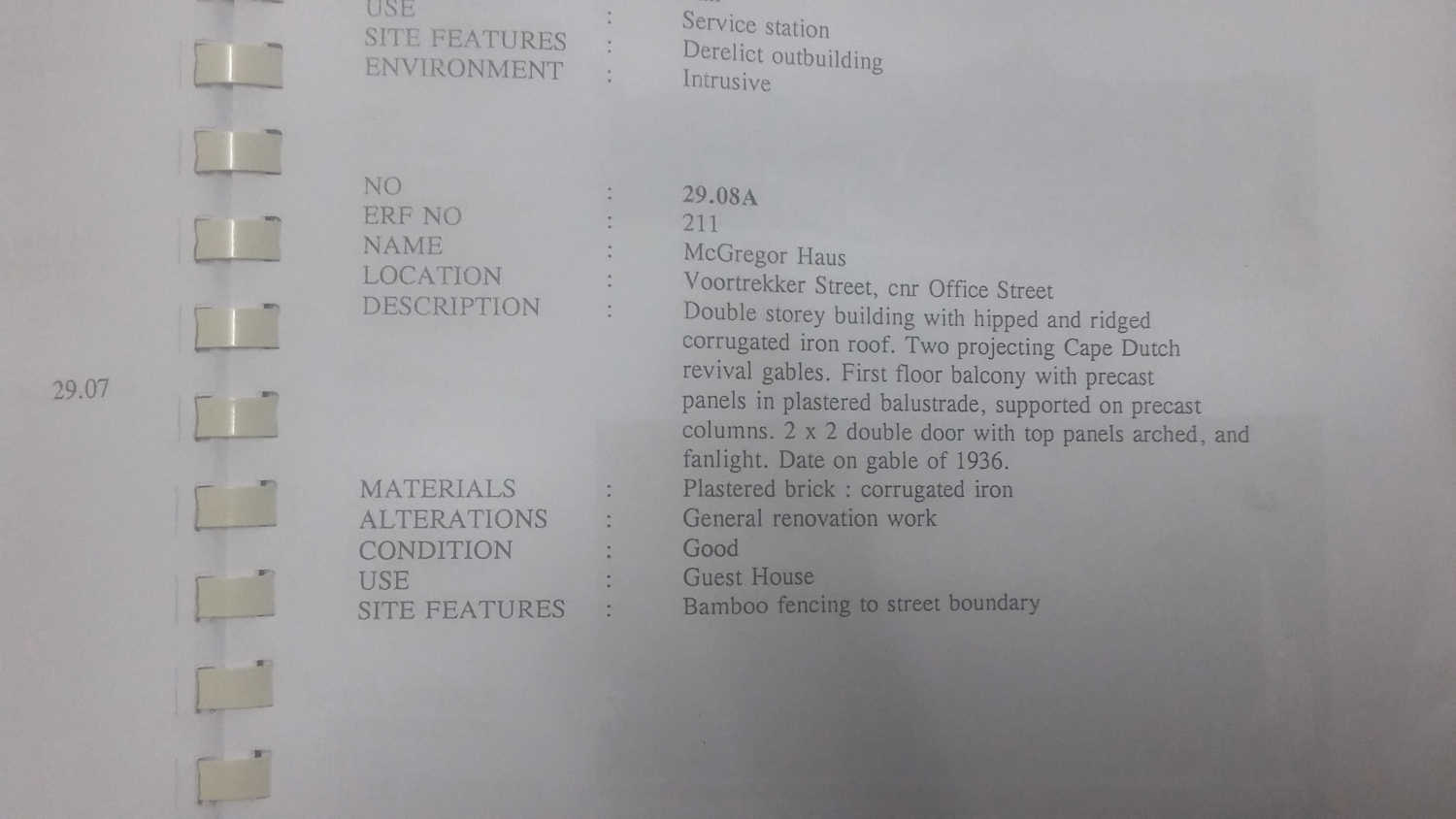
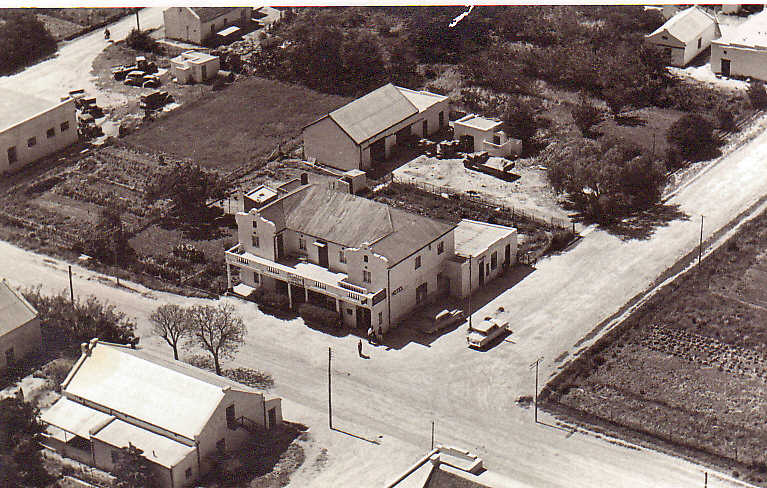
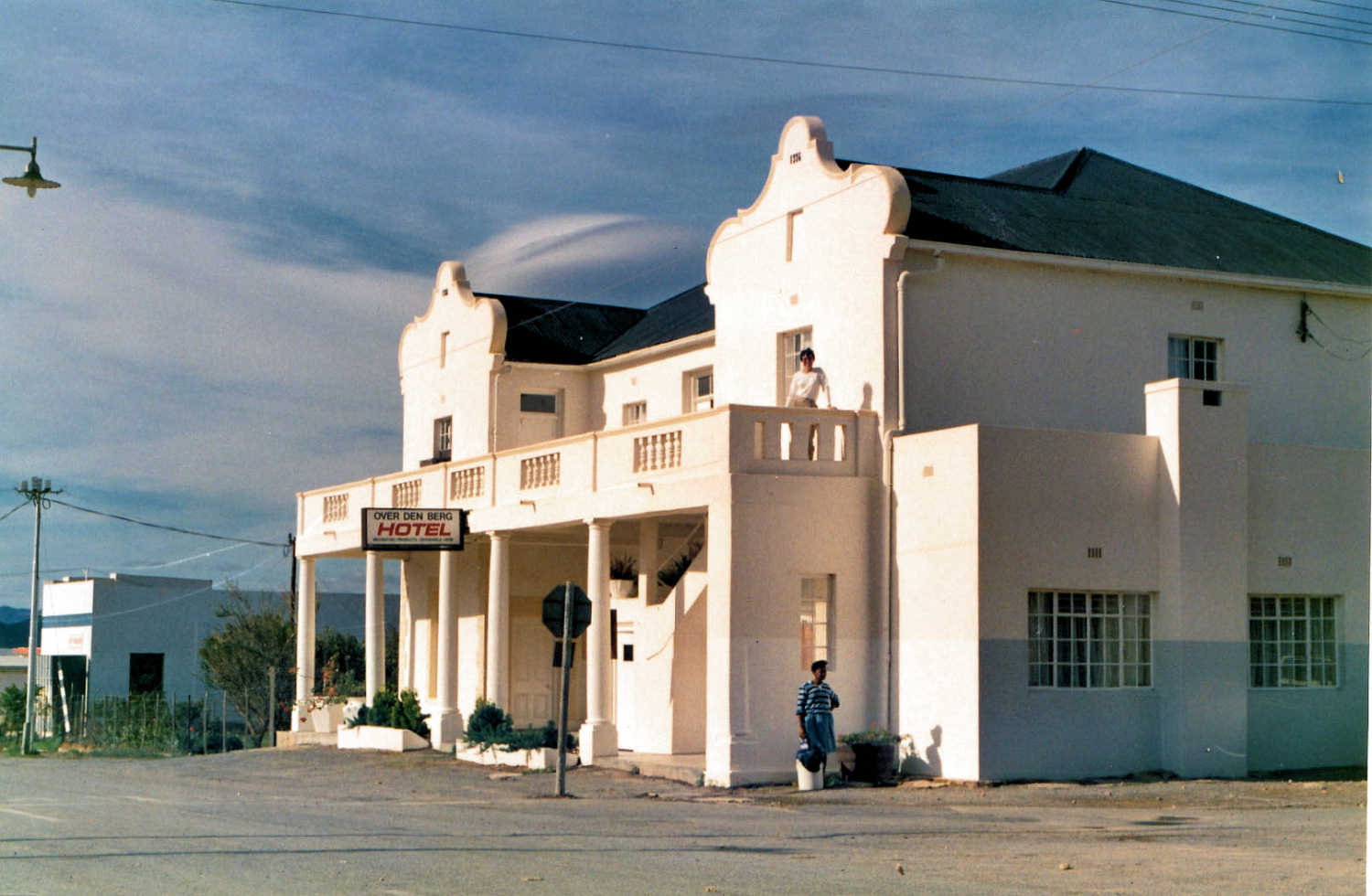
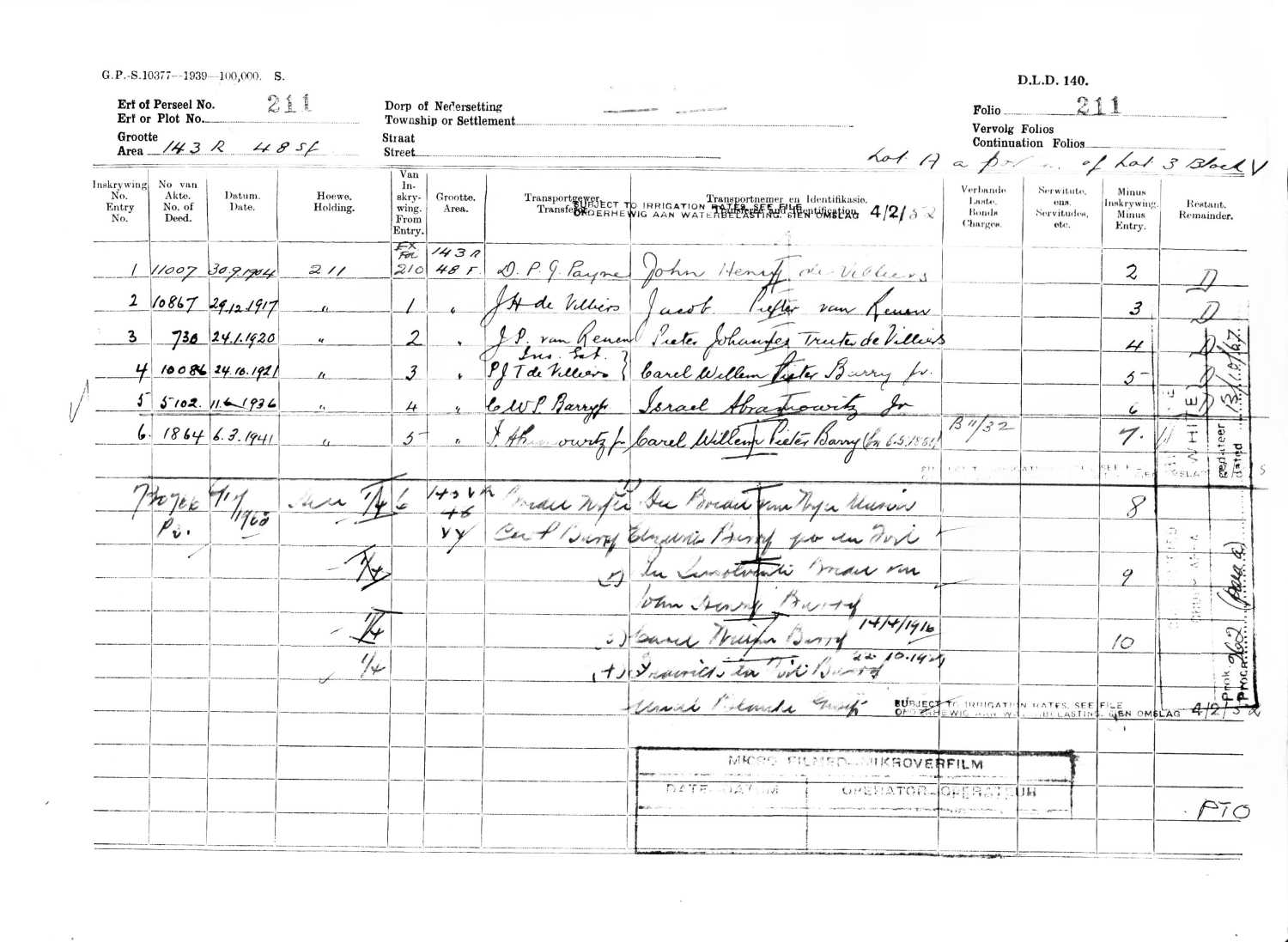
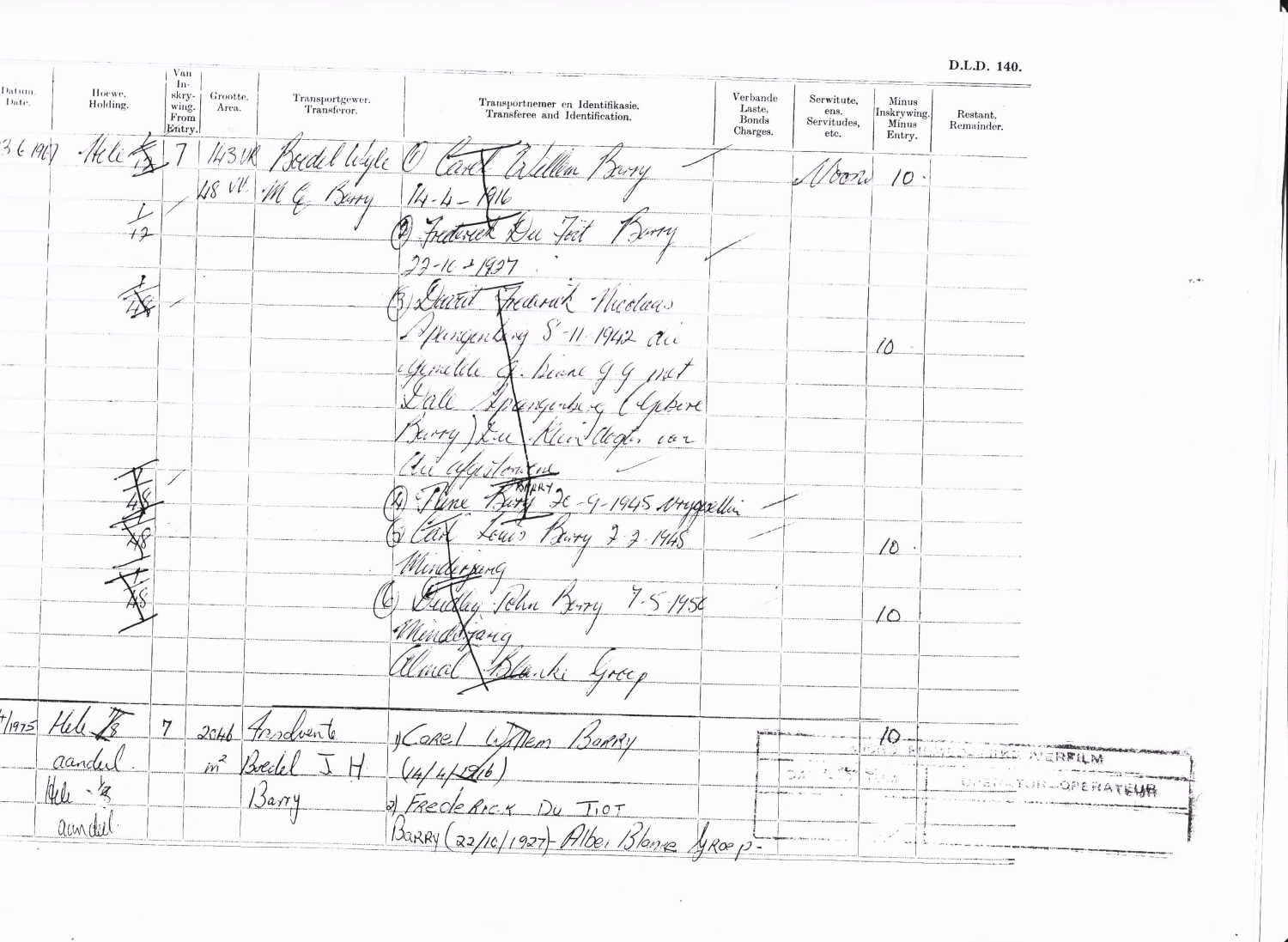
<p>That changed around 1936, when the property’s owner at the time, Mr Barry, added a full upper floor, transforming the modest villa into a proper hotel. The new floor was built in the Cape Dutch Revival style, with gables projecting out over the original stoepkamers and a concrete balcony — supported on precast Doric columns — replacing the old Victorian veranda. Even so, traces of the original house survived the upgrade: the stoepkamers are still there, along with their decorative corner quoining and the front door and sidelights that once matched Lion House’s.</p>
<h2 id="mcetoc_1k2kni8166q">The Barry Years</h2>
<p>The hotel remained in the Barry family for some time after that. In 1948, a sixteen-year-old Ina Barry arrived in McGregor from Villiersdorp to take up the post of postmistress, responsible for both the post office and the telephone exchange. She lodged in a room at the hotel when she first arrived, and in 1962 married Fritz Barry. The couple went on to live in a house next to the shop Shiprah on Voortrekker Road, which the family still runs today — Tannie Ina remains a much-loved figure in the village.</p>
<h2 id="mcetoc_1k2kni8166r">Changing Hands</h2>
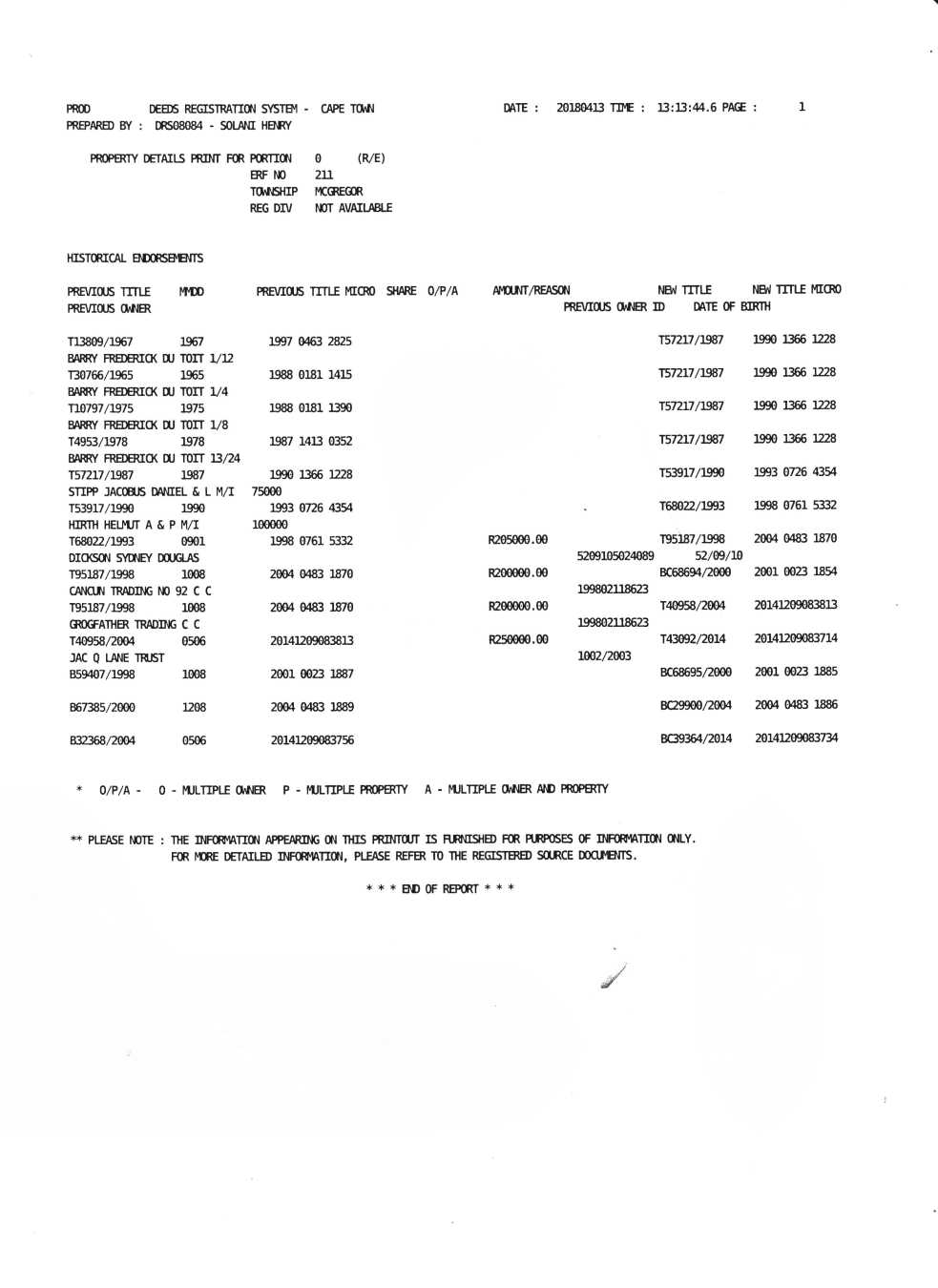
<p>At some point the hotel passed out of the Barry family and into the hands of a lawyer based in Bonnievale. By 1988 it was being run by Dawn Meerholz, though she gave it up after about a year. Around the same time, the bar was kept by an elderly, taciturn man known simply as Piet, who lived upstairs and stayed on until about 1990.</p>
<p>In 1991, the hotel was bought by Inge and Arnold Nauhaus, who renamed it McGregor Haus and ran a well-regarded restaurant there — both contributed recipes to a village recipe book produced that same year. Ownership then passed to Syd Dixon, under whom the business leaned more towards a liquor store than a hotel. Two women, Dianne and Jill — known locally as the Wiccan, or White Witch — helped him run the place, and the three of them later joined newcomer Pat Werdmuller to help establish a local SPCA, carrying out animal rescue and clinic work in the village. Syd subdivided the property and built the bottle store behind the hotel, which he then ran separately.</p>
<p>The next owners, Peter Friend and his wife, converted the old bar area into a grocery shop, while Mrs Friend became known for making and selling excellent fish and chips. After the Friends, the building became home to the Jack and Grape restaurant, run by Margie Deegan, who still lives in McGregor today.</p>
<h2 id="mcetoc_1k2kni8166s">McGregor Village Inn, and Stone River Today</h2>
<p>Somewhere along this long line of owners and names — from Over Den Berg to McGregor Haus to the Jack and Grape — the building eventually settled into its more recent identity as the McGregor Village Inn, the name still used for the building as a whole. Today, its pub is known as Stone River, the latest chapter in a building that has spent well over a century changing shape and name while remaining, in one form or another, at the very centre of village life.</p>
</article>
            ]]>
        </content>
    </entry>
    <entry>
        <title>McGregor under Apartheid</title>
        <author>
            <name>Stone River</name>
        </author>
        <link href="https://mcgregorvillage.co.za/mcgregor-under-apartheid/index.html"/>
        <id>https://mcgregorvillage.co.za/mcgregor-under-apartheid/index.html</id>
        <media:content url="https://mcgregorvillage.co.za/media/posts/42/History-McGregor-Under-Apartheid-hero.jpg" medium="image" />
            <category term="Local History"/>

        <updated>2026-09-10T10:33:10+02:00</updated>
            <summary type="html">
                <![CDATA[
                        <img src="https://mcgregorvillage.co.za/media/posts/42/History-McGregor-Under-Apartheid-hero.jpg" alt="" />
                    A Village Divided: Apartheid-Era Segregation in McGregor For all its charm, McGregor’s&hellip;
                ]]>
            </summary>
        <content type="html">
            <![CDATA[
                    <p><img src="https://mcgregorvillage.co.za/media/posts/42/History-McGregor-Under-Apartheid-hero.jpg" class="type:primaryImage" alt="" /></p>
                <article>
<div class="post__toc">
<h3>Table of Contents</h3>
<ul>
<li><a href="#mcetoc_1k2knbapm33">A Village Divided: Apartheid-Era Segregation in McGregor</a>
<ul>
<li><a href="#mcetoc_1k2knbapm34">Two McGregors, One Village</a></li>
<li><a href="#mcetoc_1k2knbapm35">Page’s Halt: A Small Victory</a></li>
<li><a href="#mcetoc_1k2knbapm36">Land, Inheritance and Loss</a></li>
<li><a href="#mcetoc_1k2knbapm37">Faith and Learning Along the Lines</a></li>
<li><a href="#mcetoc_1k2knbapm38">Separate Bars at the Village Inn</a></li>
<li><a href="#mcetoc_1k2knbapm39">Living Around the Lines</a></li>
<li><a href="#mcetoc_1k2knbapm3a">A Legacy Still Being Addressed</a></li>
</ul>
</li>
</ul>
</div>
<h1 id="mcetoc_1k2knbapm33">A Village Divided: Apartheid-Era Segregation in McGregor</h1>
<p>For all its charm, McGregor’s history carries the same scars as almost every other town in South Africa: for much of the twentieth century, the village was shaped and divided by law according to race. The story of that division — and of how the community lived around it — is a part of McGregor’s past worth remembering alongside its cottages and orchards.</p>
<h2 id="mcetoc_1k2knbapm34">Two McGregors, One Village</h2>
<p>Like most small towns in the Western Cape, McGregor was physically split into racially demarcated areas under apartheid-era planning rules. The area along Voortrekker Road, toward the west of the village, was set aside for white residents, while the area at the eastern entrance to the village was designated for the coloured community. It was a layout imposed from above rather than one the village had organically grown into — part of a planning pattern repeated in towns across the country wherever the old Group Areas Act took hold. The legacy of that artificial split is still visible in the village today, in subtler ways than a map of two areas might suggest — in where newcomers to McGregor tend to settle versus where long-time families remain, and in the presence of what locals still call the “skeems”: the old government housing schemes built to house people who were relocated under the Act.</p>
<h2 id="mcetoc_1k2knbapm35">Page’s Halt: A Small Victory</h2>
<p>Not every family accepted the Group Areas Act without a fight. Behind a white boundary wall in the village stand two houses; the one with a slightly crooked gable is still known locally as Page’s Halt. The Page family living there in the 1950s were told, like so many others, that they would have to leave and move to the eastern side of the village because they were classified as Coloured under the Population Registration Act. But one family member happened to work at the time in the very government department responsible for the reclassification, and was able to have the family’s name struck from the removal list. The house has remained in Page family hands ever since — a rare, small victory against a law built to make such victories impossible, and a piece of the village’s history now kept alive through local walking tours of the old part of town.</p>
<h2 id="mcetoc_1k2knbapm36">Land, Inheritance and Loss</h2>
<p>The effects went beyond where people were allowed to live. Heritage researchers who studied McGregor in the early 1990s noted that large portions of land had been taken from residents under the Group Areas Act, and that families designated “Coloured” often couldn’t pass property down to their children at all: on the owner’s death, the land was simply auctioned off. Compared to many other towns, McGregor saw relatively few forced removals in the dramatic sense — but the slower erosion of land ownership through inheritance law left its own lasting mark on who owned what in the village, an imbalance still felt in the pattern of ownership today.</p>
<h2 id="mcetoc_1k2knbapm37">Faith and Learning Along the Lines</h2>
<p>Religious and educational life reflected the same divide. While the Dutch Reformed congregation — served for forty years by Rev. Andrew McGregor, after whom the village is named — met in its own church, the Methodist church served as the local school for the coloured community during the week and as a place of worship on weekends. Many families in what is still known as the Ou Dorp trace their roots directly back to parents and grandparents who grew up attending that school, some of whom — the Damon family among them — were noted local herbalists as well.</p>
<h2 id="mcetoc_1k2knbapm38">Separate Bars at the Village Inn</h2>
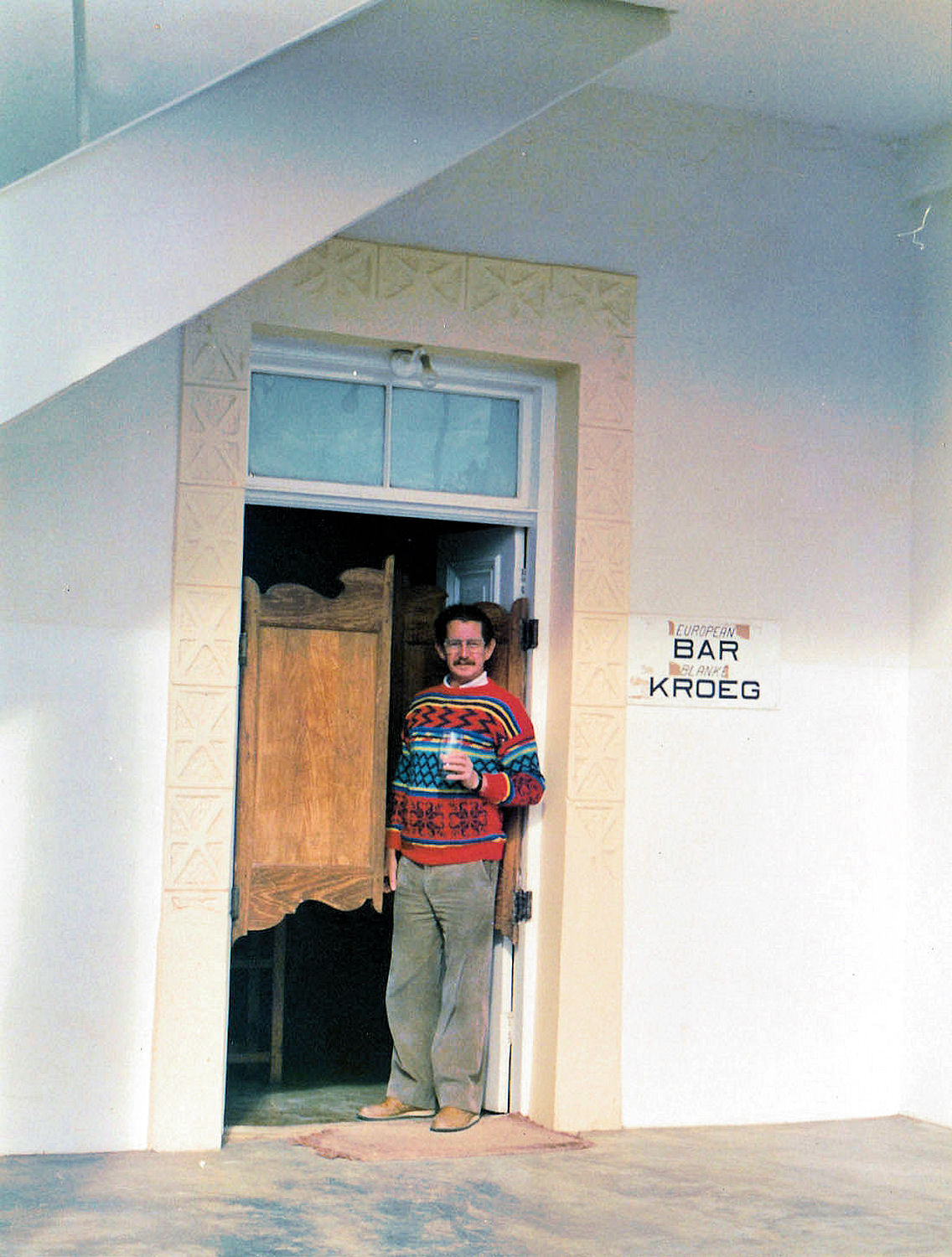
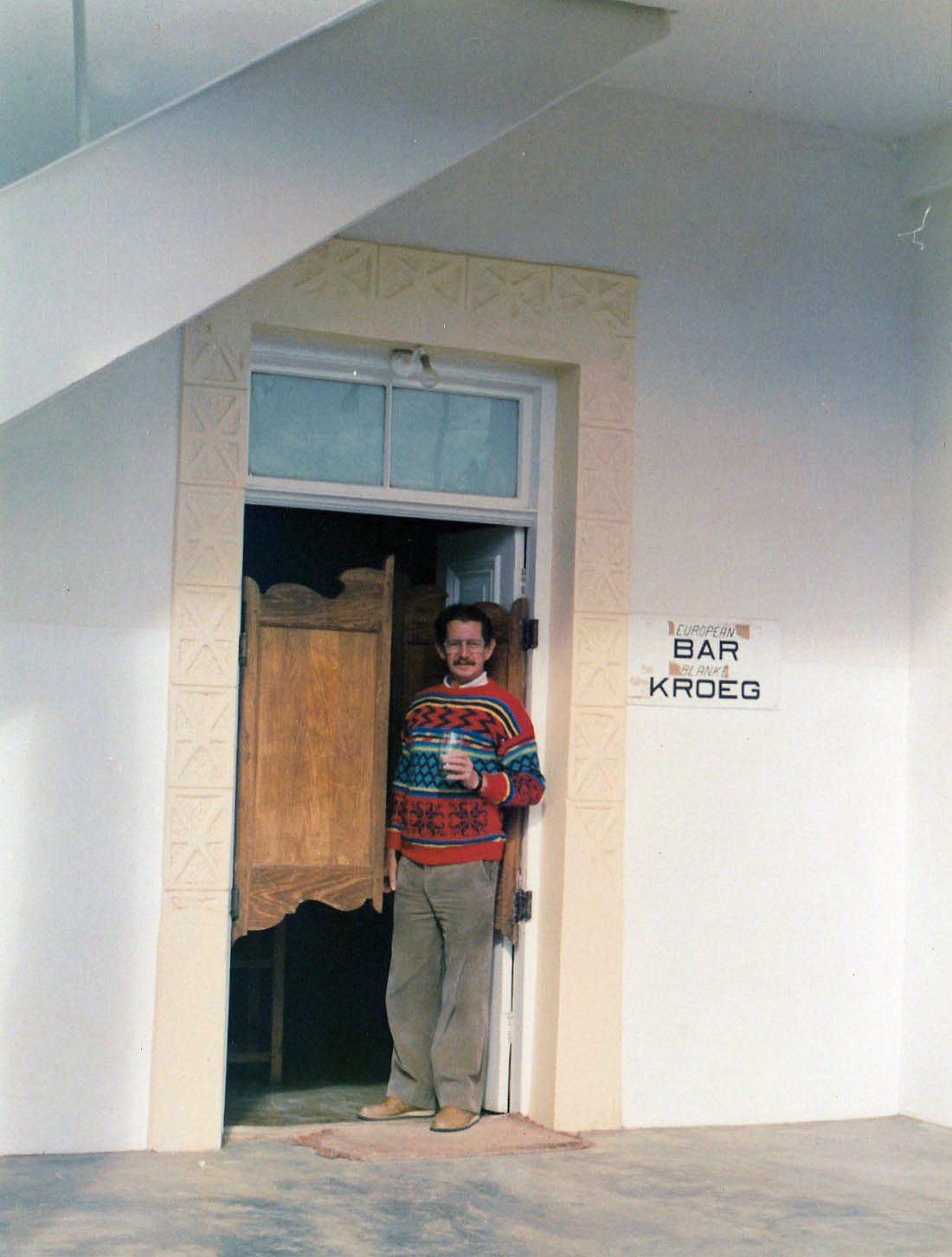
<figure class="post__image post__image--right"><img loading="lazy"  src="https://mcgregorvillage.co.za/media/posts/42/History-hotel.jpg" alt="Whites only at entrance to pub" width="272" height="359" sizes="(max-width: 1024px) 100vw, 1024px" srcset="https://mcgregorvillage.co.za/media/posts/42/responsive/History-hotel-xs.jpg 300w ,https://mcgregorvillage.co.za/media/posts/42/responsive/History-hotel-sm.jpg 480w ,https://mcgregorvillage.co.za/media/posts/42/responsive/History-hotel-md.jpg 768w ,https://mcgregorvillage.co.za/media/posts/42/responsive/History-hotel-lg.jpg 1024w"></figure>The old McGregor Village Inn, which has stood at the heart of the village since it became a hotel in 1936, carried its own version of the same divide. By local recollection, the section of the building that today houses a corner shop was once reserved for white patrons, while a separate bar around the back served coloured customers — and, in a further layer of separation, there was even a third bar set aside for white women only. The lines between them weren’t always respected: as the story is told locally, after a few drinks men would sometimes wander from the back bar into the white one, and the arguments that followed would spill out of the building and into the street.</p>
<h2 id="mcetoc_1k2knbapm39">Living Around the Lines</h2>
<p>Even so, the picture on the ground was not always as rigid as the law demanded. People who grew up in the village in the 1980s recall a place that, in practice, often blurred the boundaries apartheid tried to draw — wandering freely between areas and using facilities, like the village library, that were technically off-limits under the law, seemingly without anyone making an issue of it. Daily rhythms nonetheless bore the marks of the system: many men left the village to find work in Robertson, Worcester or Ashton, often away for the working week, while basics like electricity did not reach parts of the village until the early 1990s, and children had to travel out of McGregor entirely to finish their final year of school until McGregor Primary School was built.</p>
<h2 id="mcetoc_1k2knbapm3a">A Legacy Still Being Addressed</h2>
<p>By the time heritage practitioners returned to study McGregor in the early 1990s, the imprint of this history was impossible to ignore. Their planning work acknowledged the legacy of the Group Areas Act only briefly, and looking back on it decades later, those involved have suggested that this part of McGregor’s past deserves far more attention than it has received — both in how the village’s heritage is told, and in how future planning decisions try to build trust and benefit across the whole community.</p>
<p><em> Sources: Marshallene Harris, “Childhood memories of the village of McGregor”; Jane Banks, “McGregor stories: From historical records and my memories”; and Karin Dugmore-Ström, “Conservation by Todeschini and Japha 1993” — all in <em>McGregor Workshop: New Design in a Historic Context</em> (Vernacular Architecture Society of South Africa, 2021); and a local audio walking tour of McGregor’s historic streets, on the story of Page’s Halt. </em></p>
</article>
            ]]>
        </content>
    </entry>
    <entry>
        <title>An Introduction to McGregor&#x27;s History</title>
        <author>
            <name>Stone River</name>
        </author>
        <link href="https://mcgregorvillage.co.za/mcgregors-history/index.html"/>
        <id>https://mcgregorvillage.co.za/mcgregors-history/index.html</id>
        <media:content url="https://mcgregorvillage.co.za/media/posts/41/History-McGregors-History-hero.jpg" medium="image" />
            <category term="Local History"/>

        <updated>2026-09-09T12:24:47+02:00</updated>
            <summary type="html">
                <![CDATA[
                        <img src="https://mcgregorvillage.co.za/media/posts/41/History-McGregors-History-hero.jpg" alt="" />
                    A Brief History of McGregor Legend has it that parents in the&hellip;
                ]]>
            </summary>
        <content type="html">
            <![CDATA[
                    <p><img src="https://mcgregorvillage.co.za/media/posts/41/History-McGregors-History-hero.jpg" class="type:primaryImage" alt="" /></p>
                <article>
<div class="post__toc">
<h3>Table of Contents</h3>
<ul>
<li><a href="#mcetoc_1k2knbqhu3n">A Brief History of McGregor</a>
<ul>
<li><a href="#mcetoc_1k2knbqhu3o">A Village Shaped by Isolation</a></li>
<li><a href="#mcetoc_1k2knbqhu3p">From Lady Grey to McGregor</a></li>
<li><a href="#mcetoc_1k2knbqhu3q">Preserving the Past</a>
<ul>
<li>
<ul>
<li><a href="#mcetoc_1k2knbqhu3r">The McGregor Heritage Society</a></li>
<li><a href="#mcetoc_1k2knbqhu3s">The McGregor Museum</a></li>
</ul>
</li>
</ul>
</li>
</ul>
</li>
</ul>
</div>
<h1 id="mcetoc_1k2knbqhu3n">A Brief History of McGregor</h1>
<p>Legend has it that parents in the Breede Valley once admonished their errant children with, “Behave, or I’ll send you to McGregor!” Whatever truth lies behind the story, there’s no denying that McGregor has always been a little different — and all the better for it.</p>
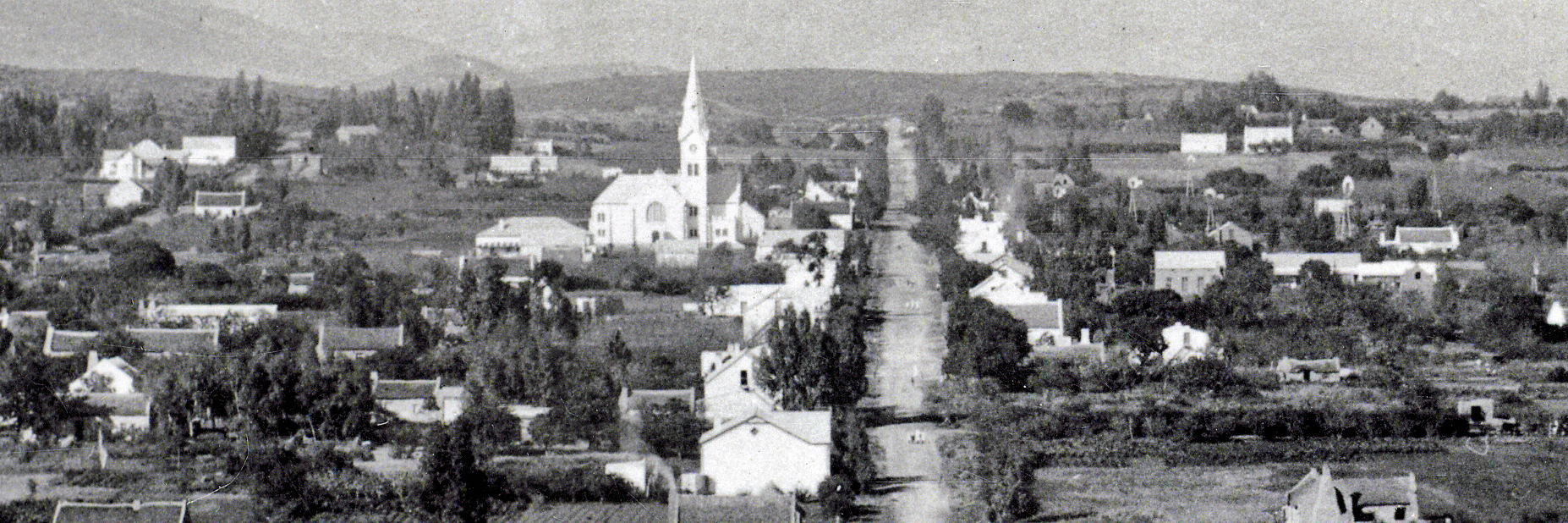
<p>Tucked at the foot of the Riviersonderend Mountains, 20 km from Robertson along a good tarred road, McGregor is widely regarded as the best-preserved and most complete example of a mid-nineteenth-century town in the Cape. Its whitewashed, thatched cottages line quiet streets, hemmed in by mountains, wildlife and wine estates — a setting that has earned it a reputation as one of the true jewels of the Western Cape.</p>
<h2 id="mcetoc_1k2knbqhu3o">A Village Shaped by Isolation</h2>
<p>A dirt road connects McGregor to the N2 via the Stormsvlei Pass, but the tar ends just beyond the village, near the start of the well-known McGregor-to-Greyton hiking trail over the Boesmanskloof Pass. It is this sense of physical isolation that has done more than anything to preserve the village’s nineteenth-century architecture. McGregor shares the climate of the Little Karoo: hot in summer, and cool to freezing in winter, when rain — and occasionally a dusting of snow on the surrounding hills — is not uncommon.</p>
<p>It was the quality of the farming land that first drew settlers to the area in the late 1700s. A handful of houses were built in the early 1800s, some serving as informal churches (a terrace of three, known as ‘Die Trein’, still stands in Voortrekker Street), others housing laborers, millers and a whip-maker.</p>
<h2 id="mcetoc_1k2knbqhu3p">From Lady Grey to McGregor</h2>
<p>The village was only officially proclaimed in 1862, when it was divided into two-and-a-half-hectare plots. By 1905, all the land had been bought up by nineteen smallholders and farmers, whose names are recorded on a map now held in the McGregor Museum. An advertising poster from the time of the original auction claimed, rather optimistically, that the main road from the north to Cape Town would pass through the village. Neither that road nor the planned mountain route to Greyton through the Boesmanskloof Pass ever materialized — and the village has retained its peaceful, unhurried character ever since, its thatched cottages framed by vines, apricot trees and olive groves.</p>
<p>The settlement was originally named Lady Grey, a name it inconveniently shared with another town in the Eastern Cape, much to the confusion of the postal service. In 1904, the congregation of the Dutch Reformed Church chose to rename their parish and new church in Voortrekker Street after their much-loved former pastor, the Rev. Andrew McGregor, who had recently retired after forty years of service in Robertson. Two years later, in April 1906, the authorities — no doubt relieved to resolve the naming confusion — gazetted the official change to McGregor, a name that also happens to belong to one of the oldest and most honorable of the Scottish clans.</p>
<h2 id="mcetoc_1k2knbqhu3q">Preserving the Past</h2>
<h4 id="mcetoc_1k2knbqhu3r"><a href="#non-existing-post-with-id-20">The McGregor Heritage Society</a></h4>
<p>The McGregor Heritage Society exists to safeguard this legacy, promoting conservation awareness and continuing the development of the surrounding nature reserve. Unfortunately, preservation isn't always successful and the beautiful weathered ruins of the original post office and other buildings were bulldozed by a landowner a few years ago. Pictures of what was once there can be seen on our <a href="https://mcgregorvillage.co.za/mcgregors-post-office/index.html">McGregor's Post Office</a> page.</p>
<h4 id="mcetoc_1k2knbqhu3s"><a href="https://mcgregorvillage.co.za/the-mcgregor-museum/index.html">The McGregor Museum</a></h4>
<p>Its work is complemented by the McGregor Museum, housed alongside the Tourism Office in the National Monument building on Voortrekker Street. Run informally by a dedicated group of volunteers — first organized under the leadership of Helaine Shand, whose own family ties to the village stretch back to the nineteenth century — the museum holds documents, letters, title deeds and artifacts relating to the area’s history from the late 1700s onward, including transcriptions of long-running water-rights disputes fought in the courts by the area’s pioneering farmers. Donations and loans of historical material are always welcome.</p>
</article>
            ]]>
        </content>
    </entry>
    <entry>
        <title>The Kampterrein</title>
        <author>
            <name>Stone River</name>
        </author>
        <link href="https://mcgregorvillage.co.za/the-kampterrein/index.html"/>
        <id>https://mcgregorvillage.co.za/the-kampterrein/index.html</id>
        <media:content url="https://mcgregorvillage.co.za/media/posts/40/History-Kampterrein-hero.jpg" medium="image" />
            <category term="Local History"/>

        <updated>2026-09-09T12:23:02+02:00</updated>
            <summary type="html">
                <![CDATA[
                        <img src="https://mcgregorvillage.co.za/media/posts/40/History-Kampterrein-hero.jpg" alt="" />
                    The Kampterrein: A History of the McGregor Secondary School Long before it&hellip;
                ]]>
            </summary>
        <content type="html">
            <![CDATA[
                    <p><img src="https://mcgregorvillage.co.za/media/posts/40/History-Kampterrein-hero.jpg" class="type:primaryImage" alt="" /></p>
                <article>
<div class="post__toc">
<h3>Table of Contents</h3>
<ul>
<li><a href="#mcetoc_1k2kn4j0r1l">The Kampterrein: A History of the McGregor Secondary School</a>
<ul>
<li><a href="#mcetoc_1k2kn4j0r1m">A Ward of the Robertson Parish</a></li>
<li><a href="#mcetoc_1k2kn4j0r1n">The School Commission Minutes</a>
<ul>
<li><a href="#mcetoc_1k2kn4j0r1o">Early Teachers</a></li>
</ul>
</li>
<li><a href="#mcetoc_1k2kn4j0r1p">Life in the Old School</a></li>
<li><a href="#mcetoc_1k2kn4j0r1q">Piecing the Timeline Together</a></li>
</ul>
</li>
</ul>
</div>
<h1 id="mcetoc_1k2kn4j0r1l">The Kampterrein: A History of the McGregor Secondary School</h1>
<div class="gallery-wrapper"><div class="gallery" data-is-empty="false" data-translation="Add images" data-columns="3">
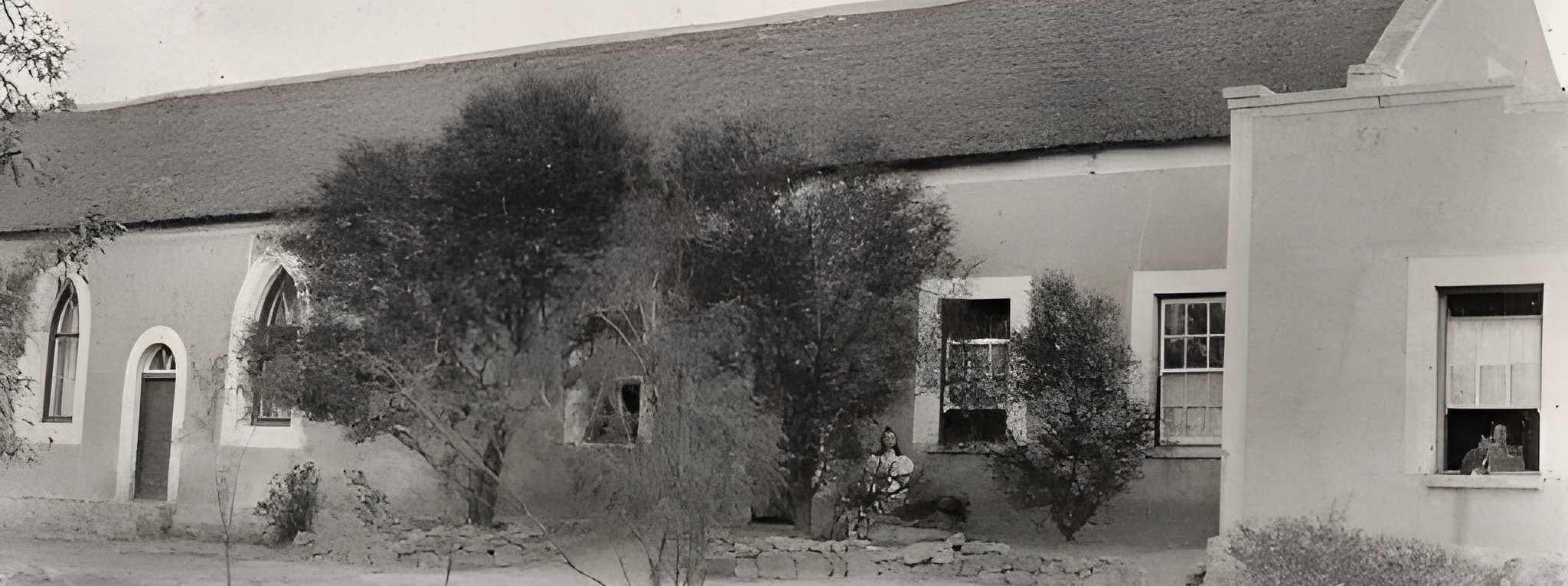
<figure class="gallery__item"><a href="https://mcgregorvillage.co.za/media/posts/40/gallery/History-Kampterrein-01.jpg" data-size="785x560"><img loading="lazy" src="https://mcgregorvillage.co.za/media/posts/40/gallery/History-Kampterrein-01-thumbnail.jpg" alt="" width="768" height="548"></a></figure>
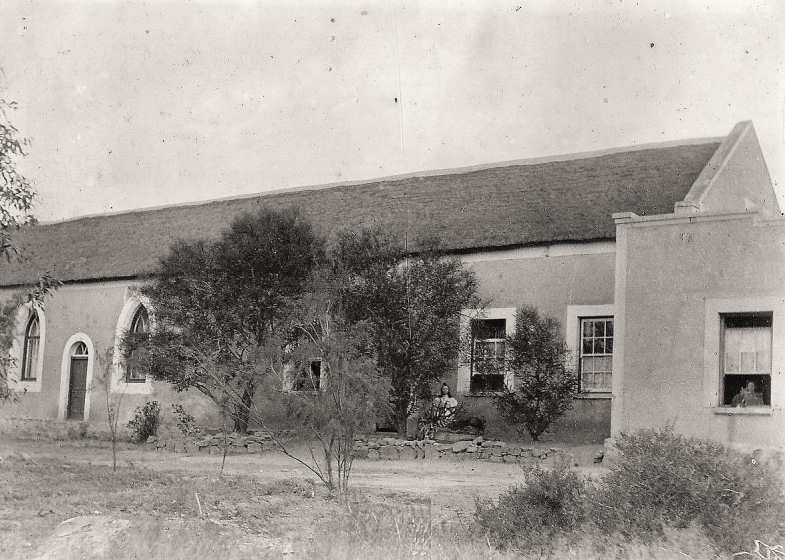
<figure class="gallery__item"><a href="https://mcgregorvillage.co.za/media/posts/40/gallery/History-Kampterrein-02.jpg" data-size="785x570"><img loading="lazy" src="https://mcgregorvillage.co.za/media/posts/40/gallery/History-Kampterrein-02-thumbnail.jpg" alt="" width="768" height="558"></a></figure>
</div></div>
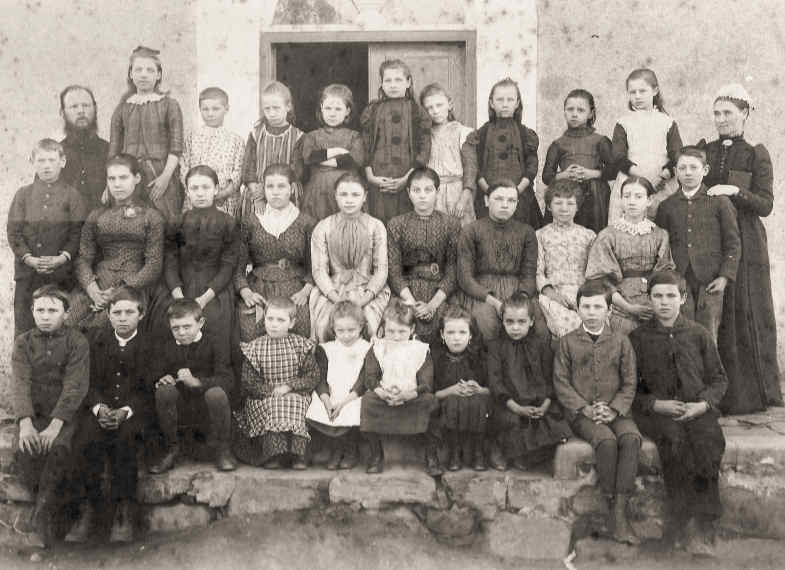
<p>Long before it became known as the Kampterrein, this site was home to the village’s first school — and, for many years, its church as well. Its story is closely bound up with that of the village itself, and much of what follows is drawn from “A History of the McGregor NG Congregation,” a Master of Theology thesis by L. W. Breytenbach of Stellenbosch University, along with the surviving minutes of the old Lady Grey School Commission.</p>
<h2 id="mcetoc_1k2kn4j0r1m">A Ward of the Robertson Parish</h2>
<p>In the settlement’s earliest days, the growing community on Over-den-Berg — as Lady Grey was then also known — did not build its own church, unlike its neighbor Robertson. Instead, it was absorbed as a ward of the Nederduitse Gereformeerde parish of Robertson, and its spiritual needs were met, at first, by visiting clergy: the substitute minister Rev. W. Robertson of Swellendam, followed by Rev. C. H. de Smidt, Robertson’s first resident minister. From 1862, that role fell to Rev. Andrew McGregor — the man after whom the village would later be named. Because the Robertson parish was so large, McGregor could not visit Lady Grey often, and much of the day-to-day pastoral care fell instead to missionaries, chief among them Rev. Stephan Weich.</p>
<p>Breytenbach’s thesis notes that this arrangement placed a real burden on the community’s poorer members, who often lacked the transport or the means to travel to Robertson for services or confirmation classes. Over time, this hardship fed a growing desire among the Lady Grey congregation to break away and form a parish of their own.</p>
<blockquote cite="A History of the McGregor NG Congregation, L. W. Breytenbach">
<p>“The first step taken was to nominate seven ‘Direkteure of the Lady Grey Ward’ at a meeting held on 10 March 1901. These seven members — all of whom would later serve on the first church council of the new parish — were tasked with preparing the way for separation, a duty they carried out with dedication.”</p>
</blockquote>
<p>On the practical side, the fledgling parish already had land to build on: two erven donated by A. P. Brönn and earlier secured for church use by Rev. Weich. The seven directors also personally guaranteed the new minister’s salary for the first three years. Beyond these responsibilities, the new church council’s first task was to negotiate with the school commission over the shared use of school property. The two bodies eventually agreed that the church would have full use of the school hall, in exchange for paying half the building’s rates and taxes, and that the church council could use one room of the teacher’s house as a vestry, on condition that it built a replacement room for the teacher in its place. These negotiations set the tone for what would become a long and cooperative relationship between the church and the school in Lady Grey — soon to be renamed McGregor.</p>
<h2 id="mcetoc_1k2kn4j0r1n">The School Commission Minutes</h2>
<p>The school itself predates the parish split by several decades. Its commission’s surviving minutes open on 1 August 1867, with a meeting called to welcome a new teacher, Mr. Livesly. At that meeting, the commission agreed to buy the land the school stood on, along with its buildings, from Mr. J. P. van Reenen for £120. The property comprised four erven, two of which carried water rights, and the commission undertook to pay 6% interest on the purchase price from 1 January 1868. Rev. Andrew McGregor chaired the meeting, with the teacher acting as secretary.</p>
<p>A further meeting on 15 August raised nothing of great importance, but by 2 October the boundary beacons for the school land were being checked, and a committee of local residents — Messrs. S. Malherbe, J. F. Wessels, P. D. Geldenhuis, C. J. du Toit and F. J. de Wet — was appointed to see the purchase through. At a special meeting on 25 January 1868, the commission resolved to hold a country bazaar on 15 February to help raise the purchase price, and by 30 June, Rev. McGregor was able to report that he had written to Mr. van Reenen requesting the title deeds be delivered on 1 August, when the full amount would be paid. By then, £25 had already been collected, with a further £80 borrowed from a Mr. Erasmus to cover the rest. Yet by the end of August, no title deeds had arrived.</p>
<p>The matter dragged on for years. It was only on 17 December 1873 that the commission returned to the purchase in earnest, prompted by a letter from Mr. D. J. van Reenen — son of the original seller, who had since come of age. The commission decided that no further interest would be charged after the end of that year, given that no title deed had yet been produced. It wasn’t until 19 August 1874 that Rev. McGregor could finally announce that the deed had been received, and that he had settled the outstanding amount in full — £160, principal and interest together — with Mr. van Reenen.</p>
<p>With the land finally secured, the commission moved on to improvements. On 16 December 1875, it resolved to build a new residence for the teacher along with a new school building, both of which were completed by the contractor, Mr. A. J. Schoonwinkel, in September 1876.</p>
<h3 id="mcetoc_1k2kn4j0r1o">Early Teachers</h3>
<p>Mr. Livesly, welcomed in August 1867, remained at the school until the end of 1874, when he left for Mossel Bay. His successor, Mr. J. A. de Schmidt, served until the end of March 1884. A Mr. Collins of Graaff-Reinet was then chosen, on 29 March 1884, but never took up the post; the position went instead to Mr. Weich of Stellenbosch.</p>
<h2 id="mcetoc_1k2kn4j0r1p">Life in the Old School</h2>
<p>A vivid picture of daily life at the school survives in two student essays: one by van der Sandt de Villiers, formerly of Standard VI and son of the school’s headmaster, and another by A. van Reenen, formerly of Standard 5, published in the 1938 school yearbook.</p>
<blockquote cite="A. van Reenen, McGregor Secondary School Yearbook, 1938">
<p>“The school was formerly the [wine] cellar of the farm, and it had an earthen floor. The desks were large stumps over which planks were placed. Every Saturday, two girls had to smear the floor of the building [with cow dung], and two boys had to fetch water and scrub the desks.”</p>
</blockquote>
<p>A new teacher’s residence and school building followed later. Religious services continued to be held in the school hall, and when the time came to build a separate school building, some in the community suggested simply enlarging the old school hall for use as a church instead. The idea proved unpopular: most residents preferred a purpose-built church, and the disagreement was eventually settled by circulating two separate collection lists — one for enlarging the school hall, the other for a new church. When the lists were presented to the church council, the school-hall list had raised nothing, while the church list had raised £1,700. The new church was built, and together with its pews and organ came to cost around £8,650; the manse followed later, funded partly by a £500 donation from Mr. C. Payne. Rev. Weber served as the first minister of the new church.</p>
<p>The same yearbook’s headmaster’s report records that the school had by then designed its own crest, bearing the motto “Always Higher.”</p>
<h2 id="mcetoc_1k2kn4j0r1q">Piecing the Timeline Together</h2>
<p>Taken together, the records suggest a fairly clear sequence of events: the school began operating in August 1867, initially in a converted cellar with distinctly rough-and-ready facilities. The teacher’s residence and a proper school building followed only later — and since the hall and the residence form part of the same structure, they were most likely completed together in 1876, a date consistent with the one carved into the gable of the hall. That inscription is not, in fact, the school motto, but a phrase in Hebrew carrying a religious message — fitting, given that the hall continued to double as a place of worship for roughly another twenty-five years. The date on the gable also lines up neatly with the paper trail: the commission only took formal transfer of the property in August 1874, after which the new school and teacher’s house — two separate buildings — were built, following the December 1875 decision to proceed, and delivered in September 1876.</p>
<p><em> A file on the history of the school is held in the museum cabinet. </em></p>
</article>
            ]]>
        </content>
    </entry>
    <entry>
        <title>McGregor&#x27;s Post Office</title>
        <author>
            <name>Stone River</name>
        </author>
        <link href="https://mcgregorvillage.co.za/mcgregors-post-office/index.html"/>
        <id>https://mcgregorvillage.co.za/mcgregors-post-office/index.html</id>
        <media:content url="https://mcgregorvillage.co.za/media/posts/39/History-Post-Office-hero.jpg" medium="image" />
            <category term="Local History"/>

        <updated>2026-09-09T12:22:35+02:00</updated>
            <summary type="html">
                <![CDATA[
                        <img src="https://mcgregorvillage.co.za/media/posts/39/History-Post-Office-hero.jpg" alt="" />
                    The History of McGregor Post Office Over the years, the McGregor post&hellip;
                ]]>
            </summary>
        <content type="html">
            <![CDATA[
                    <p><img src="https://mcgregorvillage.co.za/media/posts/39/History-Post-Office-hero.jpg" class="type:primaryImage" alt="" /></p>
                <div class="post__toc">
<h3>Table of Contents</h3>
<ul>
<li><a href="#mcetoc_1k2kncdl243">The History of McGregor Post Office</a>
<ul>
<li><a href="#mcetoc_1k2kncdl244">The Locations Through the Years</a></li>
<li><a href="#mcetoc_1k2kncdl245">The First Post Office Ruins</a></li>
</ul>
</li>
</ul>
</div>
<h1 id="mcetoc_1k2kncdl243">The History of McGregor Post Office</h1>
<p>Over the years, the McGregor post office has operated from three different locations. In earlier times, alongside the church, the post office served as a vital focal point for village life. However, all of these former locations are now gone, with the the final working office being closed by postal authorities as a cost-cutting measure.</p>
<h2 id="mcetoc_1k2kncdl244">The Locations Through the Years</h2>
<p>McGregor's final full post office (version number three) was located on the corner of Kerk and Voortrekker Streets, directly across from the church. Its predecessor (version number two) operated a few doors down inside the little ACVV building.</p>
<h2 id="mcetoc_1k2kncdl245">The First Post Office Ruins</h2>
<p><strong>Please note that the ruins of the original site and other buildings have now been bulldozed by the landowner. </strong></p>
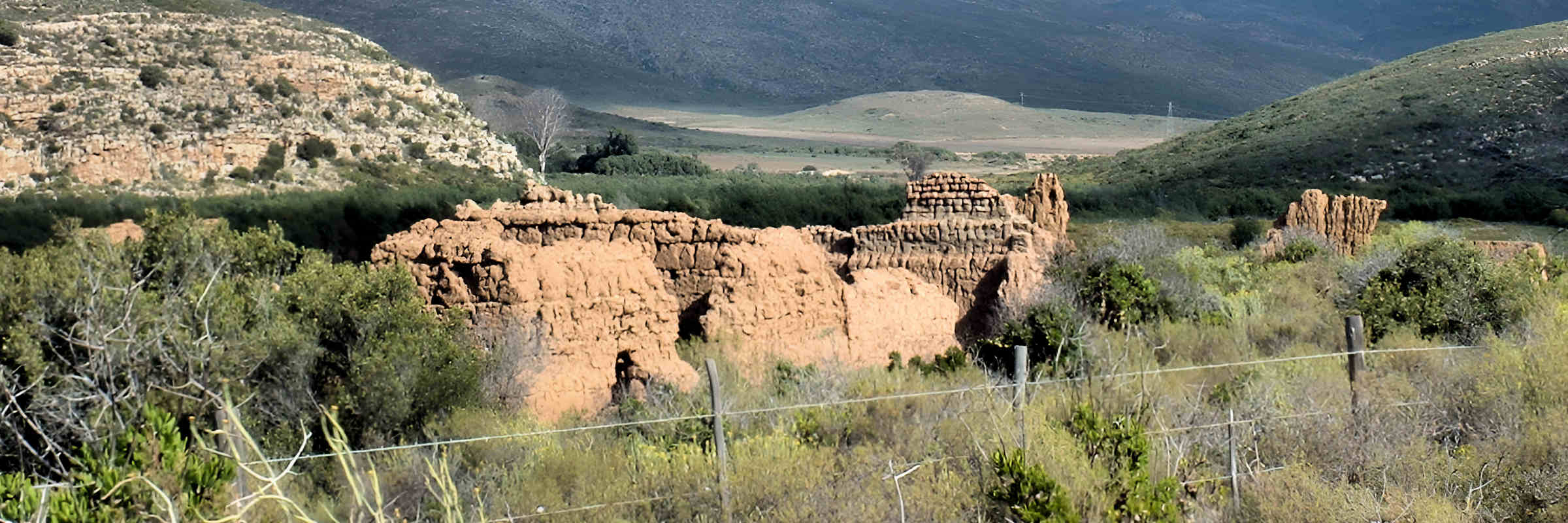
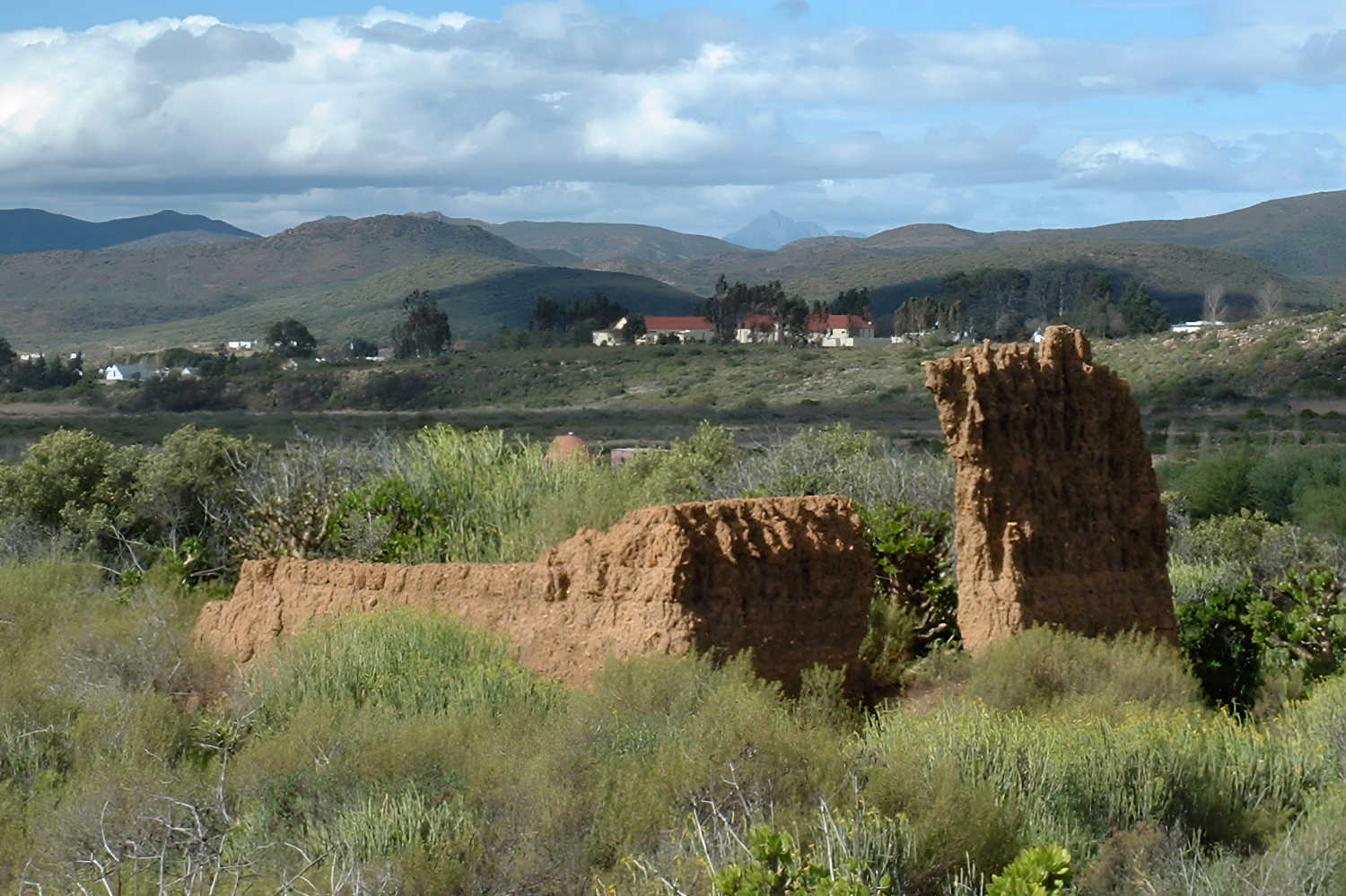
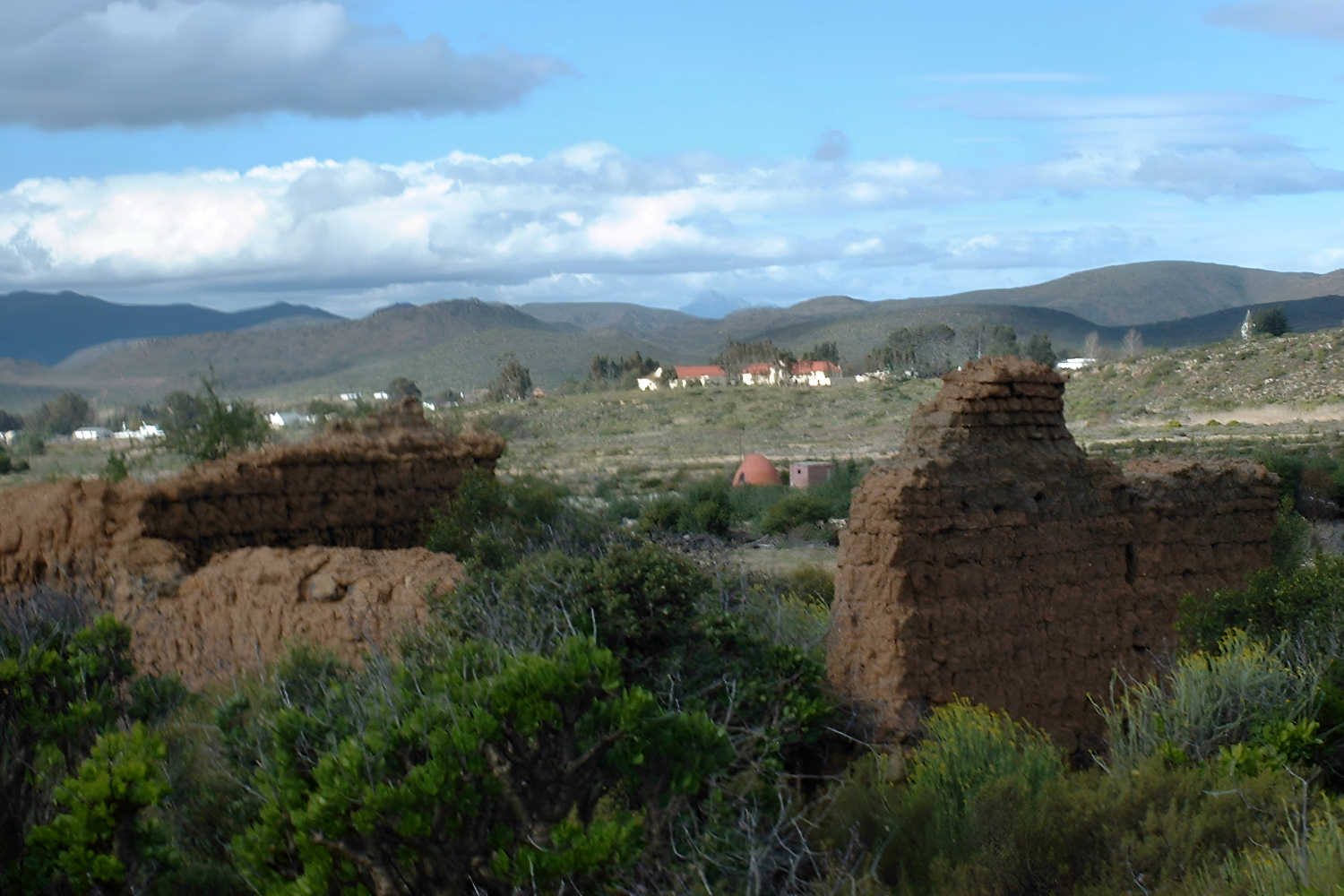
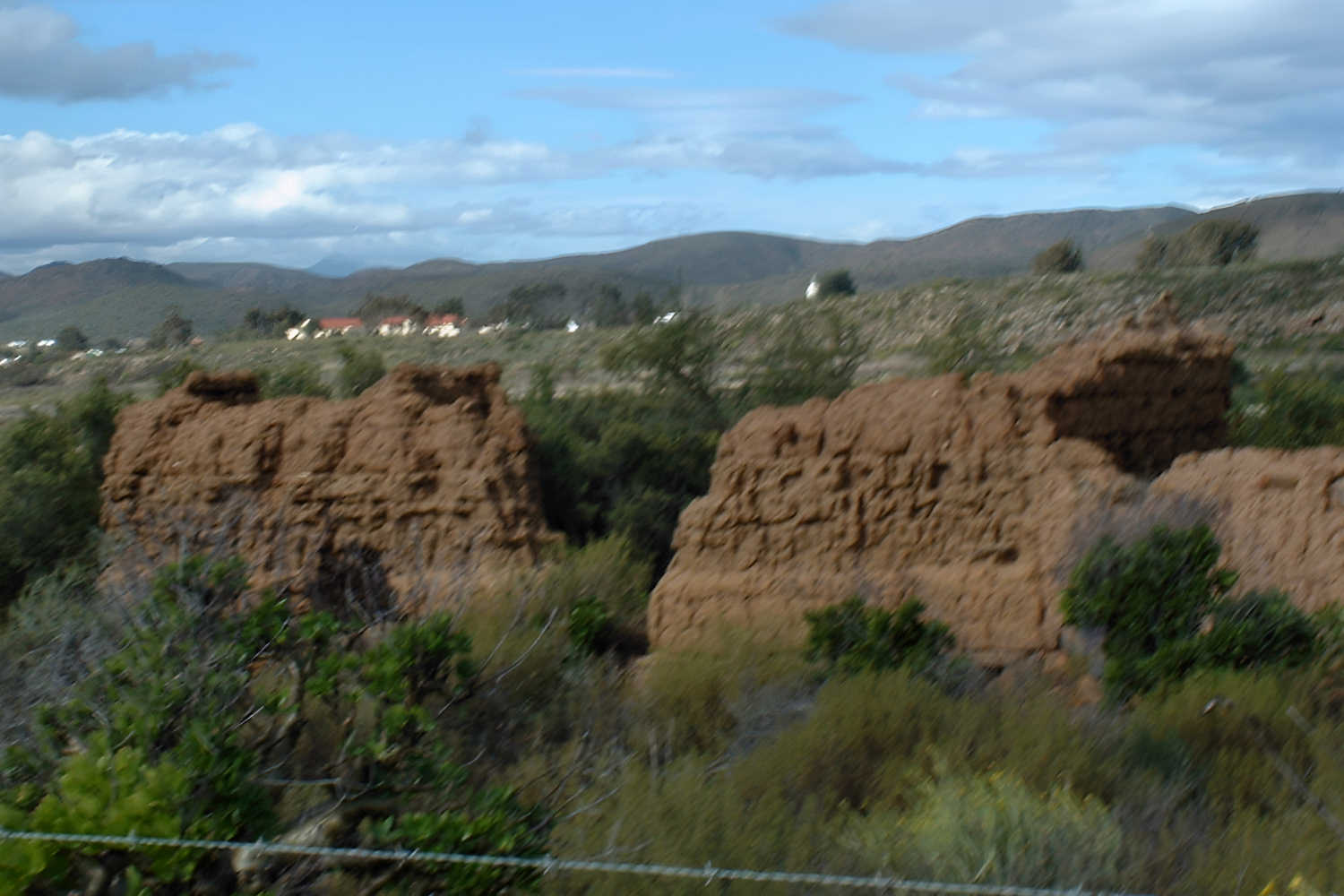
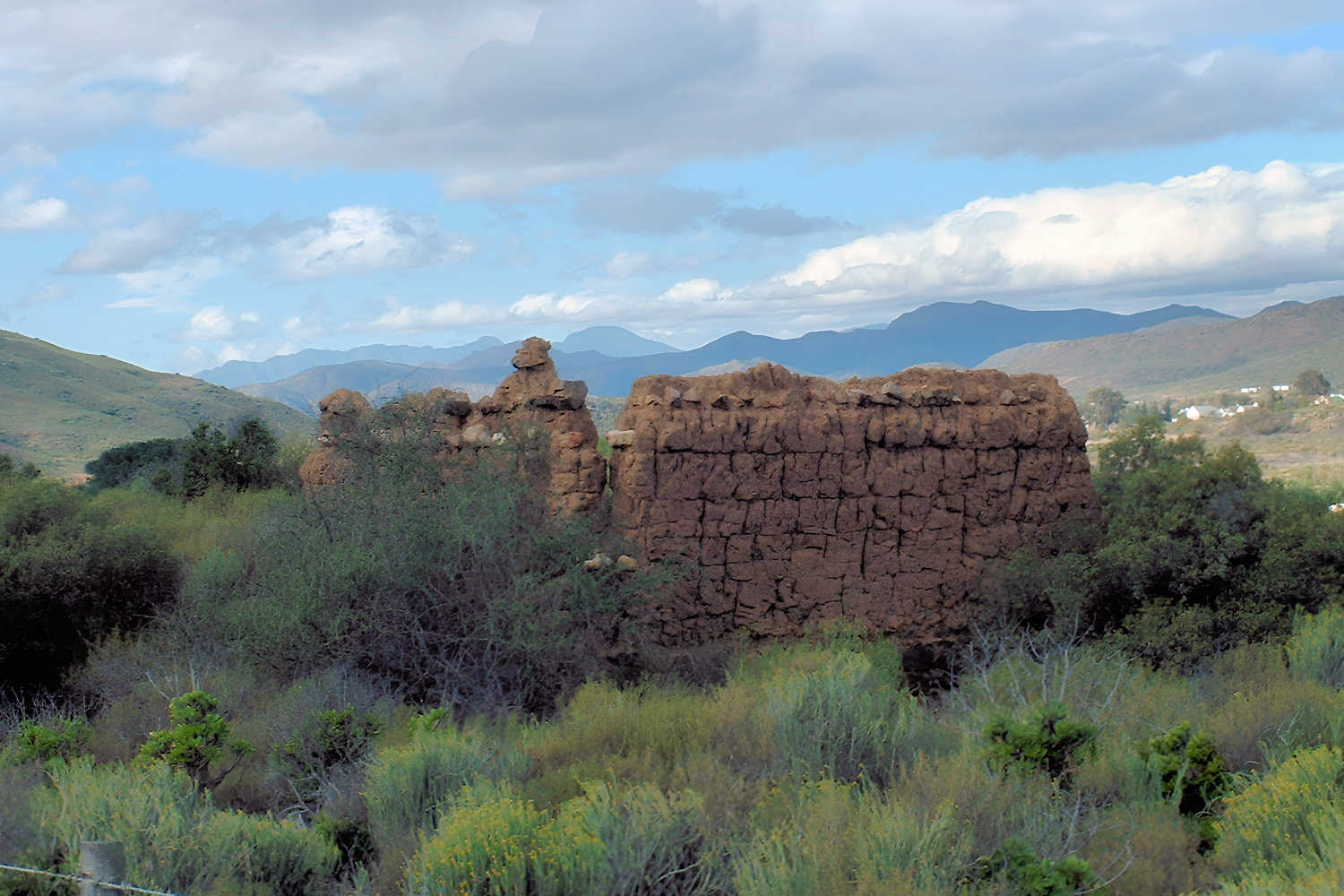
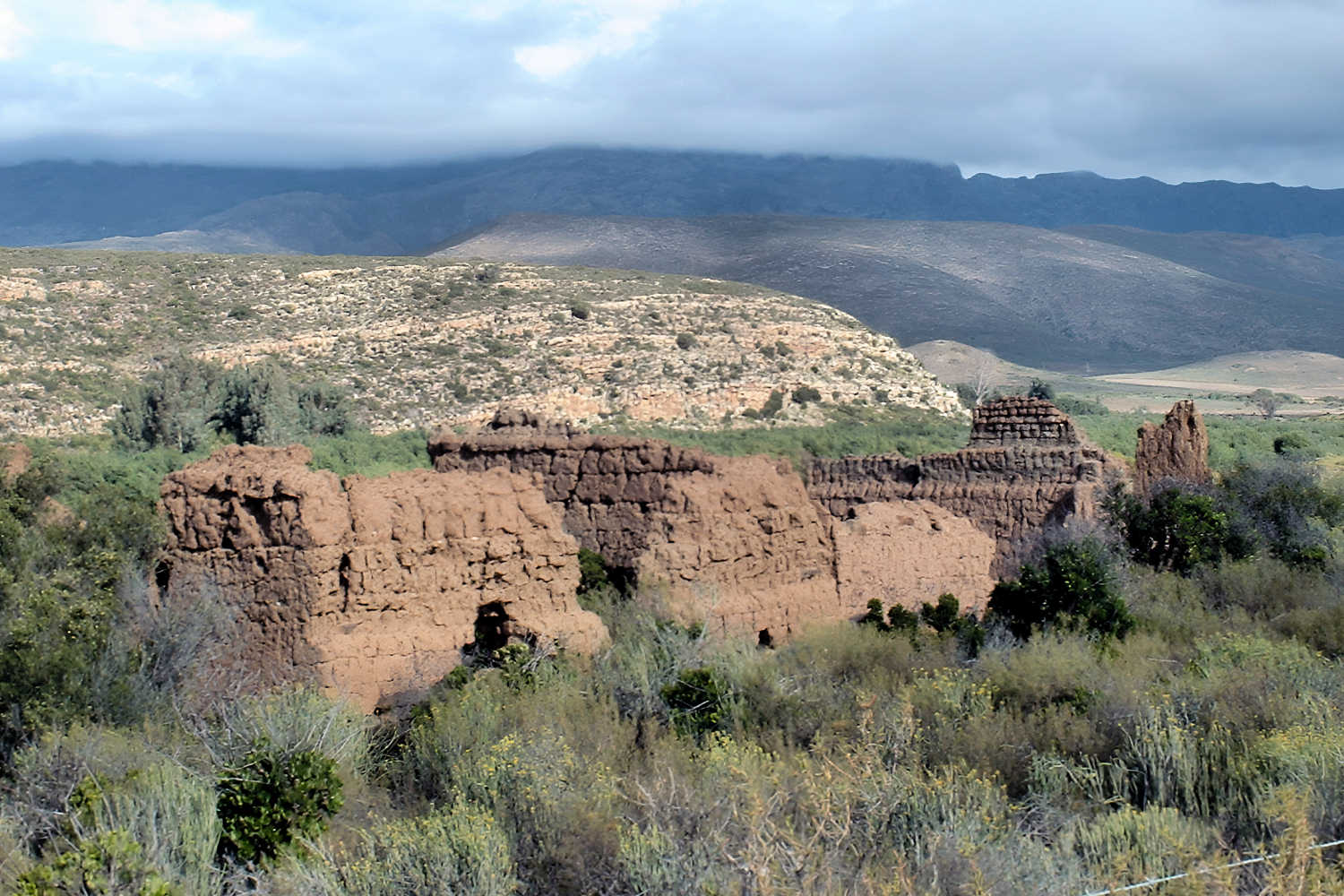
<p>The very first post office was situated about a kilometer north-west of present-day McGregor. Access to the site was via the old Robertson Road, across the Houtbaais River, following a dirt track through a municipal gate. Notably, absent-minded key custodians over the years left no fewer than eight disused locks hanging on this gate.</p>
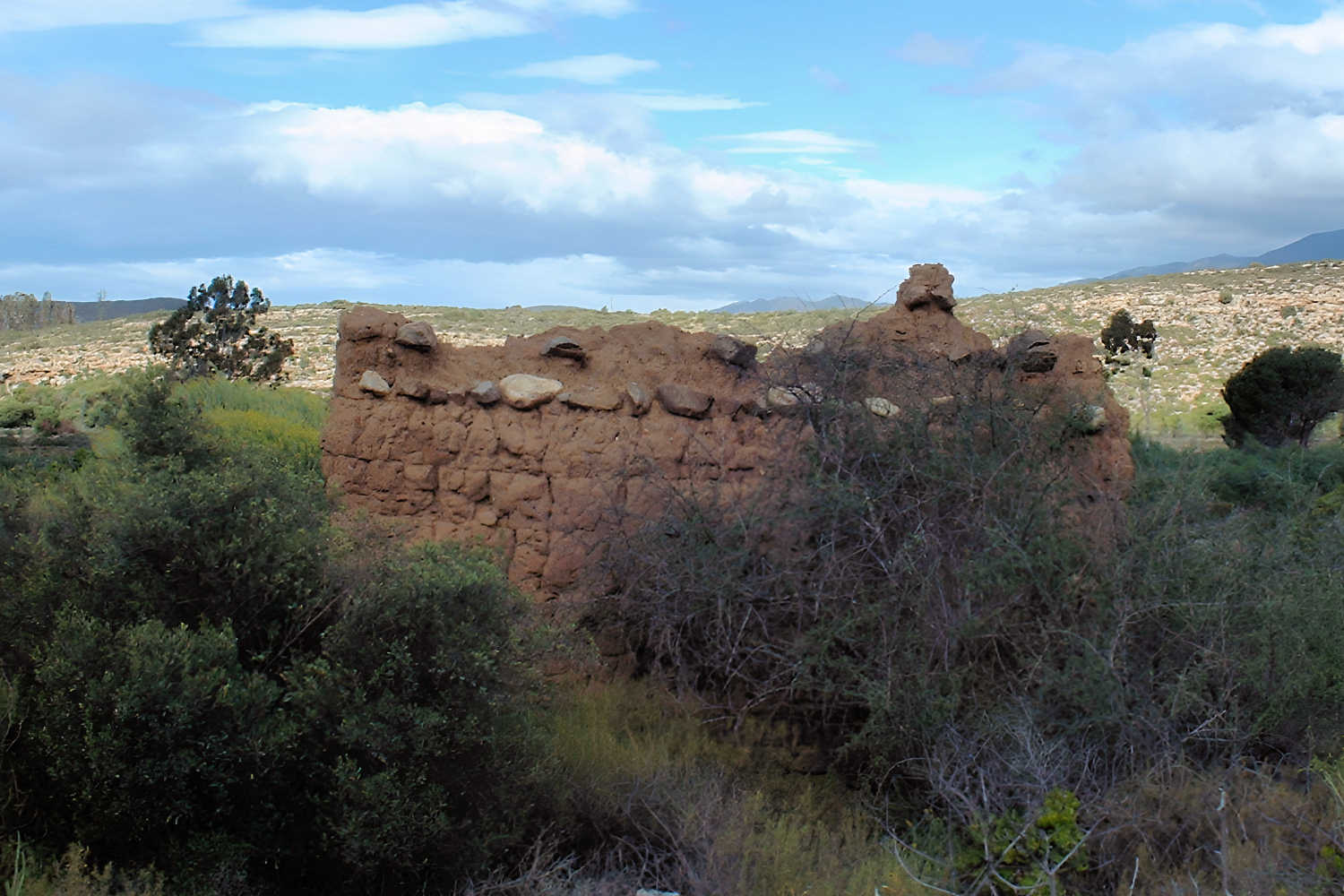
<p>The track led southwards onto the farm Ouplaas, passing the ruins of several small buildings constructed from unfired clay and stones. On the western side stood a larger oblong structure believed to be the area's first post office. Featuring an external skin of half-fired clay bricks, deep window embrasures, and walls embedded with river-rounded stones for structural support, all slowly crumbling under the sun, wind and incursions of grasses and bushes. A few deep window embrasures emphasised the thickness of the walls, and doves had moved into the numerous small holes in the brickwork - maybe this is where the term "pigeon hole" comes from!</p>
<div class="gallery-wrapper"><div class="gallery" data-is-empty="false" data-translation="Add images" data-columns="4">
<figure class="gallery__item"><a href="https://mcgregorvillage.co.za/media/posts/39/gallery/History-Post-Office-Ruins01.jpg" data-size="1500x999"><img loading="lazy" src="https://mcgregorvillage.co.za/media/posts/39/gallery/History-Post-Office-Ruins01-thumbnail.jpg" alt="" width="768" height="511"></a></figure>
<figure class="gallery__item"><a href="https://mcgregorvillage.co.za/media/posts/39/gallery/History-Post-Office-Ruins02.jpg" data-size="1500x1000"><img loading="lazy" src="https://mcgregorvillage.co.za/media/posts/39/gallery/History-Post-Office-Ruins02-thumbnail.jpg" alt="" width="768" height="512"></a></figure>
<figure class="gallery__item"><a href="https://mcgregorvillage.co.za/media/posts/39/gallery/History-Post-Office-Ruins03.jpg" data-size="1500x1000"><img loading="lazy" src="https://mcgregorvillage.co.za/media/posts/39/gallery/History-Post-Office-Ruins03-thumbnail.jpg" alt="" width="768" height="512"></a></figure>
<figure class="gallery__item"><a href="https://mcgregorvillage.co.za/media/posts/39/gallery/History-Post-Office-Ruins04.jpg" data-size="1500x1000"><img loading="lazy" src="https://mcgregorvillage.co.za/media/posts/39/gallery/History-Post-Office-Ruins04-thumbnail.jpg" alt="" width="768" height="512"></a></figure>
<figure class="gallery__item"><a href="https://mcgregorvillage.co.za/media/posts/39/gallery/History-Post-Office-Ruins05.jpg" data-size="1500x1000"><img loading="lazy" src="https://mcgregorvillage.co.za/media/posts/39/gallery/History-Post-Office-Ruins05-thumbnail.jpg" alt="" width="768" height="512"></a></figure>
<figure class="gallery__item"><a href="https://mcgregorvillage.co.za/media/posts/39/gallery/History-Post-Office-Ruins06.jpg" data-size="1500x1000"><img loading="lazy" src="https://mcgregorvillage.co.za/media/posts/39/gallery/History-Post-Office-Ruins06-thumbnail.jpg" alt="" width="768" height="512"></a></figure>
<figure class="gallery__item"><a href="https://mcgregorvillage.co.za/media/posts/39/gallery/History-Post-Office-Ruins07.jpg" data-size="1500x1000"><img loading="lazy" src="https://mcgregorvillage.co.za/media/posts/39/gallery/History-Post-Office-Ruins07-thumbnail.jpg" alt="" width="768" height="512"></a></figure>
</div></div>
<p><em>Photos by Adam Lewis. Apologies for the poor quality but I only had a phone with a low-res camera back then and there's no option to take new. If anyone has better quality ones I could use then I'd be very grateful to have them.</em></p>
<p>Although there was a mission station in the area prior to 1861, numerous farmsteads had grown up along the flood plain beside the river, and they would have needed some kind of central service. So, although there is no evidence of any internal walls ever having existed in the larger oblong building, it could have doubled as a small shop. The upper line of some of the walls on the McGregor side provided an interesting glimpse of early building methods as large river-rounded stones had been exposed. These had obviously been included to give strength and help support roof trusses, but they were used at random - almost as if tossed into the wet clay rather than placed on it. As a mute testimony to hopes and disappointments of bygone years, one wonders what stories these ruins would have had to tell us if they could have spoken.</p>
<p><em>Note: This historical overview is based on an article provided by Mrs. Marilyn Poole, with minor updates reflecting the past tense of the ruins.</em></p>
            ]]>
        </content>
    </entry>
    <entry>
        <title>Clan MacGregor</title>
        <author>
            <name>Stone River</name>
        </author>
        <link href="https://mcgregorvillage.co.za/clan-macgregor/index.html"/>
        <id>https://mcgregorvillage.co.za/clan-macgregor/index.html</id>
        <media:content url="https://mcgregorvillage.co.za/media/posts/38/History-Clan-McGregor-hero.jpg" medium="image" />
            <category term="Local History"/>

        <updated>2026-09-09T12:15:27+02:00</updated>
            <summary type="html">
                <![CDATA[
                        <img src="https://mcgregorvillage.co.za/media/posts/38/History-Clan-McGregor-hero.jpg" alt="" />
                    The village takes its name from the Reverend Andrew McGregor, a Scottish-born&hellip;
                ]]>
            </summary>
        <content type="html">
            <![CDATA[
                    <p><img src="https://mcgregorvillage.co.za/media/posts/38/History-Clan-McGregor-hero.jpg" class="type:primaryImage" alt="" /></p>
                <article>
<div class="post__toc">
<h3>Table of Contents</h3>
<ul>
<li><a href="#mcetoc_1k2knd6ta4m">Clan Gregor: A History of the MacGregors</a>
<ul>
<li><a href="#mcetoc_1k2knd6ta4n">Origins in the Mists of History</a></li>
<li><a href="#mcetoc_1k2knd6ta4o">War and Dispossession</a></li>
<li><a href="#mcetoc_1k2knd6ta4p">The “Children of the Mist”</a></li>
<li><a href="#mcetoc_1k2knd6ta4q">The Jacobite Uprisings</a></li>
<li><a href="#mcetoc_1k2knd6ta4r">Clan Profile</a></li>
<li><a href="#mcetoc_1k2knd6ta4s">Notable Clan Members</a></li>
<li><a href="#mcetoc_1k2knd6ta4t">Septs of Clan MacGregor</a></li>
</ul>
</li>
</ul>
</div>
<p>The village takes its name from the Reverend Andrew McGregor, a Scottish-born Dutch Reformed Church minister who was recruited to South Africa in the early 1860s and went on to serve the Robertson congregation for forty years, from 1862 until his retirement in 1902. He also ministered to the nearby settlement of Lady Grey, and it was in his honor that the village was renamed McGregor in 1905–1906, once the confusion of sharing a name with another Lady Grey in the Eastern Cape had become too much for the postal service to bear.</p>
<p>The link to Clan Gregor itself is one of name rather than any documented family tree. Under Highland Scottish tradition, anyone bearing the MacGregor or McGregor surname — or one of its many septs — is considered part of the clan, whether or not a direct line back to its chiefs can be traced. No genealogical record ties Rev. McGregor to a specific branch of the clan’s chiefly line; the connection he carried into the Overberg was simply the name itself, and the shared heritage, motto and history that come with it. It is a link locals have sometimes lost sight of over the years, even as another descendant carried the name to fame in its own right: Rev. McGregor’s great-grandson was the noted South African jazz pianist and composer Chris McGregor.</p>
<h1 id="mcetoc_1k2knd6ta4m">Clan Gregor: A History of the MacGregors</h1>
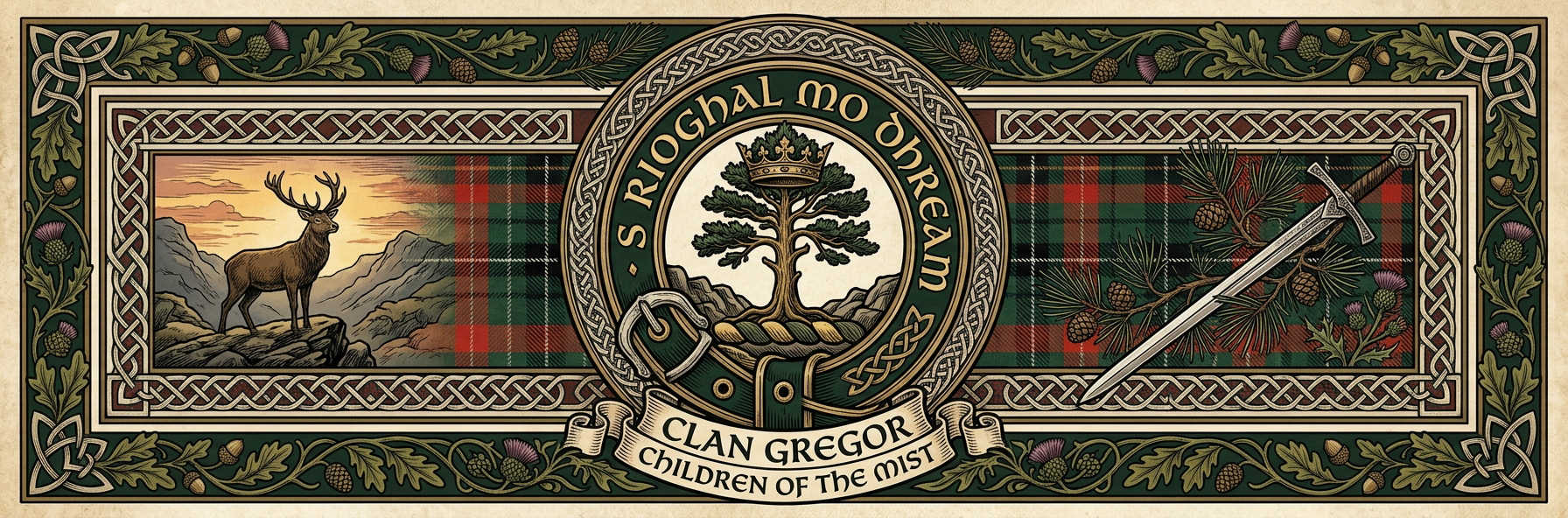
<p>Clan Gregor is one of the great Highland clans of Scotland, famous both for its claimed royal descent and for the two centuries it spent outlawed after a long and bitter power struggle with Clan Campbell. The clan traces its line back to a son of Kenneth MacAlpin, the first King of Scotland — a heritage proclaimed in its motto, <em>‘S Rioghal Mo Dhream</em>, “Royal is my Race.”</p>
<h2 id="mcetoc_1k2knd6ta4n">Origins in the Mists of History</h2>
<p>The clan is thought to have taken shape in Scotland during the 800s. According to the MacGregors’ own tradition, the name descends from Gregor, a son of King Kenneth MacAlpin — a claim lent some support by Y-chromosome studies, which show the clan’s hereditary genetic markers to be consistent with those of other families claiming descent from the early Dalriadic kings. A second, competing theory holds that the clan instead descends from Griogair, son of Dungal, a joint ruler of Alba in north-central Scotland between 879 and 889 — though the genetic evidence does not support this version of events.</p>
<h2 id="mcetoc_1k2knd6ta4o">War and Dispossession</h2>
<p>In the 14th century, during the Wars of Scottish Independence, the MacGregors fought at the Battle of Bannockburn under their chief, Malcolm MacGregor. The clan’s first chief on secure historical footing is generally agreed to be Gregor “of the Golden Bridles,” succeeded before 1390 by his son, Iain Camm, “of the One Eye.”</p>
<p>The clan’s fortunes turned sharply when King Robert the Bruce granted much of its land — including the barony of Loch Awe — to Clan Campbell. Driven from these lands, the MacGregors fought the Campbells for decades before being dispossessed almost entirely, retreating ever deeper into the Highlands until they were largely confined to Glenstrae. Landless and increasingly desperate, many turned to rustling cattle and poaching deer to survive, and grew so skilled at it that other clans took to paying them simply to be left alone.</p>
<p>One notable episode from this period is the storming of Castle Grant, originally a stronghold of Clan Comyn, said to have been taken in the 14th century by a combined force of the Grants and MacGregors. Clan Grant tradition holds that the slain Comyn chief’s skull was kept afterward as a trophy and heirloom at Castle Grant — one account even describing it as hinged at the crown and used to store documents — with a warning that the clan would lose all its lands in Strathspey should the skull ever leave the family’s hands.</p>
<h2 id="mcetoc_1k2knd6ta4p">The “Children of the Mist”</h2>
<p>The chiefship passed into disarray when Iain of Glenstrae died without a direct heir in 1519, giving the Campbells an opening to meddle in the succession and press their claim to what remained of MacGregor land. In 1560 they dispossessed Gregor Roy MacGregor, who fought the Campbells for ten years before being captured and killed. His son Alistair inherited the chiefship but could do little to halt the persecution that was by now the settled fate of the “Children of the Mist” — a name earned, it was said, for the clan’s knack of vanishing into the Highland fog.</p>
<p>The Earl of Argyll and his Campbell allies were tasked with hunting the scattered MacGregors down. At Bentoik, around sixty clansmen made a defiant stand against two hundred men of Clan Cameron, Clan MacNab and Clan Ranald under Robert Campbell, son of the Laird of Glenorchy. Duncan Aberach, one of the MacGregor chieftains, his son, and seven others were killed in the fighting; despite inflicting heavy losses on their pursuers, the MacGregors were eventually overwhelmed.</p>
<p>The clan also fought the English at the Battle of Pinkie Cleugh in 1547, and in 1558 was drawn into a violent feud with Clan MacLaren after killing eighteen MacLaren men and seizing their farms — an incident that went uninvestigated for decades, surfacing only in 1604 when the MacGregors stood trial for a separate, equally bloody conflict with Clan Colquhoun, of which they were ultimately cleared.</p>
<p>That conflict with the Colquhouns culminated in 1603 at the Battle of Glen Fruin, where four hundred MacGregors routed a Colquhoun force of five hundred, three hundred of them mounted. Splitting into two parties to attack from front and rear, the MacGregors drove the Colquhoun horsemen onto the boggy ground of the Moss of Auchingaich, inflicting over two hundred casualties. It was a victory the clan would pay dearly for: Glen Fruin became the pretext for the proscription of the MacGregor name later that year. It would not be until the following century that the two clans made peace, when their chiefs met and shook hands on the site of the old battlefield.</p>
<p>Stripped of their lands and still surviving by rustling and poaching, the MacGregors’ troubles deepened after the king’s forester, John Drummond, was murdered in reprisal for hanging MacGregor poachers — a killing for which the clan’s chief was condemned by the Privy Council. In April 1603, King James VI issued an edict formally abolishing the MacGregor name, ordering that it be renounced on pain of death. The chief and eleven of his chieftains were hanged at Edinburgh’s Mercat Cross in January 1604, and the clan was scattered, many taking other surnames — Murray, King and Grant among them — to survive. They were hunted with bloodhounds through the heather, and it was not until 1774 that the persecution formally ended and the clan was permitted to reclaim its name.</p>
<p>Even neighboring clans were not spared. In 1606, around two hundred MacGregors and allied Catarans raided the cattle of Clan MacThomas, making off with some 2,700 head in what became known as the Battle of Cairnwell. Though the MacThomases eventually caught and defeated the raiders, much of the stolen herd had already been slaughtered out of spite, leaving several MacThomas clansmen financially ruined.</p>
<h2 id="mcetoc_1k2knd6ta4q">The Jacobite Uprisings</h2>
<p>The MacGregors took up arms again in the 18th century during the Jacobite risings, fighting at the Battle of Glen Shiel in 1719 alongside their famous kinsman Rob Roy MacGregor, who was wounded in the action. During the 1745–46 rising, MacGregor men serving under the Duke of Perth fought as Jacobites at the Battle of Prestonpans in 1745 and, the following year, at the Battle of Culloden.</p>
<h2 id="mcetoc_1k2knd6ta4r">Clan Profile</h2>
<ul>
<li><strong>Name origin:</strong> Son of Gregory (“flocksman”)</li>
<li><strong>Gaelic name:</strong> MacGrioghair, “Son of Gregory”</li>
<li><strong>Motto:</strong> ‘S Rioghal Mo Dhream — “Royal is my Race”</li>
<li><strong>War cry:</strong> “Ard Choille!” — “The woody height!”</li>
<li><strong>Pipe music:</strong> Ruaig Ghlinne Freoine — The Chase (or Rout) of Glen Fruin</li>
<li><strong>Crest:</strong> A lion’s head, erased and proper, crowned with a five-pointed antique crown</li>
<li><strong>Tartan:</strong> Red, green and white plaid — three dark green stripes on red, the middle stripe bisected by black-edged white</li>
<li><strong>Nickname:</strong> The “Children of the Mist,” for the clan’s reputed ability to vanish into the Highland fog</li>
</ul>
<h2 id="mcetoc_1k2knd6ta4s">Notable Clan Members</h2>
<ul>
<li>Rob Roy MacGregor (Robert Roy MacGregor), the clan’s best-known historical figure</li>
<li>Chief Sir Malcolm MacGregor of MacGregor, 7th Baronet, 24th Chief of Clan Gregor</li>
<li>Sir Ian Kinloch MacGregor (1912–1998), chairman of British Steel from 1980 to 1983 and of British Coal from 1983 to 1986, who worked alongside Prime Minister Margaret Thatcher during the 1984–85 miners’ strike</li>
<li>Ian MacGregor, former Chief Investment Officer of the Wellcome Trust, credited with growing the Trust into the world’s largest foundation and with overseeing the record-setting flotation of Wellcome Plc</li>
<li>Dr. James Grierson MacGregor (1905–1989), Alberta engineer, historian and member of the Order of Canada, author of fifteen books on the history of Alberta</li>
<li>Ewan McGregor, actor (b. 1971)</li>
</ul>
<h2 id="mcetoc_1k2knd6ta4t">Septs of Clan MacGregor</h2>
<p>Over the centuries, families forced to abandon the MacGregor name for their own survival adopted a wide range of alternative surnames, known as septs of the clan. These include: Alpin, Bain, Beachley, Black, Bowers, Bowie, Coleman, Comrie, Dochart, Dunn, Fletcher, Greer, Gregg, Gregor, Gregorson, Gregory, Greig, Grewer, Grier, Grierson, Grigg, Grigor, Gruer, Gudger, Johnson, King, Kirkwood, Lakie, Landless, Leckie, Lockie, MacAlpin, MacAdam, Macaldowie, Macara, Macaree, MacChoiter, MacConachie, MacCrowther, MacEan, MacEwin, MacGregor, MacGrigor, MacGrowther, MacGruder, Macilduy, MacLeister, MacLiver, MacNee, MacNie, MacNeice, MacNeish, MacPeters, MacPetrie, Magruder, Malloch, McGehee, McNish, Mor, Neish, Orr, Patullo, Peters, Petrie, Pippig, Roy, Skinner, Stirling, Stringer, White, Whyte and Willox.</p>
<p>For more on the clan’s history today, visit <a href="http://www.clangregor.org/" target="_blank" rel="noopener">the Clan Gregor Society</a>.</p>
</article>
            ]]>
        </content>
    </entry>
    <entry>
        <title>The McGregor Museum</title>
        <author>
            <name>Stone River</name>
        </author>
        <link href="https://mcgregorvillage.co.za/the-mcgregor-museum/index.html"/>
        <id>https://mcgregorvillage.co.za/the-mcgregor-museum/index.html</id>
        <media:content url="https://mcgregorvillage.co.za/media/posts/37/History-Museum-hero.jpg" medium="image" />
            <category term="Local History"/>

        <updated>2026-09-09T11:15:52+02:00</updated>
            <summary type="html">
                <![CDATA[
                        <img src="https://mcgregorvillage.co.za/media/posts/37/History-Museum-hero.jpg" alt="" />
                    Uncovering the Treasures of the McGregor Museum Tucked away on the edge&hellip;
                ]]>
            </summary>
        <content type="html">
            <![CDATA[
                    <p><img src="https://mcgregorvillage.co.za/media/posts/37/History-Museum-hero.jpg" class="type:primaryImage" alt="" /></p>
                <div class="post__toc">
<h3>Table of Contents</h3>
<ul>
<li><a href="#mcetoc_1k2knde8a56">Uncovering the Treasures of the McGregor Museum</a>
<ul>
<li><a href="#mcetoc_1k2knde8a57">A Community-Driven Legacy</a></li>
<li><a href="#mcetoc_1k2knde8a58">Voices of the Past</a></li>
<li><a href="#mcetoc_1k2knde8a59">Remarkable Artifacts and Exhibits</a></li>
</ul>
</li>
</ul>
</div>
<h1 id="mcetoc_1k2knde8a56">Uncovering the Treasures of the McGregor Museum</h1>
<p>Tucked away on the edge of the Little Karoo, the McGregor Museum is much like the surrounding renosterveld landscape: unassuming at first glance, yet brimming with hidden depth and historical significance for visitors willing to explore further.</p>
<h2 id="mcetoc_1k2knde8a57">A Community-Driven Legacy</h2>
<p>Located on the left side of the Tourism Bureau at 53 Voortrekker Street inside a national monument building, the museum is managed by dedicated volunteers. The initiative was originally sparked by Helaine Shand, a local figure with deep 19th-century ties to the community. Operating under the guidance of the McGregor Heritage Society—a registered conservation body recognized by Heritage Western Cape—the institution continuously invites the public to contribute documents, letters, title deeds, and artifacts dating back to the late 1700s.</p>
<h2 id="mcetoc_1k2knde8a58">Voices of the Past</h2>
<p>At the core of the museum's mission is the preservation of local oral history. Visitors can browse open-table files containing recorded and transcribed recollections from longtime residents. These accounts offer vivid windows into early 20th-century farm and vineyard life, as well as memories from workers involved in the village's once world-renowned whipstock industry. Additional stories can also be explored online through the Heritage Society's "Voices of McGregor" project.</p>
<h2 id="mcetoc_1k2knde8a59">Remarkable Artifacts and Exhibits</h2>
<p>The museum's compact shelves and cabinets house an eclectic collection of items that trace the region's evolution:</p>
<ul>
<li><strong>The Foundation Trowel:</strong> An engraved silver trowel utilized during the 1904 laying of the Dutch Reformed church (NG Kerk) foundation stone. It was famously discovered inside a secret desk compartment left to former South African Chief Justice Mick Corbett, a great-grandson of the village's namesake, the Scottish-born Rev. Andrew McGregor. Descendants have also contributed a growing archive of McGregor family memorabilia.</li>
<li><strong>The Historic Bible:</strong> A verified King James Bible featuring Rob Roy’s signature, available for viewing by special appointment. Notably, its pages once contained a registry of the area's earliest pioneering families.</li>
<li><strong>The Antique Wooden Waterpipe:</strong> Unearthed during local utility digs near Mill and Hof Streets, this remarkable 4.6-meter pipe segment measures about 150mm across. Crafted from interlocking Oregon Pine-like wooden slats, it is bound with spiral wire, sealed with pitch, and fitted with recessed steel sleeves. Such pipes were prized for superior water flavor and durability matching cast iron. Similar historical water-infrastructure artifacts can be found on display at the Kleinplasie museum in Worcester and integrated into the architecture of Montagu's Die Boord Tea Garden.</li>
<li><strong>Archival Documents:</strong> The facility preserves early paperwork, titles, and court transcripts detailing intense water-rights disputes among pioneering local farmers. These papers anchor the area's history well before the village's official proclamation in 1862, following initial settlement construction in the early 1800s.</li>
</ul>
<p><em>Visitor Information: The McGregor Museum is situated at 53 Voortrekker Street and welcomes anyone eager to connect with the heritage of the region.</em></p>
<div class="gallery-wrapper"><div class="gallery" data-is-empty="false" data-translation="Add images" data-columns="3">
<figure class="gallery__item"><a href="https://mcgregorvillage.co.za/media/posts/37/gallery/History-Museum-01.jpg" data-size="785x388"><img loading="lazy" src="https://mcgregorvillage.co.za/media/posts/37/gallery/History-Museum-01-thumbnail.jpg" alt="The engraved silver trowel used to lay the foundation stone of the Dutch Reformed church in 1904." width="768" height="380"></a>
<figcaption>The engraved silver trowel used to lay the foundation stone of the Dutch Reformed church in 1904.</figcaption>
</figure>
<figure class="gallery__item"><a href="https://mcgregorvillage.co.za/media/posts/37/gallery/History-Museum-02.jpg" data-size="195x258"><img loading="lazy" src="https://mcgregorvillage.co.za/media/posts/37/gallery/History-Museum-02-thumbnail.jpg" alt="" width="195" height="258"></a></figure>
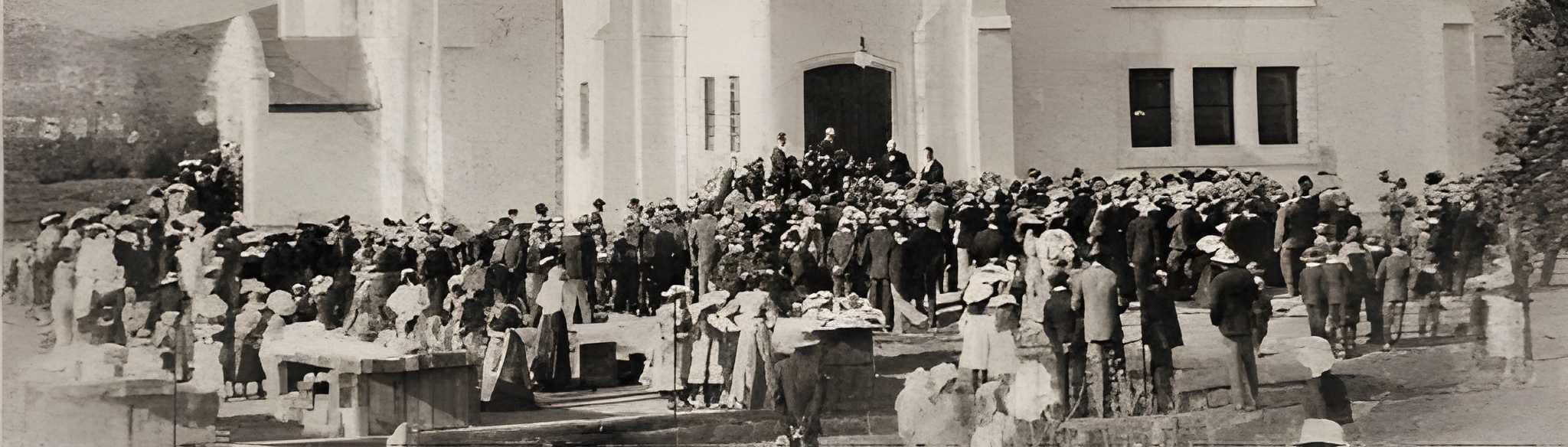
<figure class="gallery__item"><a href="https://mcgregorvillage.co.za/media/posts/37/gallery/History-Museum-03.jpg" data-size="282x387"><img loading="lazy" src="https://mcgregorvillage.co.za/media/posts/37/gallery/History-Museum-03-thumbnail.jpg" alt="The Lady Grey Dutch Reformed Church,   opening day ceremony, June 28th 1904. " width="282" height="387"></a>
<figcaption>The Lady Grey Dutch Reformed Church, opening day ceremony, June 28th 1904.</figcaption>
</figure>
<figure class="gallery__item"><a href="https://mcgregorvillage.co.za/media/posts/37/gallery/History-Museum-04.jpg" data-size="785x224"><img loading="lazy" src="https://mcgregorvillage.co.za/media/posts/37/gallery/History-Museum-04-thumbnail.jpg" alt="Detail from the church opening ceremony" width="768" height="219"></a>
<figcaption>Detail from the church opening ceremony</figcaption>
</figure>
<figure class="gallery__item"><a href="https://mcgregorvillage.co.za/media/posts/37/gallery/History-Museum-05.jpg" data-size="258x194"><img loading="lazy" src="https://mcgregorvillage.co.za/media/posts/37/gallery/History-Museum-05-thumbnail.jpg" alt="The McGregor Museum" width="258" height="194"></a>
<figcaption>The McGregor Museum</figcaption>
</figure>
<figure class="gallery__item"><a href="https://mcgregorvillage.co.za/media/posts/37/gallery/History-Museum-06.jpg" data-size="785x477"><img loading="lazy" src="https://mcgregorvillage.co.za/media/posts/37/gallery/History-Museum-06-thumbnail.jpg" alt="Voortrekker Street, McGregor in the 1930's." width="768" height="467"></a>
<figcaption>Voortrekker Street, McGregor in the 1930's.</figcaption>
</figure>
<figure class="gallery__item"><a href="https://mcgregorvillage.co.za/media/posts/37/gallery/History-Museum-08.jpg" data-size="785x570"><img loading="lazy" src="https://mcgregorvillage.co.za/media/posts/37/gallery/History-Museum-08-thumbnail.jpg" alt="Detail from the plan made for the division of McGregor, originally drawn in 1821, added to in 1838 and finally copied with addition of last owner in 1905. There are 15 separate landowners listed with their village blocks designated, from 1862 (when Lady Grey was officially designated a town) to 1905. The full plan may be viewed in the museum." width="768" height="558"></a>
<figcaption>Detail from the plan made for the division of McGregor, originally drawn in 1821, added to in 1838 and finally copied with addition of last owner in 1905. There are 15 separate landowners listed with their village blocks designated, from 1862 (when Lady Grey was officially designated a town) to 1905. The full plan may be viewed in the museum.</figcaption>
</figure>
</div></div>
            ]]>
        </content>
    </entry>
    <entry>
        <title>Churches and Spiritual Centres</title>
        <author>
            <name>Stone River</name>
        </author>
        <link href="https://mcgregorvillage.co.za/churches-and-spiritual-centres/index.html"/>
        <id>https://mcgregorvillage.co.za/churches-and-spiritual-centres/index.html</id>
            <category term="Useful Local Info"/>

        <updated>2026-09-09T09:14:36+02:00</updated>
            <summary type="html">
                <![CDATA[
                    McGregor NG Kerk McGregor Address: Cnr Voortrekker &amp; Church St, McGregor Phone:&hellip;
                ]]>
            </summary>
        <content type="html">
            <![CDATA[
                <h2>McGregor</h2>
<h4>NG Kerk McGregor</h4>
<ul>
<li><strong>Address:</strong> Cnr Voortrekker &amp; Church St, McGregor</li>
<li><strong>Phone:</strong> 023 625 1605</li>
</ul>
<h4>Temenos Retreat Centre</h4>
<ul>
<li><strong>Address:</strong> Corner of Bree &amp; Voortrekker St, McGregor</li>
<li><strong>Phone:</strong> 023 625 1871</li>
<li><strong>Email:</strong> <a href="mailto:reception@temenosretreat.co.za">reception@temenosretreat.co.za</a></li>
<li><strong>Website:</strong> <a href="https://www.temenosretreat.co.za" target="_blank" rel="noopener">temenosretreat.co.za</a></li>
</ul>
<h4>VGK McGregor (Uniting Reformed Church)</h4>
<ul>
<li><strong>Address:</strong> Voortrekker Rd, McGregor</li>
</ul>
<h4>New Apostolic Church McGregor</h4>
<ul>
<li><strong>Address:</strong> 7 Long St, McGregor</li>
</ul>
<h2>Robertson</h2>
<h4>Anglican Church (St. Mary's)</h4>
<ul>
<li><strong>Address:</strong> St Mary's Church, Robertson (PO Box 411)</li>
<li><strong>Phone:</strong> 023 626 2235</li>
</ul>
<h4>Apostolic Faith Mission (AFM / AGS) Robertson</h4>
<ul>
<li><strong>Address:</strong> 22 Piet Retief St, Robertson</li>
<li><strong>Phone:</strong> 023 626 3532</li>
</ul>
<h4>Catholic Church (St. Monica)</h4>
<ul>
<li><strong>Address:</strong> St. Monica Catholic Church, Robertson, 6705 (PO Box 714)</li>
<li><strong>Phone:</strong> 023 347 0464</li>
<li><strong>Email:</strong> <a href="mailto:st.monica@bisdomoudtshoorn.org">st.monica@bisdomoudtshoorn.org</a></li>
</ul>
<h4>Kings Church International</h4>
<ul>
<li><strong>Address:</strong> Robertson Primary School, Robertson, 6705</li>
<li><strong>Phone:</strong> 023 626 3860</li>
<li><strong>Email:</strong> <a href="mailto:info@kcionline.co.za">info@kcionline.co.za</a></li>
<li><strong>Website:</strong> <a href="https://www.kcionline.co.za" target="_blank" rel="noopener">kcionline.co.za</a></li>
</ul>
<h4>Methodist Church of South Africa</h4>
<ul>
<li><strong>Address:</strong> Tindall St, Robertson</li>
<li><strong>Phone:</strong> 023 626 2634</li>
</ul>
<h4>New Apostolic Church Robertson</h4>
<ul>
<li><strong>Address:</strong> 25 Victoria St, Robertson</li>
</ul>
<h4>NG Kerk Robertson</h4>
<ul>
<li><strong>Address:</strong> Junction of Kerk St &amp; Paul Kruger St, Robertson</li>
<li><strong>Phone:</strong> 023 626 2241 / 023 626 3220</li>
</ul>
<h4>NG Sendingkerk</h4>
<ul>
<li><strong>Address:</strong> Loop St, Robertson</li>
<li><strong>Phone:</strong> 023 626 2410</li>
</ul>
<h4>Robertson Dharma Centre</h4>
<ul>
<li><strong>Address:</strong> 26 White St, Robertson, 6705</li>
<li><strong>Phone:</strong> 083 703 3160 / 023 626 3515</li>
<li><strong>Email:</strong> <a href="mailto:heila.downey@gmail.com">heila.downey@gmail.com</a></li>
<li><strong>Website:</strong> <a href="https://dharmacentre.org.za" target="_blank" rel="noopener">dharmacentre.org.za</a></li>
</ul>
<h4>Wesleyan Church</h4>
<ul>
<li><strong>Address:</strong> Paul Kruger St, Robertson</li>
</ul>
            ]]>
        </content>
    </entry>
    <entry>
        <title>Some Other Things to Do and Places to Go</title>
        <author>
            <name>Stone River</name>
        </author>
        <link href="https://mcgregorvillage.co.za/things-to-do-places-to-go/index.html"/>
        <id>https://mcgregorvillage.co.za/things-to-do-places-to-go/index.html</id>
        <media:content url="https://mcgregorvillage.co.za/media/posts/34/Some-Other-Things-header.jpg" medium="image" />
            <category term="Tourism"/>

        <updated>2026-09-06T12:37:30+02:00</updated>
            <summary type="html">
                <![CDATA[
                        <img src="https://mcgregorvillage.co.za/media/posts/34/Some-Other-Things-header.jpg" alt="" />
                    Nature Reserves &amp; Outdoor Venues Vrolijkheid Nature Reserve (CapeNature) (Map Link) Location:&hellip;
                ]]>
            </summary>
        <content type="html">
            <![CDATA[
                    <p><img src="https://mcgregorvillage.co.za/media/posts/34/Some-Other-Things-header.jpg" class="type:primaryImage" alt="" /></p>
                <h2>Nature Reserves &amp; Outdoor Venues</h2>
<ul>
<li><strong>Vrolijkheid Nature Reserve (CapeNature)</strong> (<a href="https://www.google.com/maps/search/?api=1&amp;query=Vrolijkheid+Nature+Reserve+McGregor" target="_blank" rel="noopener">Map Link</a>)
<ul>
<li><strong>Location:</strong> Robertson–McGregor Road (R317 area), McGregor</li>
<li><strong>Telephone:</strong> +27 (0)87 087 8250 (CapeNature Call Centre)</li>
<li><strong>Activities:</strong> A CapeNature reserve set in the dry succulent Karoo landscape featuring the 19km Rooikat hiking trail, Heron bird hide walk (3km, wheelchair friendly), mountain biking routes, and picnic spots.</li>
</ul>
</li>
<li><strong>Temenos Retreat &amp; Sacred Gardens</strong> (<a href="https://www.google.com/maps/search/?api=1&amp;query=Temenos+Retreat+Corner+Bree+and+Voortrekker+Street+McGregor" target="_blank" rel="noopener">Map Link</a>)
<ul>
<li><strong>Location:</strong> Corner of Voortrekker &amp; Bree Street, McGregor</li>
<li><strong>Telephone:</strong> +27 (0)23 625 1871</li>
<li><strong>Activities:</strong> Renowned sanctuary featuring quiet gardens, contemplative spaces, wellness retreats, peacocks, and garden dining.</li>
</ul>
</li>
</ul>
<h2>Animal Sanctuaries &amp; Family Attractions</h2>
<ul>
<li><strong>Eseltjiesrus Donkey Sanctuary</strong> (<a href="https://www.google.com/maps/search/?api=1&amp;query=Eseltjiesrus+Donkey+Sanctuary+Langverwagten+Road+McGregor" target="_blank" rel="noopener">Map Link</a>)
<ul>
<li><strong>Location:</strong> Langverwagten Road, McGregor, 6708</li>
<li><strong>Telephone:</strong> +27 (0)23 625 1801</li>
<li><strong>Overview:</strong> A permanent sanctuary providing care for rescued donkeys, offering educational tours, visitor paths, and an on-site coffee shop.</li>
<li><strong>Opening Hours:</strong> Thu–Sun: 10:00–16:00 | Mon–Wed: Closed</li>
</ul>
</li>
<li><strong>Sheilam Cactus Farm</strong> (<a href="https://www.google.com/maps/search/?api=1&amp;query=Sheilam+Cactus+and+Succulent+Nursery+Robertson" target="_blank" rel="noopener">Map Link</a>)
<ul>
<li><strong>Location:</strong> R60 Route, Klaasvoogds West Road, Robertson, 6705</li>
<li><strong>Telephone:</strong> +27 (0)23 626 4133</li>
<li><strong>Overview:</strong> Established in 1954, this renowned succulent and cactus nursery features over 2,000 plant species, guided garden walks, and a specialized retail section.</li>
<li><strong>Opening Hours:</strong> Mon–Thu: 08:00–17:00 | Fri: 08:00–16:00 | Sat: 09:00–14:00 | Sun: Closed</li>
</ul>
</li>
<li><strong>Marbrin Olives</strong> (<a href="https://www.google.com/maps/search/?api=1&amp;query=Marbrin+Olives+Wolvendrift+Road+Robertson" target="_blank" rel="noopener">Map Link</a>)
<ul>
<li><strong>Location:</strong> R317, Wolvendrift Road, Bonnievale / Robertson area, 6707</li>
<li><strong>Telephone:</strong> +27 (0)78 916 3606</li>
<li><strong>Overview:</strong> A boutique, family-run olive estate producing extra virgin olive oil, tapenades, and cured olives with dedicated tasting flights.</li>
<li><strong>Opening Hours:</strong> Mon–Fri: 09:00–16:00 | Sat: 10:00–14:00 | Sun: Closed</li>
</ul>
</li>
<li><strong>Owl’s Rest Olive &amp; Lavender Farm (Herbal Distillery)</strong> (<a href="https://www.google.com/maps/search/?api=1&amp;query=Owl's+Rest+Olive+and+Lavendar+Farm" target="_blank" rel="noopener">Map Link</a>)
<ul>
<li><strong>Address:</strong> Klaasvoogds West, Robertson, 6705</li>
<li><strong>Telephone:</strong> +27 (0)23 626 1281</li>
<li><strong>Details:</strong> Specialty boutique farm distilling essential oils (lavender, rose geranium, rosemary) with on-site cordials, herbal tea tastings, and a garden coffee shop.</li>
<li><strong>Opening Hours:</strong> Mon–Sat: 09:00–16:00 | Sun: Closed</li>
</ul>
</li>
</ul>
<h2>Cultural, Art &amp; Historical Venues</h2>
<ul>
<li><strong>Robertson Art Gallery</strong> (<a href="https://www.google.com/maps/search/?api=1&amp;query=Robertson+Art+Gallery+3+Upper+Church+Street+Robertson" target="_blank" rel="noopener">Map Link</a>)
<ul>
<li><strong>Location:</strong> 3 Upper Church Street, Robertson</li>
<li><strong>Telephone:</strong> +27 (0)23 626 6420</li>
<li><strong>Activities:</strong> Exhibition venue featuring contemporary and classical South African fine art, sculptures, and paintings.</li>
</ul>
</li>
<li><strong>Robertson Museum (Old Magistrate's Court)</strong> (<a href="https://www.google.com/maps/search/?api=1&amp;query=Robertson+Museum+50+Paul+Kruger+Street+Robertson" target="_blank" rel="noopener">Map Link</a>)
<ul>
<li><strong>Location:</strong> 50–52 Paul Kruger Street, Robertson</li>
<li><strong>Telephone:</strong> +27 (0)23 626 3681</li>
<li><strong>Activities:</strong> Local agricultural heritage exhibits, historic wagon displays, and regional history archives.</li>
</ul>
</li>
<li><strong>McGregor Heritage Society Museum</strong> (<a href="https://www.google.com/maps/search/?api=1&amp;query=McGregor+Tourism+Bureau+Voortrekker+Street+McGregor" target="_blank" rel="noopener">Map Link</a>)
<ul>
<li><strong>Location:</strong> Voortrekker Street, McGregor</li>
<li><strong>Telephone:</strong> +27 (0)23 625 1954 (via Tourism Bureau)</li>
<li><strong>Activities:</strong> Historical displays of local 19th-century architecture and village history.</li>
</ul>
</li>
</ul>
<h2>River &amp; Adventure Activities</h2>
<ul>
<li><strong>Viljoensdrift River Cruises &amp; Picnic Barge</strong> (<a href="https://www.google.com/maps/search/?api=1&amp;query=Viljoensdrift+Fine+Wine+and+River+Cruises+Robertson" target="_blank" rel="noopener">Map Link</a>)
<ul>
<li><strong>Location:</strong> R317 Road, Robertson</li>
<li><strong>Telephone:</strong> +27 (0)23 615 1908</li>
<li><strong>Activities:</strong> Guided flat-bottom boat cruises on the Breede River with custom deli picnic baskets.</li>
</ul>
</li>
<li><strong>Breede River Goose Boat Trips (River Goose Campsite)</strong> (<a href="https://www.google.com/maps/search/?api=1&amp;query=River+Goose+Campsite+Eureka+Farm+Gelukshoop+Road+Bonnievale" target="_blank" rel="noopener">Map Link</a>)
<ul>
<li><strong>Address:</strong> Farm Eureka, Gelukshoop Road, Bonnievale, 6730</li>
<li><strong>Telephone:</strong> +27 (0)82 759 5727</li>
<li><strong>Activities:</strong> Leisurely pontoon boat cruises along the Breede River, river swimming, birdwatching, and custom braai or picnic cruises departing from the campsite waterfront.</li>
<li><strong>Opening Hours:</strong> Pre-booked trips (weather and river conditions permitting)</li>
</ul>
</li>
<li><strong>Wine Valley Safari</strong> (<a href="https://www.google.com/maps/search/?api=1&amp;query=Wine+Valley+Safari+Robertson" target="_blank" rel="noopener">Map Link</a>)
<ul>
<li><strong>Location:</strong> Robertson Railway Station / Local Pickups</li>
<li><strong>Telephone:</strong> +27 (0)80 021 2178</li>
<li><strong>Activities:</strong> Hop-on hop-off open-air safari truck trips touring wine farms, olive estates, and local venues.</li>
</ul>
</li>
<li><strong>Silwerstrand Golf Club</strong> (<a href="https://www.google.com/maps/search/?api=1&amp;query=Silwerstrand+Golf+Club+Robertson" target="_blank" rel="noopener">Map Link</a>)
<ul>
<li><strong>Location:</strong> R60 Route, Robertson</li>
<li><strong>Telephone:</strong> +27 (0)23 626 1090</li>
<li><strong>Activities:</strong> 18-hole championship golf course, clubhouse, and riverfront restaurant.</li>
</ul>
</li>
</ul>
            ]]>
        </content>
    </entry>
    <entry>
        <title>History &amp; the McGregor Heritage Society</title>
        <author>
            <name>Stone River</name>
        </author>
        <link href="https://mcgregorvillage.co.za/history-and-the-mcgregor-heritage-society/index.html"/>
        <id>https://mcgregorvillage.co.za/history-and-the-mcgregor-heritage-society/index.html</id>
        <media:content url="https://mcgregorvillage.co.za/media/posts/33/History-McGregor-Heritage-hero-02.jpg" medium="image" />
            <category term="Local History"/>

        <updated>2026-09-04T15:03:30+02:00</updated>
            <summary type="html">
                <![CDATA[
                        <img src="https://mcgregorvillage.co.za/media/posts/33/History-McGregor-Heritage-hero-02.jpg" alt="" />
                    Discover McGregor: History, Heritage &amp; Preservation Nestled at the foot of the&hellip;
                ]]>
            </summary>
        <content type="html">
            <![CDATA[
                    <p><img src="https://mcgregorvillage.co.za/media/posts/33/History-McGregor-Heritage-hero-02.jpg" class="type:primaryImage" alt="" /></p>
                <div class="post__toc">
<h3>Table of Contents</h3>
<ul>
<li><a href="#mcetoc_1k2kndpjq62">Discover McGregor: History, Heritage &amp; Preservation</a>
<ul>
<li><a href="#mcetoc_1k2kndpjq63">The History of McGregor</a>
<ul>
<li><a href="#mcetoc_1k2kndpjq64">Origins &amp; Early Settlement</a></li>
<li><a href="#mcetoc_1k2kndpjq65">Architectural Significance &amp; Historical Recognition</a></li>
<li><a href="#mcetoc_1k2kndpjq66">The Leiwater Irrigation Legacy</a></li>
<li><a href="#mcetoc_1k2kndpjq67">Inclusive History &amp; Re-Curated Museum</a></li>
</ul>
</li>
<li><a href="#mcetoc_1k2kndpjq68">The McGregor Heritage Society / Erfenisvereniging</a>
<ul>
<li><a href="#mcetoc_1k2kndpjq69">Key Responsibilities &amp; Community Roles</a></li>
</ul>
</li>
<li><a href="#mcetoc_1k2kndpjq6a">Planning &amp; Building Compliance in McGregor</a>
<ul>
<li><a href="#mcetoc_1k2kndpjq6b">Core Conservation Principles</a></li>
</ul>
</li>
<li><a href="#mcetoc_1k2kndpjq6c">Resources &amp; Downloadable Guides</a></li>
<li><a href="#mcetoc_1k2kndpjq6d">Contact &amp; Society Information</a></li>
</ul>
</li>
</ul>
</div>
<h1 id="mcetoc_1k2kndpjq62">Discover McGregor: History, Heritage &amp; Preservation</h1>
<p>Nestled at the foot of the Riviersonderend Mountains and the historic Boesmanskloof trail, McGregor is widely recognized as one of the best-preserved 19th-century agricultural villages in South Africa. Its unique sense of place stems not only from its historic architecture, but also from its enduring rural routines, open irrigation channels, and a vibrant local community dedicated to inclusive historical storytelling.</p>
<hr>
<h2 id="mcetoc_1k2kndpjq63">The History of McGregor</h2>
<h3 id="mcetoc_1k2kndpjq64">Origins &amp; Early Settlement</h3>
<p>Established in 1861 on the farm <i>Langefontein</i>, the village was originally named Lady Grey. It was renamed "McGregor" in 1905 in honor of the Reverend Andrew McGregor, who served the local Dutch Reformed congregation for over forty years. Positioned away from main transit highways, McGregor’s geographic isolation allowed its original grid-layout town planning, large agricultural plots (<i>erven</i>), and traditional architecture to survive intact into the modern era.</p>
<figure class="post__image"><img loading="lazy" src="https://mcgregorvillage.co.za/media/posts/33/History-McG-heritage-001-2.jpg" alt="" width="2048" height="1367" sizes="(max-width: 1024px) 100vw, 1024px" srcset="https://mcgregorvillage.co.za/media/posts/33/responsive/History-McG-heritage-001-2-xs.jpg 300w ,https://mcgregorvillage.co.za/media/posts/33/responsive/History-McG-heritage-001-2-sm.jpg 480w ,https://mcgregorvillage.co.za/media/posts/33/responsive/History-McG-heritage-001-2-md.jpg 768w ,https://mcgregorvillage.co.za/media/posts/33/responsive/History-McG-heritage-001-2-lg.jpg 1024w">
<figcaption>Historic civic building reflecting McGregor's 19th-century settlement heritage.</figcaption>
</figure>
<h3 id="mcetoc_1k2kndpjq65">Architectural Significance &amp; Historical Recognition</h3>
<p>In their seminal work <i>Old Buildings of the Cape</i>, renowned architectural historians Hans Fransen and Mary Cook described McGregor as <i>"the best preserved and most complete example of mid-nineteenth century townscape in the Western Cape Province."</i></p>
<p>This rich cultural landscape encompasses several distinct architectural styles:</p>
<ul>
<li><strong>Cape Vernacular (Thatch Roof):</strong> Characterized by thick whitewashed walls built from local clay or stone, deep-set small-paned windows, and steep thatch roofs terminating in simple gables. A regional survey identified at least 65 historical homesteads and vernacular structures within the village.</li>
<li><strong>Karoo Vernacular (Flat Roof &amp; Corrugated Iron):</strong> Simpler, unadorned dwellings with flat or low-pitched corrugated iron roofs, often featuring decorative straight parapets along the street façade.</li>
<li><strong>Georgian &amp; Victorian Architecture:</strong> Highlighted in the landmark 1996 Todeschini &amp; Japha Conservation Study for its significant contribution to the town's elegant 19th-century streetscapes.</li>
</ul>
<figure class="post__image"><img loading="lazy" src="https://mcgregorvillage.co.za/media/posts/33/History-McG-heritage-002-2.jpg" alt="" width="2048" height="1509" sizes="(max-width: 1024px) 100vw, 1024px" srcset="https://mcgregorvillage.co.za/media/posts/33/responsive/History-McG-heritage-002-2-xs.jpg 300w ,https://mcgregorvillage.co.za/media/posts/33/responsive/History-McG-heritage-002-2-sm.jpg 480w ,https://mcgregorvillage.co.za/media/posts/33/responsive/History-McG-heritage-002-2-md.jpg 768w ,https://mcgregorvillage.co.za/media/posts/33/responsive/History-McG-heritage-002-2-lg.jpg 1024w">
<figcaption>Classic Cape Vernacular thatch cottages along Voortrekker Street in McGregor.</figcaption>
</figure>
<h3 id="mcetoc_1k2kndpjq66">The <i>Leiwater</i> Irrigation Legacy</h3>
<p>Running throughout the town’s street grid is the historic <i>leiwater</i> system—an open furrow network fed by mountain streams. Historically, water was allocated to residential plots on a scheduled rotation, allowing homeowners to cultivate fruit orchards, grapevines, and vegetable gardens. This system remains central to the town's spatial character, supporting large, lush backyards and sustainable small-scale urban agriculture.</p>
<h3 id="mcetoc_1k2kndpjq67">Inclusive History &amp; Re-Curated Museum</h3>
<p>McGregor's history encompasses a diverse tapestry of people, including farmworkers, artisans, stone masons, and local families whose stories were historically marginalized during the apartheid era. The <strong>McGregor Museum</strong> underwent a major re-curation initiative in 2025 to move beyond Eurocentric historical narratives. Today, the museum showcases a comprehensive, dynamic history celebrating the voices, social clubs, church institutions, and musical traditions (such as the historic McGregor Brass Band) of all who shaped the village.</p>
<hr>
<h2 id="mcetoc_1k2kndpjq68">The McGregor Heritage Society / Erfenisvereniging</h2>
<p>Established in 1995, the <strong>McGregor Heritage Society (MHS) / Erfenisvereniging</strong> is an independent, non-profit organisation (NPO 097-978-NPO) and official conservation body registered with Heritage Western Cape (HWC/RCB/09/05).</p>
<p>The Society operates to ensure that McGregor maintains its charm, dignity, tranquility, and historical significance in both architectural and social terms—guiding development so that new designs integrate harmoniously with the existing landscape.</p>
<h3 id="mcetoc_1k2kndpjq69">Key Responsibilities &amp; Community Roles</h3>
<ul>
<li><strong>Architectural &amp; Heritage Assessment:</strong> Offering technical guidance and issuing formal comments on building proposals for properties older than 60 years or located in sensitive heritage zones.</li>
<li><strong>Museum &amp; Cultural Custodianship:</strong> Overseeing the McGregor Museum through an active museum working group, curating historical records, and leading oral history projects.</li>
<li><strong>Environmental &amp; Open Space Management:</strong> Serving as custodians of the <strong>Krantz Nature Reserve</strong>, a protected natural open space overlooking the village featuring walking trails, botanical diversity, and archaeological value.</li>
<li><strong>Plaque &amp; Walk Initiatives:</strong> Installing official heritage recognition plaques on historic buildings and maintaining self-guided village walk routes.</li>
<li><strong>Community Engagement:</strong> Hosting the annual winter <strong>Heritage Dinner</strong>—bringing the community together through traditional regional cooking and historical talks—and assisting local residents with low-cost restoration advice.</li>
</ul>
<hr>
<h2 id="mcetoc_1k2kndpjq6a">Planning &amp; Building Compliance in McGregor</h2>
<p>To safeguard the town's unique visual character, property owners, buyers, and builders must follow clear approval procedures depending on the age and nature of the structure.</p>
<table border="1" cellspacing="0" cellpadding="8">
<thead>
<tr>
<th>Property Category</th>
<th>Regulatory Authority</th>
<th>Required Approval Step</th>
</tr>
</thead>
<tbody>
<tr>
<td><strong>Structures Older than 60 Years</strong></td>
<td>Heritage Western Cape (HWC) &amp; McGregor Heritage Society (MHS)</td>
<td>Must obtain an official HWC Permit (supported by MHS comments) <strong>before</strong> submitting plans to the municipality.</td>
</tr>
<tr>
<td><strong>Structures Under 60 Years &amp; New Builds</strong></td>
<td>Langeberg Municipality &amp; McGregor Aesthetics Committee (MAC)</td>
<td>Plans submitted to the municipality are circulated to the MAC for aesthetic review against local design guidelines.</td>
</tr>
</tbody>
</table>
<h3 id="mcetoc_1k2kndpjq6b">Core Conservation Principles</h3>
<ol>
<li><strong>Like-for-Like Restoration:</strong> Original materials, timber windows, and plaster finishes should be repaired rather than replaced whenever possible.</li>
<li><strong>Authentic Materials:</strong> Avoid faux or imitation historical finishes (such as artificial stone cladding or non-authentic decorative moldings).</li>
<li><strong>Honest Modern Insertion:</strong> Contemporary extensions should be designed as distinct, sensitive modern additions rather than historic replicas (<i>pastiche</i>).</li>
</ol>
<figure class="post__image"><img loading="lazy" src="https://encrypted-tbn2.gstatic.com/licensed-image?q=tbn:ANd9GcTB_t35zXE2FSAYcC5z_eJNUE9IqvcL_TGmVIY81HTeZlwLEgDxkAVp86R_E_kPc_-HuqGX371ZlzXQbhg" alt="Whitewashed thatch cottage in McGregor" data-is-external-image="true">
<figcaption>Preserved historic cottage highlighting original whitewash and thatch roofing.</figcaption>
</figure>
<hr>
<h2 id="mcetoc_1k2kndpjq6c">Resources &amp; Downloadable Guides</h2>
<p>The McGregor Heritage Society provides downloadable PDF booklets to assist property owners, architects, and visitors:</p>
<ul>
<li><strong>McGregor Building Guidelines:</strong> A comprehensive manual detailing design indicators, proportions, roof pitches, and structural boundaries suitable for the village context.</li>
<li><strong>McGregor Recommended Paint Colours:</strong> A curated palette of traditional exterior paint tones designed to preserve streetscape harmony.</li>
<li><strong>Concise Building Plan Application Guidelines:</strong> A clear flowchart breaking down the multi-step application process across the MHS, HWC, and Langeberg Municipality.</li>
<li><strong>Historic Village Walk Maps:</strong> Self-guided walking maps detailing the architectural significance and histories of key village properties.</li>
</ul>
<p><strong>Access Documents:</strong> Download official PDF publications directly from the <a href="https://www.mcgregorheritage.com/downloads" target="_blank" rel="noopener">McGregor Heritage Society Downloads Page</a>.</p>
<hr>
<h2 id="mcetoc_1k2kndpjq6d">Contact &amp; Society Information</h2>
<p>For queries regarding building plan assessments, historical research, museum visits, or joining as a voluntary member, contact the society directly:</p>
<ul>
<li><strong>Email:</strong> <a href="mailto:mcgregorheritagesociety@gmail.com">mcgregorheritagesociety@gmail.com</a></li>
<li><strong>Official Website:</strong> <a href="https://www.mcgregorheritage.com" target="_blank" rel="noopener">www.mcgregorheritage.com</a></li>
<li><strong>Social Channels:</strong> <a href="https://www.instagram.com/HeritageMcGregor" target="_blank" rel="noopener">Instagram (@HeritageMcGregor)</a> | <a href="https://www.facebook.com/McGregorHeritageSociety" target="_blank" rel="noopener">Facebook (McGregor Heritage Society)</a></li>
</ul>
            ]]>
        </content>
    </entry>
</feed>